
One Medical's innovation chief on Amazon merger, Medicaid plans and risk-based shift
Amazon's announcement of its $3.9 billion acquisition of One Medical shook the health tech sector. At the HLTH conference in Las Vegas, One Medical's Chief Innovation Officer Rushika Fernandopulle spoke with Healthcare Dive about the progress of the merger, the impact of an economic downturn on employer demand, remote work trends, and the company's strategy to expand into Medicare and Medicaid.
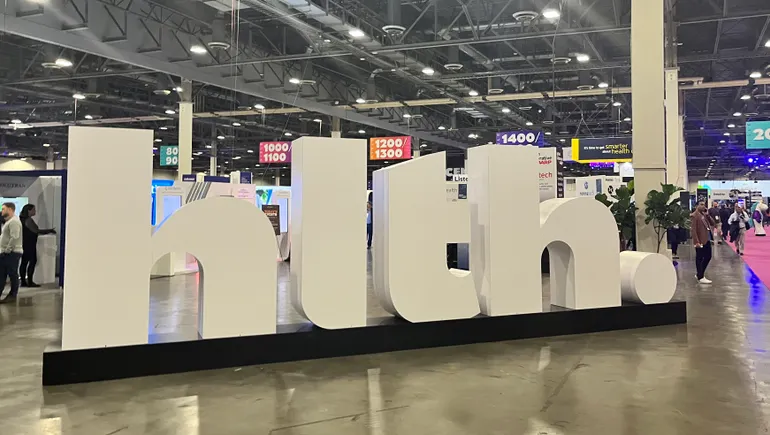
This summer, Amazon announced plans to acquire primary care network One Medical for $3.9 billion, shaking up the health tech sector. As retail giants continue to move into the primary care M&A market, San Francisco-based One Medical was already in the spotlight before the acquisition news broke—the company had expanded its business last year from serving the healthy and affluent to the riskier but potentially more profitable Medicare sector. Currently, One Medical operates more than 200 medical offices across 25 markets.
At the HLTH conference in Las Vegas, Healthcare Dive spoke with One Medical's Chief Innovation Officer, Rushika Fernandopulle, about the Amazon acquisition, the impact of remote work trends on the business, One Medical's progress in transitioning to a risk-based model, and its interest in Medicaid. Here are the three key takeaways.
1. 'Excited' about the Amazon acquisition
Fernandopulle largely declined to discuss Amazon, citing the ongoing antitrust review. In September, regulators asked Amazon and One Medical for more information about the proposed merger, extending the investigation.
But Fernandopulle said: 'What we can say is that we are truly very excited. I think for all the obvious reasons, they are a great potential partner.'
If the acquisition is approved, Amazon will gain One Medical's clinical network, subscription-based telehealth services, electronic health records system, and thousands of employer contracts. Despite the recent shutdown of its employer-focused healthcare service, Amazon Care, the e-commerce giant launched a telehealth marketplace called Amazon Clinic this week, indicating it has not given up on its efforts to enable healthcare services.
Partnering with Amazon could provide One Medical with deep capital support and potentially assistance in managing the risks of its Medicare business—which One Medical acquired last year through its $1.4 billion purchase of Iora Health. According to a filing with the U.S. Securities and Exchange Commission on Monday, Amazon has agreed to provide One Medical with up to $300 million in financing.
2. Recession has not yet impacted employer demand
Many U.S. employers are laying off workers and cutting budgets in response to the economic downturn. Although the healthcare industry is more resilient to recessions than other sectors, the downturn has triggered ripple effects within the industry—for example, payers have expressed concerns that mass unemployment could erode commercial enrollment and revenue.
But a potential recession has not yet affected health benefits. One Medical has approximately 8,500 employer clients, and Fernandopulle said its sales cycle has not been impacted. He argued that employer clients recognize that providing accessible primary care can reduce healthcare costs in the long run. 'We're not too worried about it,' Fernandopulle said.

Changes in employment structure and the rise of remote work have also significantly impacted employers' interest in clinic locations. According to McKinsey data, 58% of Americans work from home at least one day a week. Surveys show that employees prefer working from home, but bosses want them back in the office.
One Medical offers both on-site clinics and near-site clinics close to office areas for employers in need. Fernandopulle noted that the near-site clinic model has proven valuable as populations move away from offices; however, remote work has not slowed demand for on-site clinics but rather accelerated it—because employers are seeking ways to attract employees back to the office.
'This is one of our strengths—we provide on-site clinic services for large employers like Google,' Fernandopulle said. 'Interestingly, many employers are telling us they want to set up on-site clinics as a means to entice employees back to the office.'
3. 'Strong interest' in Medicaid, but structural barriers remain
One Medical's revenue from Medicare Advantage plans and Medicare direct contracting agreements continues to grow. The company entered the capitated payment model in 2021 through the acquisition of Iora. With this deal, One Medical can now cover members across the full lifecycle, from pediatrics and privately insured adults to Medicare seniors.
'One of the things One Medical is trying to do is serve everyone, regardless of their choices. Imagine a world where we serve you through our pediatrics program when you're young; you get your first job and your employer pays for One Medical; if you leave your employer, you can become a member by paying out of pocket; as you age and join a plan, we continue to serve you; and if you decide not to join a plan, we can still serve you through direct contracting agreements,' Fernandopulle said.
Fernandopulle believes Medicaid is a major gap for One Medical. 'We have strong interest in that,' the chief innovation officer said.
When Fernandopulle was CEO of Iora, the value-based care provider made several attempts to partner with state Medicaid programs but encountered structural barriers. He pointed to the extremely high turnover rate of Medicaid patients—temporary gaps in coverage caused by enrollees exiting and re-entering within short periods—which makes it nearly impossible to have a long-term impact on their care.
'You need them to be long-term customers, you need them to have a relationship with you for years,' Fernandopulle said. 'And under many Medicaid programs, people cycle in and out every month.'
Another barrier for Iora in Medicaid was that states must zero out their Medicaid budgets each year, making it difficult to design an investment model where 'you invest this year and reap returns next year.' The chief innovation officer said: 'It's absurd, it doesn't make sense at all. So we're working with multiple parties to try to solve these structural problems.'