
Medical technology companies weigh financing strategies to address cash burn and sluggish IPO market
Industry analysts note that with the IPO market experiencing its worst year in two decades, cash-burning healthcare enterprises may turn to alternative methods such as private financing, insider rounds, or mergers and acquisitions to sustain operations. The number of medical technology IPOs plummeted in 2022, with most stocks underperforming, and experts expect the market to recover slowly in the short term.
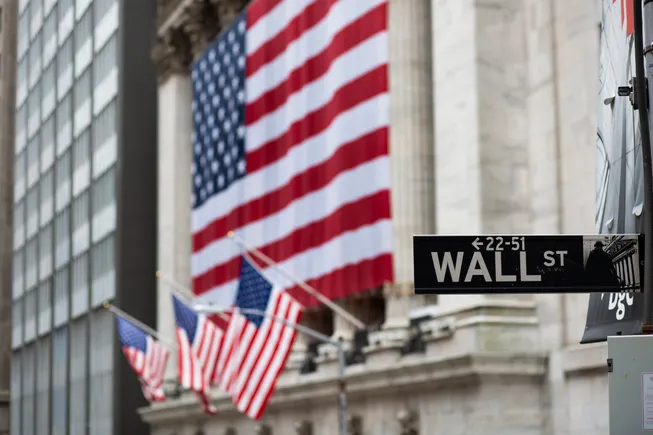
Industry analysts say that against the backdrop of a persistently sluggish initial public offering (IPO) market, healthcare companies with high cash burn that are still seeking to go public may turn to alternative financing channels to keep their operations running.
The IPO market for healthtech companies is facingits worst year in two decades, as the COVID-19 pandemic, Russia's war on Ukraine, record inflation, and rising interest rates have jointly squeezed public market valuations and led to sharp declines in stock prices.
Before this, healthtech companies considering going public had once been optimistic. In 2020 and 2021, driven by low borrowing costs, pandemic relief funds, and the rise of special purpose acquisition companies (SPACs), public markets surged. According to market observer Stock Analysis, last yeara record 1,035 companies went public on U.S. exchanges. Healthcare companies also rode the wave, raisinga record $56.36 billion through 403 IPOs。
However, market enthusiasm clearly faded in 2022.
This year,the number of companies filing for listinghas plummeted to 173. Healthcare companies have also performed weakly; according to Renaissance Capital data, as of October this year,only 20 IPO filings (excluding SPACs)。
This decline has been accompanied by a broad drop in public market stocks. According to investment and analysis firm Silicon Valley Bank, as of September, most healthtech stocks were on a downward trend,with a median performance of about -58%。

Experts expect the public market will be slow to recover in the near term.
"I think 2023 is going to be very tough," said Jonathan Norris, managing director of life sciences and healthcare at Silicon Valley Bank. "I hope we start to see some bright spots in the second half of 2023."
"Whether it's long-term listed companies or those that have gone public in the past few years, there has been a massive contraction in public market valuations, which really casts a shadow over the IPO outlook," Norris said. "So the question is... what are they doing now?"
Capital raising
Analysts point out that with IPO funding drying up and investors being cautious about lending, companies waiting for the market to recover may turn to private capital financing rounds.
However, turning to private markets also carries risks, as the financing market itself is also facing a downturn. This year, global capital financing has declined overall. In August, global venture capital fundingfell to its lowest level in two years。
"Not only are public market exit conditions unfavorable, but the market downturn, inflation, interest rate hikes, and thescrutinyfollowing bear market investments in 2021 have made it harder for IPO-stage startups to obtain private capital compared to last year," said Adriana Krasniansky, research director at digital health venture fund Rock Health.
Healthcare companies have raised less capital compared to 2020 and 2021. According to Rock Health data, the third quarter of 2022 wasthe lowest quarter for digital health financing in the past 11 quarters。
"I hear a lot of VCs saying that tightening the belt is a wise move," said Stephanie Davis, senior research analyst at Silicon Valley Bank. "So many people are no longer investing purely for growth, but are adopting a more balanced strategy to weather the storm."
As overall financing declines, companies that decide to raise funds in the current market may face lower valuations, known as a "down round," Krasniansky said.
This could lead companies to turn to quieter financing rounds, such as insider rounds, extension rounds, and bridge rounds, which can provide capital without harming the stock price, Krasniansky added.
"Many late-stage companies that thought they could all go public, but couldn't due to market conditions, ended up doing some kind of insider round with existing investors to extend their cash runway as long as possible into 2023 or beyond," said Norris of Silicon Valley Bank. "This basically gives them breathing room."
Healthtech companies in particular may be affected by the broader negative sentiment in the tech industry, as large tech companies like Amazon and Meta have laid off thousands of workers under economic pressure, said Adam Sorensen, Americas health integration and divestiture leader and strategy and transactions leader at EY.
"Especially technology-driven companies in the health sector, their value proposition is being truly tested," Sorensen said. "I think if they don't have a compelling value proposition, they will find it harder to raise capital."
Companies can also explore other financing avenues rather than pure equity financing, such as debt and warrants, Davis added.
However, due to the strong financing environment in 2021, some companies may not need to raise more capital if they successfully raised funds last year.
"There was a lot of financing activity at the end of 2021," Davis said. "I don't think you'll really see a lot of pressure until that last round of capital runs out."
Still, these companies may be among the lucky few, Norris said.
"Some companies are well-capitalized, with cash lasting into 2024. But I think that's a small percentage," Norris said, adding that well-capitalized late-stage companies may need to start considering financing in the second or third quarter of 2023.
Return to M&A
Capital constraints, low valuations, and poor public market options may also drive M&A demand, as companies seek financing and exit routes, said Nathan Ray, partner at management consulting firm West Monroe.
"I think the demand for pitching to buyers is picking up again," Ray said. "Those buyers are trying to buy, and those companies that need capital are trying to find capital or get to market."
The massive amounts of capital raised in 2020 and 2021, along with the excess capital held by private equity (often called "dry powder"), are also driving buyers into the market, he said.
Although healthcare deal volume and total transaction value in 2022 are trending down compared to the previous two years, deals may be returning to the pre-pandemic "new normal" level, such as in 2019, Ray added.
On the sell side, digital health startups in particular may be more welcoming of M&A offers, which can help strengthen products, reduce costs, and provide liquidity for "impatient investors," said Krasniansky of Rock Health.
On the buy side, lower valuations may prompt strategic buyers (benefiting from capital raised in 2020 and 2021) to enter the market for more opportunistic acquisitions, said Sorensen of EY. Despite a "tougher" environment than last year, private equity firms are also continuing to look for deal opportunities, he added.
"I think there has been broader interest in healthtech over the past two years," said Davis of Silicon Valley Bank. "So the pullback in valuations provides an opportunity for some companies to enter the market at a more attractive entry point."
Among healthtech companies, most are not yet profitable, and if they go to market, they may be hit hardest by the decline in valuations, Davis said.
"I can't imagine valuations staying at these levels for long," Davis said. "It's like the pendulum has swung the other way... I'm starting to see some high-quality companies trading at puzzling price-to-earnings ratios."
The downturn may lead more companies to do mergers of equals, which could make companies more resilient and unlock more financing options, Norris added.
"But the problem is, nobody likes to be the acquired party," Norris said. "Everyone likes to be the acquirer."
Correction: This article originally incorrectly stated that Definitive Healthcare had been acquired.