
Oak Street has no intention of being acquired, is optimistic about its partnership with Walmart, and CMO Ali Khan details the strategic layout
Oak Street Health's Chief Medical Officer Ali Khan stated at the HLTH conference that the company has no intention of being acquired, is optimistic about its partnership with Walmart, and plans to deepen expansion in existing markets.
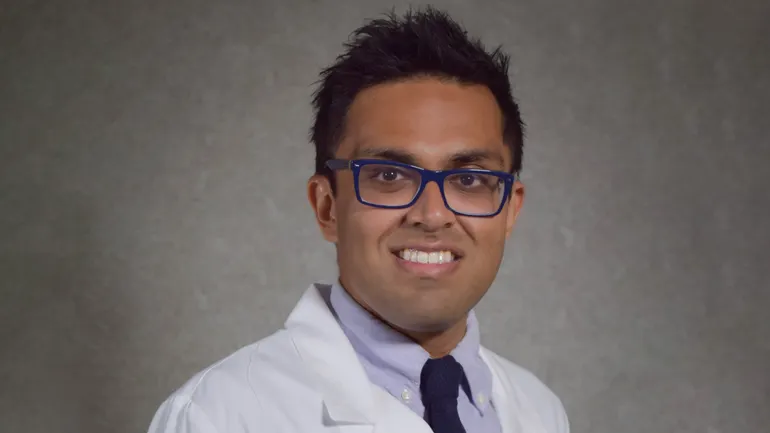
Oak Street Health has recently attracted industry attention as a potential acquisition target, especially as primary care and risk-bearing models remain hot. However, according to Chief Medical Officer Ali Khan, Oak Street is not focused on competition or industry jockeying, nor does it have any intention of being acquired. This value-based primary care provider for Medicare adults is focused on integrating lessons learned during the COVID-19 pandemic, including how to continue delivering high-intensity primary care across a diverse patient population.
On the sidelines of the HLTH conference in Las Vegas, Healthcare Dive interviewed Khan, who shared Oak Street's views on the future of its business, including the Medicare direct contracting program, its ongoing partnership with Walmart, and the company's positioning in an increasingly competitive market.
Oak Street has no intention of being acquired
Primary care operators have been swept up in a wave of M&A driven by retail giants such as CVS and Amazon. Since Amazon acquired One Medical for $3.9 billion in the summer, analyst reports have repeatedly named Oak Street as a potential acquisition target. Recently, CVS was reported to be seeking to acquire Oak Street competitor Cano Health. Earlier this month, VillageMD, a primary care company controlled by pharmacy giant Walgreens, agreed to acquire medical group Summit Health for nearly $9 billion.
But Khan made clear that Oak Street is not interested in being acquired. "We have a model that works, is replicable, and scalable. We believe we have something truly special, so we want to take it all the way," he said.
The Chicago-based company recently received financial backing. On Wednesday, Silicon Valley Bank and Hercules Capital announced a $300 million credit facility for Oak Street, providing operational and strategic capital for the coming years.
"Obviously, there is a lot of M&A activity right now, and anything can happen. But I am confident in the current path, and we will see a good response in the public markets," Khan said. Oak Street's stock rose nearly 91% on its first day of trading after its IPO in 2020, but the current share price is down 66% from its all-time high in February 2021.
Optimistic about Medicare direct contracting, but the model needs refinement
Medicare's direct contracting program (ACO Reach) allows organizations to take on full risk within traditional fee-for-service Medicare. Khan said CMS recently reformed the program with meaningful social risk adjustment in mind. For example, a bonus weight based on the area deprivation index means companies caring for vulnerable patients receive higher payments.
"This has real implications for us to demonstrate our capabilities and incentivize others to join us in communities where options are limited," Khan said. "The focus is not on picking from 50 metrics, but on focusing on two or three outcome-oriented metrics."
Direct contracting also requires organizations to be more precise in patient engagement. Oak Street's capitated revenue in the third quarter was affected by CMS reviewing its patient roster and retroactively removing a small number of patients, involving $6 million. Khan sees this as an opportunity for the company to more rigorously verify and update its roster. Next year, CMS will review the roster again and may remove patients who did not qualify for direct contracting in 2022.
"If we don't handle these processes well now, they could become burdensome and have long-term effects in the future. Learning early is better," Khan said.
Walmart partnership is a 'huge' opportunity
In 2020, Walmart and Oak Street announced the opening of three Oak Street clinics inside Walmart Supercenters in the Dallas-Fort Worth area, but little has been disclosed about the partnership's progress since then. Khan confirmed that the two have not expanded the number of clinics, but are in discussions about potential expansion and other ways to collaborate.
"We are excited about the partnership—from the experience of the first clinics, we learned how to activate programs in the Walmart environment to support things like nutritional counseling and pharmacy interactions," Khan said. The two have been negotiating on expanding the clinics for "the better part of a year."
"We think scaling this model nationally in partnership with Walmart is a huge opportunity. We are continuing to have in-depth discussions about how it fits with Walmart's overall strategy," Khan said.
Plans to deepen presence in existing markets and expand beyond 21 states
Oak Street has grown rapidly since its founding in 2012, entering its 21st state (Colorado) this year. It currently operates 161 centers and plans to add 30 to 40 new centers in 2023-2024.
"We will deepen our presence in markets we have entered and recently entered," Khan noted. Oak Street's geographic distribution varies widely, "and many places deserve and could benefit from this kind of care model reinvention."
Khan believes there is enormous room for growth. Oak Street currently cares for about 210,000 patients; to approach 1% of total Medicare beneficiaries, membership would need to triple. When choosing new markets, the company tends to favor areas with large Medicare populations and an imbalance in primary care supply, which often appear in structurally marginalized communities. Oak Street builds trust and attracts patients through community partnerships, digital and traditional methods (such as Facebook, call centers, and hosting events in the 1,500-square-foot community spaces at its centers).
"The key is gaining legitimacy—not just putting up a sign, but showing you are here and here for the long term," Khan said. New centers drag on profitability—each center requires an investment of over $2 million—but the company expects returns. As centers mature, platform contribution revenue and margins will improve, CEO Mike Pykosz has said.
Primary care space is vast, competition is not a concern
Oak Street has little geographic overlap with competitors like VillageMD, and when in the same market, it seeks collaboration rather than worrying about competition. Khan believes that from a care management perspective, Oak Street and value-based competitors share the same goals.
"Fundamentally, we are not worried. This is not a flippant remark; there is simply too much to do," Khan said. "If there are experts in high-quality, high-value care in an area, why wouldn't we collaborate, jointly identify patients, and refer them to the right doctors?"
For example, Oak Street is in discussions with Miami-based primary care company ChenMed to jointly provide hospital services in Chicago, as most of the clinical volume flows to the University of Chicago Medical Center.
"We are happy to provide that leadership and say, 'Hey, we are all in adolescence, and high school is a good time to make friends,'" Khan said.