
Can Blue Shield of California's Promise of a Simpler, Cheaper Drug Benefit Model Be Delivered?
Blue Shield of California announced in August that it will abandon the model of having CVS Caremark exclusively manage its pharmacy benefits, instead contracting separately with five different suppliers, expecting to save $500 million annually. This move is seen as a challenge to the traditional PBM industry, but experts are skeptical of its actual effectiveness, believing that difficulties such as coordinating multiple suppliers and maintaining customer satisfaction may cause the savings goal to fall short.
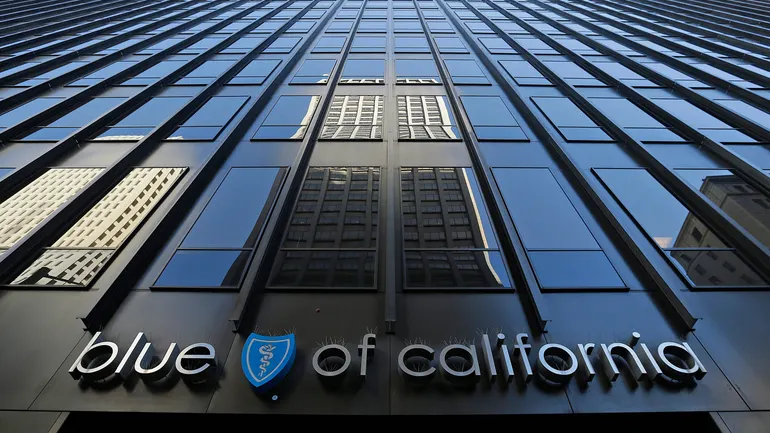
Blue Shield of California is trying to replace its pharmacy benefit manager middlemen.
One of the largest health insurers in the most populous U.S. state announced in August that it would end CVS Caremark's role as the sole manager of its pharmacy benefits. Instead, Blue Shield of California will contract with five different companies to share the pharmacy benefit management functions.
The industry sees this bold plan as directly targeting the core of the controversy surrounding the role of pharmacy benefit managers (PBMs) in the U.S. Blue Shield of California expects this move to save $500 million annually and calls it a "milestone" in a "broken prescription drug system."
However, it remains unclear whether Blue Shield of California can make this arrangement work. Major questions hang in the balance: Can the insurer coordinate pharmacy benefits among different vendors and actually generate significant savings? Will it lose employer clients as a result? How will other payers and PBMs react?
Investors seem to think Blue Shield of California has a chance to succeed. The company's August 17 announcement caused CVS's stock to fall and dragged down other large insurers with PBMs. But industry experts say the market reaction—driven by concerns about more disruption to the PBM industry, which already faces intense scrutiny from Congress and regulators—may be overblown. A contract experiment by a regional health plan, even one as large as Blue Shield of California, is unlikely to upend this entrenched industry.
Nevertheless, Blue Shield of California's willingness to make a high-stakes bet shows the growing willingness of payers to take aggressive measures to control drug costs.
"It's an interesting idea," said Mike Fox, a managing director at insurance services firm Willis Towers Watson for nearly three decades. "But I think there's considerable skepticism about how this will actually work and whether they can generate savings."
Blue Shield of California's bet
The largest PBMs like Caremark are one-stop shops for managing prescription drug benefits. These companies create formularies of covered drugs, use their purchasing power to negotiate rebates and discounts with drugmakers, and contract with pharmacies to reimburse for medications.
PBMs say they help lower drug prices and slow the growth of drug spending. But as middlemen between payers and drugmakers, PBMs have become a focus of public anger over high drug prices.
Critics argue that PBMs favor higher-priced drugs to obtain larger rebates, thereby earning higher profits. They are also criticized for hidden fees, self-dealing, and complex "black box" contracts that leave health insurers and employers in the dark.
Blue Shield of California is trying to regain some control. In the new arrangement, the payer directly oversees pharmacy benefits, contracting with different vendors to provide various pharmacy services. Amazon will deliver non-specialty brand-name and generic drugs to members' homes. Mark Cuban Cost Plus Drug Company will help members get affordable generic prices at retail pharmacies, while mid-sized PBM Prime Therapeutics will handle rebate negotiations for all drugs in the pharmacy benefit.
However, experts question whether these measures can achieve the $500 million in savings Blue Shield of California predicts, a figure that represents about 15% of its annual drug costs.
"It's hard to figure out where that $500 million comes from," Fox said.
Blue Shield of California may obtain higher rebates from drugmakers and pass them all to the plan, rather than having Caremark retain a portion. According to Jon Reid, president of benefits consulting firm ELK Strategies, the payer may also save by pushing more drug fulfillment to cheaper pharmacies through Amazon and Cost Plus. Reid said Blue Shield of California also took back mail-order fulfillment from CVS, which is a "very large profit center" for any PBM.
"Do I think there will be savings? Yes. Do I think it will be $500 million? That remains to be seen," he added.
Specialty drug savings?
Alison Lum, vice president of pharmacy services at Blue Shield of California, told Healthcare Dive that the insurer expects to generate savings in multiple ways. While she declined to share detailed financial projections, she pointed to specialty drugs as one area for cost reduction.
Specialty drugs are expensive prescription medications for complex chronic diseases, dispensed only through specialty pharmacies. According to industry estimates, less than 2% of the U.S. population takes specialty drugs, but these prescriptions account for more than 50% of total U.S. pharmacy spending.
Blue Shield of California did retain CVS's specialty drug dispensing business, a decision that is surprising given the goals of the arrangement. This is because specialty drugs are a major driver of PBM revenue and profit. CVS does not publicly report prescription revenue for specialty drugs, but estimates from the pharmaceutical industry research site Drug Channels put the company's 2022 specialty dispensing revenue at $61 billion. That's a 16% increase from the estimated $53 billion in 2021, outpacing the 11% growth rate of CVS's overall pharmacy services revenue over the same period.
Profit margins for specialty drugs may be comparable to or lower than non-specialty drugs, but because of their much higher list prices, specialty drugs can generate hundreds or even thousands of dollars in profit per prescription. PBMs are accused of steering this business to their own pharmacies, which critics say poses a conflict of interest.
But according to Lum, Blue Shield of California's specialty drug arrangement with CVS has changed. "Because of the RFP we ran last year, our contract with them will be different from the current contract," Lum said. "The specialty drugs they dispense today—by the time the new contract takes effect on January 1, 2025, we will pay for them differently." Lum declined to reveal the specifics of the new specialty dispensing contract. A Caremark representative also declined to comment.
Generic drug shift
Experts say the key to savings may lie in how Blue Shield of California and Caremark define specialty drugs. There are no clear criteria for which drugs are placed on specialty formularies. According to a report by data analytics firm 46Brooklyn Research, the three largest PBMs in the U.S.—Caremark, Cigna's Express Scripts, and UnitedHealth's OptumRx—often do not classify the same drugs as specialty. Sometimes, even low-cost generics can appear on specialty formularies.
Blue Shield of California may have negotiated that CVS cannot dispense any specialty drugs that consumers can get through other channels like Cost Plus, said ELK's Reid. "Most likely, they will split their formulary," Reid said.
This could generate significant savings. According to 46Brooklyn, 42% of drugs on CVS's high-priced specialty formulary are generics. Among specialty generics on CVS's formulary, as of 2021, 71% could be dispensed at Cost Plus. For example, a monthly supply of the generic version of the multiple sclerosis drug Tecfidera costs $39.50 at Cost Plus, compared to an average of $6,617 at other pharmacies, according to Cost Plus estimates. Although Tecfidera has a generic, large PBMs including Caremark still directed most members to the more expensive brand-name drug in 2021, according to another 46Brooklyn study.
Lum noted that Blue Shield of California has turned to other vendors for generics in the past. The insurer is one of the few payers and hospitals that invested in Civica, a nonprofit organization aimed at producing its own low-cost generics. In August of last year, Civica launched abiraterone acetate, a generic of the specialty prostate cancer drug Zytiga, at a price of $171—about $3,000 less per month than the drug's cost at the time, according to Blue Shield of California. CVS's reluctance to cover the generic was part of what prompted Blue Shield of California to split its pharmacy benefit, Blue Shield of California CEO Paul Markovich told Axios. Zytiga and abiraterone acetate are now both on CVS's 2023 specialty formulary.
"Our formulary strategy and benefits are services that Blue Shield currently executes and will continue to execute internally," Lum said. "As we get closer to the launch of the new model... we will be able to provide specific details on formularies and dispensing options."
Experts say Blue Shield of California may have other reasons to retain CVS's specialty services, including negotiating power, disease management programs, and continuity of member care.
Regardless of Blue Shield of California's specialty savings, CVS said in a regulatory filing after the August announcement that it does not expect the contract change to affect its 2023 guidance or long-term outlook. Analysts expect the split to have a slight impact on CVS's earnings in 2024 and 2025. JP Morgan analyst Lisa Gill estimated in an August report that the Blue Shield of California contract is worth about $4 billion in total revenue to CVS, involving about 60 million prescriptions—roughly 3% of Caremark's total prescription volume. While generic prescriptions outnumber specialty ones, the latter are estimated to account for a third of the contract's earnings potential because specialty drugs have higher margins, Gill wrote.
Coincidentally, Blue Shield of California's split may benefit Caremark by shifting low-margin generic drug volume to other vendors, according to Nathan Ray, healthcare partner at consulting firm West Monroe. Caremark will be responsible for dispensing drugs for a small portion of Blue Shield of California's members, but those members will be more profitable. "A lot of the volume that could be shifted is volume that CVS probably wasn't making much money on in the first place," Ray said.
Coordinating vendors
In changing its pharmacy benefit structure, Blue Shield of California has taken on a significant organizational effort that could jeopardize its ability to achieve projected savings. According to benefits experts, providing member services will be a particularly daunting challenge. As Blue Shield of California members adapt to the new arrangement, the payer's customer service representatives will have to be knowledgeable about the benefits and systems of five companies, not just one.
"Can they manage it well and maintain customer satisfaction? Because if not, that $500 million in savings might be meaningless because they'd have to go get new clients," said ELK's Reid.
Blue Shield of California plans to take an active management role but is still building the back-end processes and technology to connect its vendors to the payer and to each other, Lum said. Due to the nature of the RFP process, Blue Shield of California did not discuss the specifics of the proposal with employer clients before contracts were signed, Lum said. She said Blue Shield of California's employers have reacted positively to the changes but want more details. "My team is building all of this and working to implement it. We want to tell everyone all the details, but we're not yet at the point where we can share details down to each employer group," Lum said.
Blue Shield of California will roll out the model to its own employees in 2024, then expand it to customers as its core pharmacy benefit product starting in January 2025. Before then, the payer may see some client attrition, experts say, because employers are cautious about major changes to benefits. Blue Shield of California's large self-insured employer clients in particular may leave for competitors if they don't embrace the new pharmacy benefit, Fox said. "If I'm a company with 20,000 employees in the U.S. and 5,000 in California, now I have to educate those 5,000 employees about a new prescription drug plan that might save 1% of costs, and I have other things to do," Fox said.
Blue Shield of California's largest client is the California Public Employees' Retirement System (CalPERS), which manages retirement benefits for state employees and represents about 133,400 of the 4.8 million covered lives at Blue Shield of California. CalPERS declined to say whether it plans to continue with Blue Shield of California in 2025 and adopt the new pharmacy arrangement. "CalPERS supports innovative approaches to transforming pharmacy care to improve transparency, affordability, and value," Julia Logan, CalPERS' chief clinical director, said in a statement.
Splitting pharmacy benefit arrangements is not a new idea. Most mid-sized PBMs contract with other companies to provide services they don't have in-house, such as mail-order pharmacies or specialty dispensing. Experts say many health plans, hospitals, and universities with clinical expertise have already carved out one or more services. For example, according to a report by consulting firm Pharmaceutical Strategies Group (PSG), 16% of employers and health plans carved out specialty pharmacy benefits in 2023, while 14% outsourced utilization management. Splitting presents unique operational challenges, but the strategy is growing in popularity among plans looking to aggressively control drug costs, according to Beth Hebert-Silvia, PSG's practice leader for health plans. "I won't sit here and say this is the easiest model to bring to market. It's not," Hebert-Silvia said. "But it's exciting to see a health plan go all in."
Plans using one of the big three PBMs—Caremark, Express Scripts, or OptumRx—are more likely to consider multiple contracts to manage different benefits, according to PSG research. Satisfaction with traditional PBMs has fallen to its lowest point in nearly a decade, according to another PSG survey of employers, health plans, and providers, as payers face the largest annual increase in medical costs since 2012. "Employers always tend to prefer simplicity—streamlined, using existing carriers," said Michael Thompson, president and CEO of the National Alliance of Healthcare Purchaser Coalitions. "That said, this is an area of great need. I think they should be open to embracing these new models."
Chain of contracts
A final complication of Blue Shield of California's new model is how the payer's relationship with Prime Therapeutics might benefit health insurer—and Blue Shield of California competitor—Cigna. That's because Cigna's PBM Express Scripts has a multi-year partnership with Prime. Experts say the possibility that Express Scripts could benefit from Blue Shield of California's split highlights the difficulty of displacing the largest players in an industry where savings often depend on scale. "Aggregation is a numbers game. The more lives you have, the more you can leverage in contracts and the more value you can bring to clients," said ELK's Reid. "I do think this is a good thing for Express Scripts."
Prime partnered with Express Scripts in 2019. Under the agreement, Express Scripts handles rebate negotiations with drugmakers and retail pharmacy network contracts for the majority of Prime's business. Specifically, Prime obtains formulary rebates through Ascent Health Services, a Swiss group purchasing organization created by Express Scripts in 2019. Prime joined Ascent's ownership later that year, but Express Scripts remains the controlling owner of Ascent. The group purchasing organization says it leverages scale to negotiate deeper drug discounts. Nevertheless, the companies have been criticized for allowing PBMs to coordinate pricing and rebate programs with competitors. Ascent controls negotiations for 100 million covered lives in the U.S., according to the company.
"There are clearly some opportunities to ensure everyone gets some advantage from the additional volume flowing through their contracts," said West Monroe's Ray. The Blue Shield of California contract could also benefit Cigna's health services division, Evernorth, by expanding the member pool for other value-based clinical programs that Prime has contracted with Express Scripts, experts say. Lum confirmed that Prime obtains rebates through Ascent but said Prime is "aligned and in sync" with Blue Shield of California's values and how the payer wants to pay for pharmacy care. Prime and Blue Shield of California are both affiliated with Blue Cross and Blue Shield, a federation of nonprofit health plans. Blue Shield of California is an independent member of the Blue Shield Association, while Prime is co-owned by 19 Blue Cross and Blue Shield plans. Blue Shield of California and Prime said they plan to move to a value-based pricing model focused on outcomes, but Blue Shield of California declined to provide a specific timeline for the shift. Cigna and Blue Shield of California both referred questions about Prime's rebate contract arrangements to Prime. Prime referred questions to Blue Shield of California.
"We can't continue"
The ripple effects of Blue Shield of California's new agreement highlight the complex web of relationships in U.S. healthcare and how a payer's attempt to reduce its reliance on one major PBM could ultimately benefit another, experts say. Reliable cost and outcomes data may take years to emerge, so whether Blue Shield of California can deliver on its promise of a simpler, cheaper pharmacy benefit model will not be clear for some time. If the insurer's experiment succeeds, other payers may choose to follow suit, experts say. In the meantime, payers and plan sponsors will be watching closely, weighing drastic measures to reduce spending at a time when one in four adults taking medication reports difficulty affording their drugs.
"To the skeptics, I would say, yes. This is a complex industry," Lum said. "But 'we can't continue as we have before.'"
Correction: This story has been updated to include the number of CalPERS members covered by Blue Shield of California.

