
Climate Resilience Construction Faces Dual Challenges of Cost and Uncertainty: How U.S. Hospitals Prepare for the Future
Climate change is increasing the frequency and intensity of extreme weather events, posing severe tests to the operations of U.S. hospitals. From 2000 to 2017, natural disasters forced hospitals to evacuate patients 114 times. Although climate resilience planning is crucial for ensuring medical services during disasters, the industry's financial difficulties, workforce shortages, uncertainty in climate projections, and the expanding geographic footprint of healthcare systems present significant obstacles to this critical preparatory work.
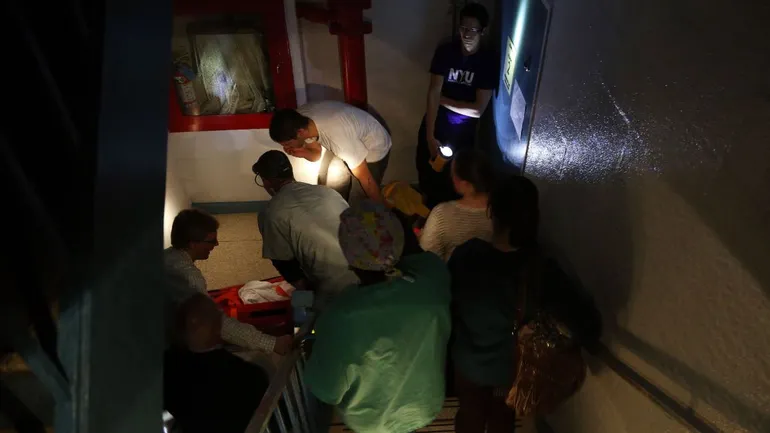
Climate change is placing an increasingly severe test on healthcare systems. As extreme weather events such as heatwaves, heavy rainfall, floods, and hurricanes become more frequent and intense due to climate change, hospitals may facea surge in patients.
However, extreme weather also threatens the operations of hospitals themselves, potentially leaving communities without access to medical services during emergencies. One study shows that between 2000 and 2017 alone, U.S. hospitals wereforced to evacuate patients 114 times。
due to natural disasters such as hurricanes, wildfires, floods, and storms. U.S. hospitals have already had many difficult experiences during extreme weather events. TheHurricane Sandythat struck the East Coast more than a decade ago strained hospital resources; an analysis published in 2018 found that among the reported deaths in Puerto Rico after Hurricane Maria,one-thirdcould be attributed to delays or interruptions in medical services.
Experts point out that climate resilience planning—that is, the preparation of facilities to adapt to and respond to climate-related disruptions—is crucial for maintaining hospital operations during disasters. However, industry-wide financial and workforce challenges, uncertainty about future climate events, and the expanding geographic footprint of healthcare systems make this critical preparation difficult.
"I think people traditionally assume that hospitals will be open, that hospitals will be there for them in a disaster," said Paul Biddinger, chief preparedness and continuity officer at Mass General Brigham and director of the Emergency Preparedness Research, Evaluation and Practice Program at Harvard T.H. Chan School of Public Health. "But we have seen many times that this is not the case."
Natural disasters are the most common cause of hospital evacuations
Expanding healthcare systems face planning challenges
Biddinger noted that one of the biggest challenges facing healthcare systems is obtaining data on the impacts of climate change, especially at the local level. Currently, the federal government recommends that healthcare facilities' climate resilience plans includefive elements, the first of which is using forward-looking climate data for risk assessments to address current and future vulnerabilities.
Hospitals typically preparehazard vulnerability analysesbased on historical data, examining potential threats such as mass casualty events, power outages, or severe weather that could affect the facility or community. But in the context of climate change, past events may not be indicative of the future.
"We know there will be stronger storms, more precipitation, more heatwaves, and so on. But knowing these broad trends alone is not practically helpful unless you can determine whether your hospital faces a significantly elevated flood risk that might require evacuation," Biddinger said. "You cannot know exactly which roads in your community might be flooded, preventing people from reaching the hospital."

Biddinger believes that federal or state governments could play a role in providing more precise forecasts and maps of affected areas. Data-sharing partnerships with academic institutions, cities, towns, and other critical infrastructure sectors could also help hospitals.
For example, the city of Chicago, along with volunteers from17 other communitiesacross the country, jointly mapped urban heat islands this summer, an initiative led by the U.S. National Oceanic and Atmospheric Administration. Ian Hughes, sustainability manager at Rush University Medical Center in Chicago, said such granular data can help local hospitals conduct targeted community outreach on extreme heat days, as certain areas of the city are worse off due to less tree cover or more concrete and steel infrastructure near residences.
But healthcare systems still need to recognize that some climate events are difficult to predict, said Seema Wadhwa, executive director of environmental stewardship at Kaiser Permanente in Oakland, California. "Until earlier this year, I often said that climate change manifests differently in different parts of the United States," Wadhwa said. "I pointed out that on the East Coast, I did not reallyworry about wildfires. But that world is changing."
Another challenge in resilience planning is the sheer scale of many healthcare systems. Emmie Mediate, director of the U.S. climate and health program at the nonprofit Health Care Without Harm, noted that healthcare operators may span multiple regions, facing different climate impacts and social vulnerabilities among patient populations.
"These resilience plans are often developed at the system level, but they must be flexible enough to cover all facilities across different geographies and communities, ensuring we address region-specific climate resilience and different needs. This is difficult to achieve," Mediate said.
High costs amid financial difficulties
At a time when climate resilience planning is becoming a priority for healthcare system operations, hospitals are still recovering from the COVID-19 pandemic, which strained their finances and workforce. In 2022, labor shortages and rising costs hit hospital operating margins hard—although some health systems have seen improved margins this year, higher costs and staffing shortages will continue tochallenge nonprofit healthcare organizations。
in 2024, according to Fitch Ratings. "Another challenge from the pandemic is that all healthcare systems are facing financial difficulties during the recovery period. This means less available funding," said Shelly Schlenker, chief advocacy officer at CommonSpirit Health in Chicago. "So we have to work creatively."

Updating hospital buildings to withstand more severe weather is a financial burden for hospitals. Biddinger of Mass General Brigham said many current building codesdo not adequately incorporate climate change factors, and hospital infrastructure is often used for many years. Biddinger's health system identified more than $300 million in climate vulnerability capital improvement needs in 2015.
Healthcare systems may not be able to afford these upgrades in the short term, so they should focus on ensuring new buildings are climate-resilient and prioritizing improvements to buildings that provide critical services such as emergency or intensive care, he said. Healthcare facilities should also look beyond their own walls to explore collaboration opportunities, such as working with local governments to harden other critical infrastructure like nearby power.
"This is costly and cannot be done overnight," Biddinger said. "But we should know that people are aware of the risks and are taking action, and we should not allow this to go unaddressed as a major challenge to healthcare services."
CommonSpirit is one of the healthcare systems trying to integrate climate resilience planning into mandatory emergency response preparedness plans, Schlenker said. Although the pandemic has put pressure on hospitals, it has also reminded people that hospital preparedness can play an important role when disasters strike, she said.
"Unfortunately, the pandemic forced us to practice emergency response in ways we never imagined," Schlenker said. "But it showed us that the planning and drills we conduct regularly do make a difference."