
GLP-1 Weight-Loss Drug Coverage Dilemma: Employers Caught Between Cost and Employee Health
The application of GLP-1 receptor agonists in weight loss has sparked intense debate in the healthcare industry. Despite their significant efficacy, high costs and unclear long-term effects limit insurance coverage. Employers face a dilemma: they want to provide effective treatment for employees but worry about budget overruns. Data shows that over 40% of U.S. adults are obese, with projections reaching 50% by 2030, while currently only 25% of employers cover GLP-1 drugs, potentially rising to 43% in 2024.
The healthcare industry is engaged in a heated debate over whether GLP-1 drugs should be covered by insurance for weight loss indications. Uncertainty about long-term efficacy, coupled with high prices, limits insurance coverage for these drugs, leaving many patients who need treatment unable to access or afford them.
Experts point out that high drug prices are not new in healthcare, but usually the most expensive drugs target rare diseases. GLP-1 drugs are different because their potential beneficiary population is extremely large, making them unique.
According to the latest data from the U.S. Centers for Disease Control and Prevention (CDC), more than 40% of American adults have obesity, and that number is expected to reach 50% by 2030. Doctors and researchers believe GLP-1 drugs have enormous potential in improving obesity and related downstream health problems.
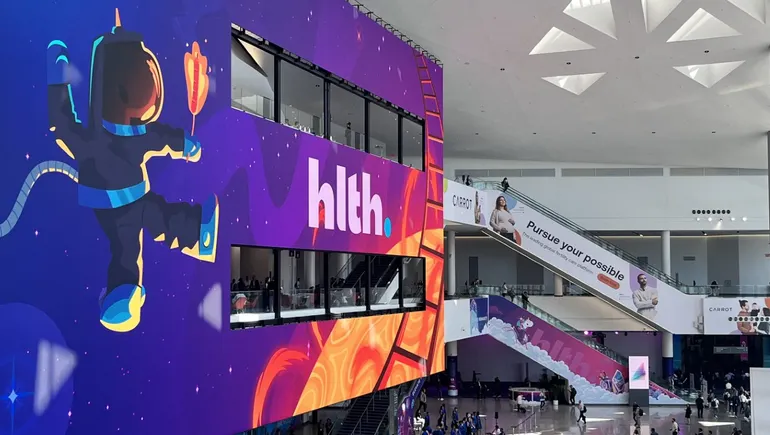
However, this potential, combined with the cost of the drugs, puts employers in a dilemma. At the HLTH conference in Las Vegas this week, experts said employers want to provide beneficial therapies to employees but are reluctant to cause financial crises as a result.
"Why is this causing so much tension in the market? Of course it's because of the prevalence, of course it's because these drugs are extremely effective, of course it's because prevalence times cost is blowing through budgets," said Wei-Li Shao, president of chronic disease management company Omada Health, during a panel discussion on GLP-1 on Tuesday.
Low coverage, high cost
GLP-1, short for glucagon-like peptide-1 receptor agonists, has been approved to treat diabetes since 2005. But earlier drugs were not as potent as newer ones like Novo Nordisk's Ozempic (for diabetes) and Wegovy (for weight loss). Last year, demand surged as the weight-loss effects of these drugs became widely known among doctors and the public.
Demand has led to shortages of semaglutide-based GLP-1 drugs, although only Novo Nordisk's Wegovy is currently approved by the U.S. Food and Drug Administration (FDA) for weight loss. Patients taking GLP-1 drugs lose an average of 15% of their body weight. Additionally, studies show GLP-1 may reduce the risk of obesity-related diseases such as cardiovascular disease, heart attacks, type 2 diabetes, and stroke.
"There are many ancillary benefits to this drug, and we are trying to move forward and start treatment before obesity turns into diabetes and other diseases," said Cheryl Pegus, managing director of Morgan Health, JPMorgan's health venture arm, in an interview.
However, according to a recent survey by care navigation company Accolade, only 25% of employers currently cover GLP-1 drugs. Experts say this is mainly because the drugs are too expensive for most employers to afford.
In the U.S., Wegovy's monthly supply is listed at $1,349, according to KFF. Other off-label drugs for weight loss include Novo Nordisk's Ozempic and Rybelsus, both listed at $936. Meanwhile, Eli Lilly's Mounjaro (with a different active ingredient but a similar mechanism of action) costs $1,023. Mounjaro is currently under FDA review for a weight-loss indication, with a decision expected this year.
During Tuesday's GLP-1 panel discussion, Andreas Mang, senior managing director at Blackstone, said spending on these drugs by companies in its portfolio has grown 600% over the past four years.
"When something grows that fast, companies will face enormous pressure, and economic realities force them to make decisions," said Mang, who helps portfolio companies manage benefit costs.
Moreover, these drugs only work while being taken, which also makes the price hard to accept, experts say—especially when employers are facing the largest healthcare cost increases in a decade. Some studies show that most people who start GLP-1 stop within a year. Once they stop, patients may regain some or all of the weight.
"This is the worst return on investment for employers. Because if all the weight comes back, it's a huge waste," said Omada's Shao. Blackstone's Mang noted that especially in industries like hospitality, where annual turnover can be 150% to 200%, covering GLP-1 does not make sense if clinical or financial benefits cannot be seen.
Weight management
The explosion of appetite-suppressing drugs has spawned new business lines for chronic disease management companies and telehealth providers looking to capitalize on the GLP-1 craze. For example, Omada launched a specialized program this spring for members taking GLP-1, designed to pair medication with support for behavioral and lifestyle changes. The company also offers diabetes and musculoskeletal disease management programs, but it does not prescribe these drugs itself because the market is saturated, Omada CEO Sean Duffy told Healthcare Dive.
"We're all in. This is not a silver bullet—these are not curative drugs—but it's a good tool in the toolbox," Duffy said.
Supporters of weight management programs say combining medication with supporting services to promote behavioral and lifestyle changes is crucial. Companies like Omada point out that the FDA label for GLP-1 for weight management includes explicit instructions that the drug should be used in conjunction with diet and exercise.
In addition to recommending lifestyle management, Blackstone tells its portfolio companies to set usage guardrails, such as prior authorization requirements that tie GLP-1 access to metrics like A1C levels or body mass index, Mang said. A weight management program Blackstone ran with Twin Health found that 72% of members stopped taking GLP-1 after three months. Still, those members continued to lose weight and had better insulin resistance markers than when they were on GLP-1.
"Proper diet, exercise, and nutritional counseling actually address the root cause better than medication. I think there is an answer that is not $17,000 a year, and I dare say it's better than just taking the drug," Mang said.
"Never seen anything like it"
GLP-1 drugs are "much safer than other weight-loss drugs," Duffy said, but these drugs also have other concerning side effects that make employers and patients question their value. Common side effects include nausea, vomiting, and diarrhea. There have been cases of patients reporting suicidal thoughts, prompting investigations in the UK and EU. One study showed these drugs may also increase the risk of serious stomach problems in patients.
Melynda Barnes, chief medical officer of telehealth provider Ro, said during Tuesday's discussion that concerns about GLP-1 side effects and costs do not come from a patient-centered perspective but combine paternalism in medicine with stigma against obesity.
"We don't deny chemotherapy because patients feel nauseous," Barnes said. "I'm not advocating that everyone get a prescription so all obese people can access GLP-1. I'm saying this should be a conversation between doctor and patient, not necessarily a boardroom discussion about whether to cover this drug." Ro began dispensing GLP-1 via telehealth earlier this year and offers personalized coaching.
The debate over GLP-1 coverage may ease as cheaper versions come to market. But experts are divided on whether more weight-loss drug approvals will mean cheaper options. Currently, drugmakers are testing 74 drugs for obesity and weight loss, according to a Stat tracker. Novo Nordisk is testing six new drugs, and Eli Lilly is testing seven. The two drugmakers dominate the GLP-1 market.
"I think GLP-1 prices will face downward pressure in the medium term," Vin Gupta, chief medical officer of Amazon Pharmacy, told Healthcare Dive. But "that's many years away, and it may not even happen," Duffy said. "There will be new entrants, but I don't think they will price more effectively... Supply constraints are so severe right now that price points are not dampening growth in these manufacturers' business lines. They are essentially selling everything they can produce at current prices."
Novo Nordisk alone saw Ozempic sales of 41.7 billion Danish kroner in the first half of 2023, up from 26.4 billion in the same period last year. Wegovy brought in 12.1 billion Danish kroner, up from 2.6 billion last year. The U.S. is not the only country grappling with the economic impact of GLP-1. According to The New York Times, Danish economists are considering adjusting how GDP is measured because Novo Nordisk's success is skewing the country's economic data.
GLP-1 may boost Denmark's economy, but experts say drug prices are concerning in the U.S. However, more employers say they are willing to cover these drugs despite the high cost. According to the Accolade survey, the share of employers covering GLP-1 in 2024 could nearly double to 43%. Despite the expected increase, surveyed HR personnel still expressed concerns about drug costs. With little known about when cheaper alternatives will emerge, employers face a difficult decision—cover or not—which pits employee health against company profits.
"I've never seen anything like this in my career," Mang said. "The cost side cannot be ignored... If this continues, companies will go out of business. They can barely do anything other than pay for GLP-1."