
Trump administration pushes for pharmaceutical manufacturing reshoring, tech community responds to challenges
This spring, the Trump administration reiterated its call to bring pharmaceutical manufacturing back to the United States, sparking discussions on how to achieve this goal. Despite high costs and regulatory hurdles, technology experts believe that innovative manufacturing methods, such as continuous manufacturing and digital twins, could help domestic manufacturers compete with overseas suppliers.
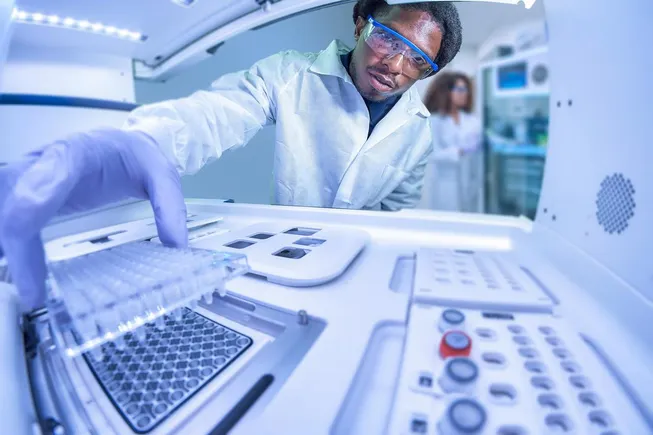
This spring, the Trump administration again called for the relocation of drug manufacturing and production back to the United States, reigniting discussions on how to turn this goal from an ideal into reality.
In an executive order, President Donald Trump pushed to increase domestic production of prescription drugs, including active pharmaceutical ingredients and raw materials, directing federal agencies to speed up approval processes for new domestic manufacturing facilities while strengthening inspections of foreign drug manufacturers.
Trump said the order aims to secure critical medical supply chains, but the government's focus on reshoring pharmaceutical supply chains is not new, nor is it strictly a partisan issue. Since the early 2010s, the federal government has invested billions of dollars to fund innovations in pharmacy and drug manufacturing. Events like the COVID-19 pandemic and other natural disasters have injected new urgency into this discussion, as the U.S. has experienced firsthand the impact of drug shortages on patient care.
"The pandemic restricted cargo flight transportation... there were huge challenges in moving products from point A to point B—which is critical when we're talking about disrupting medications for patients with chronic conditions, because continuous medication is vital for them," said Maria Nieradka, research vice president for Gartner's healthcare and life sciences team. "This proved the importance of accessibility and availability."
However, experts point out that despite more than a decade of political pressure, truly reshoring supply chains remains difficult for the pharmaceutical industry.
Jordan Brossi, senior public affairs advisor at the law firm Holland & Knight, said high costs and burdensome regulatory hurdles have been obstacles to reshoring.
She noted that land acquisition costs for new facilities, long waits for permits, and the logistical complexity of transporting active pharmaceutical ingredients (APIs) to final containers are all challenges. Additionally, companies must consider higher labor costs than overseas. Brossi said that, taken together, the total cost of domestic production is often nearly 50% higher than working with foreign manufacturers.
"For many companies, the cost-benefit doesn't add up," Brossi said.
However, she said pressure on companies is increasing, especially given Trump's ongoing threats to impose tariffs on drugs produced overseas. Several major companies have announced commitments to bring some production back to the U.S., including Thermo Fisher Scientific and Eli Lilly.
Amid these challenges, technology experts say their innovations could be key to helping other manufacturers follow suit.
They acknowledge that traditional manufacturing, which relies on batch production of APIs, may not be cost-effective for most companies. But they say public-private partnerships and private investment in advanced manufacturing have increasingly made innovation possible, enabling domestic manufacturers to compete with overseas suppliers.
"You can't simply replicate what China and India do by building batch manufacturing facilities. That company went there for specific reasons, right? Because there's low capital cost and low labor cost," said Salvatore Mascia, CEO of advanced manufacturing company Continuus Pharmaceuticals. "You can't really replicate that model. Or if you do, you'll never be competitive, never sustainable. The way to compete is through innovation and reshoring—that's the key."
Building the future supply chain
Steven Lupo, a partner at consulting firm West Monroe, said the most viable solutions for bringing drug manufacturing back domestically must be both cost-effective when deployed at scale and supported by the U.S. Food and Drug Administration (FDA).
Since the early 2010s, the federal government has worked with researchers and private companies to help them leverage this approach to production and supply chain management, with investment in the field increasing in recent years.
Just last month, the Trump administration launched Equip-A-Pharma, a collaboration between the U.S. Department of Health and Human Services (HHS), the Administration for Strategic Preparedness and Response (ASPR), the Defense Advanced Research Projects Agency (DARPA), and the private sector, aimed at advancing pharmacy automation through artificial intelligence, machine learning, and informatics.
"Manufacturing drugs end-to-end in the United States ensures the security of essential medicine supply," said John Knox, Principal Deputy Assistant Secretary for Strategic Preparedness and Response at HHS, in a statement. "Traditional drug manufacturing is often too rigid and slow to adapt to changing demand, especially during national emergencies. We are launching programs designed to fundamentally change the approach—not only bringing drug manufacturing back to the U.S., but doing it better."
Lupo said that, broadly speaking, this advancement is called "Pharma 4.0." It involves deep integration of technology, including using artificial intelligence to predict demand more accurately (enabling companies to fully utilize manufacturing capacity and complete batches faster), as well as building more facilities domestically or investing in point-of-care manufacturing—that is, producing cell or gene therapies where patients receive treatment.
Nieradka said some drug manufacturers are using digital twins—virtual replicas of the entire supply chain—to anticipate demand changes in advance. Companies feed real-time data into AI models to simulate how events like a particularly severe flu season might affect production demand.
Other manufacturers, such as Continuus Pharmaceuticals, are seeking to use technology to revolutionize the production process. The company found problems with batch processing of drugs, where medications are produced in a start-stop manner with multiple discrete steps. This approach is designed to perform quality control after batch production, but Mascia told Healthcare Dive it is riddled with inefficiencies.
His technology offers an end-to-end continuous process where active ingredients and formulations can be produced continuously.
"So you input raw materials on the left side and collect tablets at the other end, with no start-stop, fully automated control, and minimal human intervention," Mascia said.
The Department of Defense saw promise in Continuus Pharmaceuticals and awarded Mascia's team a contract of nearly $70 million at the peak of the pandemic to build the technology, saying it would help address the current public health crisis and enable more efficient care delivery in future crises. According to Mascia, the company plans to build its first domestic manufacturing plant this year.
This manufacturer is not the only player in the field. According to Nieradka, pharmaceutical giants like AstraZeneca have also invested in the technology. AstraZeneca's work in continuous manufacturing of oral solid dosage forms helped reduce production time from days to just 20 minutes.
"They not only significantly compressed product production cycles, but also reduced the footprint of manufacturing sites," Nieradka said. "Innovations like this are highly desirable, especially when you want to add new capabilities, because building a manufacturing site can take two to five years."
The FDA has been positive about continuous manufacturing, issuing preliminary guidance in 2020 to encourage manufacturers to leverage similar technologies, and then finalizing its guidance in 2023.
Point-of-care technology, a specific form of continuous manufacturing that enables drug production on-site at hospitals and clinics, is also gaining attention as therapies become more patient-specific and complex to deliver. Lupo said the technology is especially useful for cell therapies, customized drugs, or medications with short shelf lives.
Carrots and sticks still needed to accelerate change
Analysts warn that despite rapid technological advances, supply chains are unlikely to transform overnight without appropriate incentives to encourage adoption. The pace of change may take years rather than months.
"Delivering therapies to patients is very different from manufacturing toys, right?" Lupo said, noting that many companies in the pharmaceutical industry are also "laggards" in deploying new technologies.
Lupo said private investment could help accelerate the reshoring timeline. For example, his firm has tracked rising private equity interest in pharmacy automation deals this year, which he called a "bellwether" for the industry.
Brossi of Holland & Knight said favorable federal regulations could also stimulate growth.
"This industry really likes certainty, and I think providing certainty in the form of streamlined guidance and regulations would be very helpful," Brossi said. "But you can't just flip a switch like a pharmaceutical company and say, 'Okay, I'm moving everything back to the U.S.' You can't do it overnight."
At a House Energy and Commerce subcommittee hearing earlier this month, lawmakers weighed a range of policies to promote reshoring and were divided on whether incentives or penalties would drive more progress.
They considered measures such as accelerating FDA reviews of new drugs, creating tax incentives for domestic production, and encouraging more public-private partnerships to promote domestic manufacturing of generics. Others supported requiring manufacturers to disclose which APIs are sourced overseas, or strengthening scrutiny of overseas manufacturing facilities to make foreign production less desirable.
Brossi said meaningful regulatory support from the FDA could also shorten the timeline from planning to execution. However, experts question whether the FDA has the capacity to take on this task.
Although the FDA has previously expedited drug reviews to meet national needs (such as during the COVID-19 pandemic), recent layoffs under the Trump administration could hinder its reshoring efforts. For example, Brossi said employees previously responsible for issuing guidance documents for new manufacturing facility construction were affected by the layoffs.
"This administration wants to do a lot of things, and they want to do them with fewer resources than before," she said. "So we're not only asking them to continue doing big things, but we're giving them fewer resources than ever."