
UnitedHealth-Amedisys Merger Clears Major Hurdle After DOJ Settlement
UnitedHealth Group's merger with Amedisys has finally reached an agreement with federal regulators after nearly three years of regulatory review. According to the settlement disclosed on Thursday, the $3.3 billion deal is expected to close in 2026. The Department of Justice required the divestiture of at least 164 facilities, which will be taken over by BrightSpring Health Services and Pennant Group. Analysts believe that although the settlement is weaker than expected in terms of competition protection, the deal is likely to proceed smoothly.
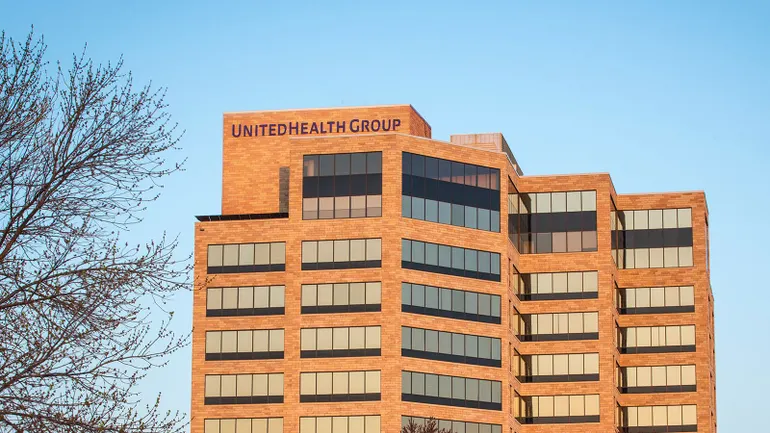
Regulatory impasse broken: $3.3 billion merger enters final stage
UnitedHealth and Amedisys have finally reached an agreement at the federal regulatory level. The two companies have sought to merge since January 2023, but the U.S. Department of Justice (DOJ) previously blocked the deal, arguing it would significantly harm competition in home health and hospice services in certain U.S. markets. According to a new settlement between UnitedHealth, Amedisys, and regulators disclosed on Thursday, the $3.3 billion deal is now on track for final approval, experts say.
"Given that UnitedHealth is likely eager to resolve this matter, the deal is more likely to move forward," said Joe Widmar, director of mergers and acquisitions at consulting firm West Monroe.
The agreement still requires a judge's approval after a public comment period. Combined with other regulatory requirements surrounding the settlement, the deal is not expected to close until 2026. But judicial review "rarely becomes a tool to overturn settlements," said Robin Crauthers, a partner at McCarter & English LLP, which focuses on antitrust matters. "I think the settlement will hold, the parties will close the deal, and then we move on."
Amedisys shares rose in Thursday trading after the DOJ's press release announced the settlement, which TD Cowen analyst Ryan Langston said in a report was a "strong signal" that investors also believe the deal is in its final stages.
The preliminary approval of the deal by the U.S. government is good news for UnitedHealth. The healthcare giant's shares have fallen sharply this year due to unexpectedly high medical costs for its insurance members, unfavorable policy changes in Washington, and widespread public criticism of its business practices.
Analysts note that Amedisys, one of the largest home health and hospice providers in the U.S., will make a relatively limited contribution to UnitedHealth's earnings. Nevertheless, the DOJ settlement related to the deal removes a key source of regulatory uncertainty that has weighed on the company for more than two years. For UnitedHealth, the timing could hardly be better.
"Seeing (the settlement) happen is not too surprising, especially given what UnitedHealth has been through this year. They probably need some good news right now," Widmar said.
Settlement may not fully eliminate competition concerns
The settlement requires UnitedHealth and Amedisys to divest at least 164 home health and hospice facilities before the DOJ will approve the deal. The vast majority of the divested assets are home health businesses. Two mid-sized home health and hospice operators—BrightSpring Health Services and Pennant Group—have agreed to acquire these facilities for undisclosed amounts.
Neither company responded to requests for comment, but TD Cowen analysts estimate BrightSpring's investment is between $200 million and $300 million, with Pennant's around $100 million. Other terms of the settlement also require UnitedHealth and Amedisys to divest certain joint venture interests, agree to oversight of their divestiture plan, and help the clinics acquired by Bright and Pennant compete in markets that overlap with UnitedHealth's businesses.
Regulators believe these measures are sufficient to offset the deal's anticompetitive effects. "This settlement protects quality and price competition for hundreds of thousands of vulnerable patients, and wage competition for thousands of nurses," Assistant Attorney General Abigail Slater of the DOJ's Antitrust Division said in a statement Thursday. According to the DOJ, this is the largest outpatient medical asset divestiture to resolve a merger challenge.
The divested facilities are concentrated in the Southeast, which experts say aligns with Optum's dense presence in the region following its 2023 acquisition of Amedisys competitor LHC Group.

But Crauthers of McCarter & English believes the settlement is weaker than expected compared to the broad competition concerns outlined in the DOJ's November lawsuit seeking to block the deal. The DOJ's complaint, joined by four states, alleged that if the merger were completed, UnitedHealth would control 30% or more of the home health or hospice market in eight states and enter five additional states for the first time. Regulators said UnitedHealth's absorption of the home health market would make the merger presumptively illegal in hundreds of local markets.
Crauthers noted that the complaint, issued by the DOJ during the Biden administration, listed nearly 800 home health and hospice markets where competition would be reduced by the Amedisys deal. She said many of those markets are not addressed in Thursday's settlement, which comes from the more business-friendly Trump administration.
"A settlement is supposed to remedy the substantial lessening of competition alleged. I'm not sure this settlement is sufficient—that's based on the complaint," said Crauthers, who worked at the DOJ for six years. "I don't want to make it sound terrible, but if you take the complaint at face value, the DOJ is doing less than it intended."
Previous divestiture proposals by UnitedHealth and Amedisys failed regulatory review. Last summer, the companies planned to sell assets to VCG Luna, a subsidiary of Texas home health and hospice company VitalCaring Group, but the DOJ deemed VCG Luna unreliable and the plan fell through. According to CTFN, another plan this spring to sell assets to BrightSpring and Pennant was also initially rejected by the DOJ. The DOJ did not respond to requests for comment on how the new settlement differs from previous proposals.
In Widmar's view, the settlement appears to preserve competition in the markets where the 164 divested facilities are located—though it will put businesses generating nearly $530 million in revenue into the hands of BrightSpring and Pennant. Both companies are already "fairly significant players," he said. "I don't think the number of facilities itself changes the landscape," Widmar said. "The bigger concern, I think, has always been that UnitedHealth, as a vertically integrated health insurer, is trying to deepen its presence in home health."
Vertical integration strategy considerations
UnitedHealth is a diversified healthcare giant that owns the largest private insurer in the U.S., a large physician network, and other businesses, with combined annual revenues exceeding $400 billion. Further strengthening care services—including acquiring players in the highly fragmented home health market—is a key part of UnitedHealth's strategy. The company says acquiring Amedisys will help it serve customers at the lowest cost and in the most convenient care settings, leading to better outcomes.
"On average, patients receiving home health care have a 36% lower hospital readmission rate than those who do not receive the service," states a website hosted by Optum, UnitedHealth's health services division. As the U.S. population ages, such care could also generate significant returns, which should increase demand for home-based care models.
Enhancing home health capabilities also helps these assets synergize with UnitedHealthcare, UnitedHealth's insurance business. By steering members toward internal and lower-cost care settings, UnitedHealth can control health benefit spending while paying its subsidiaries that provide care services—essentially paying itself. This overlap has become a major revenue source for the company. UnitedHealth's internal offsets (revenue paid to its subsidiaries for services provided to its own insured members) reached $150.9 million in 2024, up 11% year-over-year. (This strategy also allows UnitedHealth to circumvent profit caps on its insurance segment—its provider business has no such limits.)
Additionally, home health assets give UnitedHealthcare visibility into beneficiaries' homes and communities, providing clearer insight into how they live, eat, and move outside the doctor's office. This information translates into a deeper understanding of member needs, which UnitedHealthcare can use to invest in targeted preventive care to prevent adverse downstream health outcomes. It also allows UnitedHealthcare to collect more diagnosis codes. Such codes are inherently valuable in Medicare Advantage plans, where insurers' reimbursement from the government is adjusted based on the health needs of seniors in their plans. This incentivizes insurers to collect and report as many codes as possible, even if it may exaggerate the actual illness burden of their members.
According to a study published this year, UnitedHealthcare generated $14 billion in Medicare Advantage overpayments in 2021 through this practice, known as "upcoding." That far exceeds the amount of any other payer in the privatized Medicare program. Home health is one of the main drivers of upcoding. According to a study published last year in Health Affairs, health risk assessments and medical record reviews provided by insurers in members' homes increased risk scores by an average of 7%.
In February, after the HHS Office of Inspector General found that the payer received more money from the government through diagnoses made during reviews than any other MA insurer, the Senate Judiciary Committee asked UnitedHealthcare for more information about its own in-home health risk assessment program. UnitedHealth denied allegations of improper coding and said in June it supports stronger federal oversight of in-home health risk assessments. The DOJ is currently investigating UnitedHealth's Medicare billing practices.
A UnitedHealth spokesperson said in a statement that the company will continue to make improvements in home health and hospice, calling it "a critical part of our value-based care approach." "We remain committed to providing high-quality, compassionate care to the people and families who trust us," the spokesperson said in an email. "We are pleased to have reached a resolution and appreciate the DOJ's cooperation."