
340B Regulation May Face New 'Police,' Hospitals Worried
The Trump administration is pushing to transfer regulatory responsibility for the 340B drug discount program from HRSA to CMS, a move that could have far-reaching effects on the two-thirds of U.S. hospitals that rely on the program. CMS's past hardline stance on 340B, including reimbursement cuts in 2018 and restrictions on Medicaid reimbursement, worries providers. Experts note that the new regulator may focus more on cost control rather than protecting safety-net providers, but it could also improve program transparency and accountability.
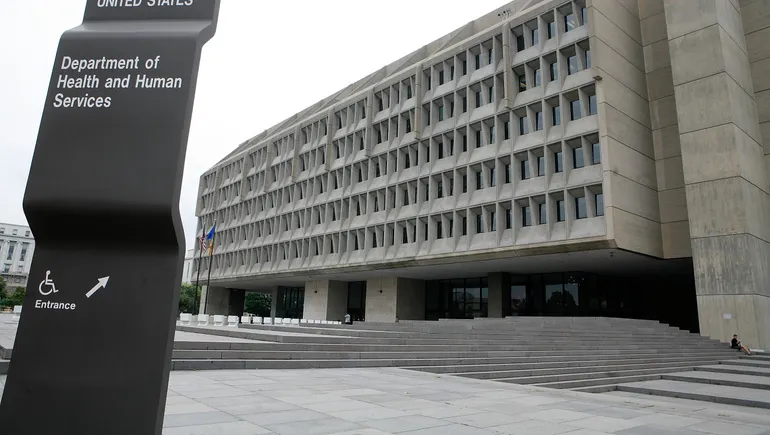
The Trump administration is pushing for major changes to the U.S. healthcare landscape, claiming it will save money, strengthen oversight, and improve efficiency in the $4.9 trillion industry. Since President Donald Trump took office in January, many of the most controversial actions by the Department of Health and Human Services (HHS) have sparked widespread debate or faced court challenges, and the healthcare industry is struggling to adapt to Washington's new mindset of "moving fast and breaking things."
However, a proposal to reassign oversight of a massive federal drug discount program from one HHS subagency to another has largely escaped public attention—even though it could have broad implications for hospitals and clinics that serve the nation's poorest populations.
HHS wants to move oversight of the 340B program from the Health Resources and Services Administration (HRSA) to the Centers for Medicare and Medicaid Services (CMS). The move could negatively impact the two-thirds of U.S. hospitals that rely on 340B to fund patient services, offset uncompensated care costs, and even keep their operations running.
This potential change is unsettling healthcare providers. Experts say that given CMS's historical friction with the program, the concerns of covered entities are not unfounded.
"This could be a real disaster for some covered entity providers," said Sarah Bowman, a principal at PYA, a public accounting firm that advises hospitals and health systems on 340B compliance.
However, increased scrutiny of how 340B funds are generated and used could be a good thing, especially amid growing evidence of fraud and abuse in the drug discount program.
"If I'm a hospital or covered entity that depends on 340B, and I'm told there's going to be a change—not just a regulatory change, but any change—I would be very concerned," said Antonio Ciaccia, a drug market expert and president of the consulting firm 3 Axis Advisors. "The reason is that 340B has become the gas in the tank for many of these entities, whether rightly or wrongly."
CMS's history with 340B
After Health and Human Services Secretary Robert F. Kennedy Jr. announced a sweeping top-to-bottom overhaul of the department in the spring, outside stakeholders have been eager to understand the changes underway at HHS. There are rumors that, as part of the restructuring, oversight of 340B could move from HRSA—where the program has been housed since its creation in 1992—to CMS, while HRSA and several other divisions are folded into a new "Administration for a Healthy America."
The HHS budget request released in early June confirmed that top regulators are moving forward with these changes. The budget document states that moving the 340B program to CMS would "streamline processes and leverage internal drug pricing resources and expertise." Under the proposal, CMS would receive $12 million to oversee 340B, the same amount as HRSA's budget this year.
Experts say placing 340B under CMS is not just a routine change of letterhead. Instead, it could disadvantage the safety-net providers that benefit from the drug discount program. The program, designed to help vulnerable and low-income patients access medications, requires drug manufacturers to provide discounted outpatient drugs to eligible hospitals and clinics.
According to government data, about 3,000 hospitals benefit from discounted drugs under the program, with purchases reaching a record $66.3 billion in 2023, up more than 50% from $43.9 billion two years earlier.
Critics of 340B say the program has strayed significantly from its original purpose. Drugmakers accuse hospitals of manipulating 340B for profit, while hospitals say drugmakers are trying to evade required discounts to protect their profits. The savings from 340B can be substantial—typically 20% to 50% off a drug's list price.
In the disputes over 340B between hospitals and the pharmaceutical industry, HRSA has typically sided with hospitals, benefiting from the agency's interpretation of 340B law. But CMS has a different track record when it comes to engaging with the program.
In 2018, CMS, which runs federal health insurance programs, cut Medicare reimbursement for 340B drugs by nearly 30%—a decision later overturned by the Supreme Court on administrative grounds, forcing CMS to repay hospitals the disputed funds.
CMS also finalized rules limiting Medicaid fee-for-service reimbursement for 340B drugs to actual acquisition cost and making it harder for providers to collect rebates on 340B drugs dispensed to patients covered by Medicaid managed care organizations, said 340B Health, a lobby group representing covered entities in the program.
CMS could approach 340B "with a payer's hat," aiming to reduce costs for federal insurance programs rather than protect resources for safety-net providers, said Maureen Testoni, president and CEO of 340B Health.
"If they view 340B as a way to control Medicare and Medicaid costs, that would be our concern—that 340B could become a vehicle for achieving that, which hasn't been an issue on the HRSA side," Testoni said.
From an organizational standpoint, moving 340B oversight to CMS makes sense, said Bowman of PYA. The agency already conducts extensive auditing and oversight activities, gains insight into drug pricing through the Medicare prescription drug benefit, and collects data that determines provider eligibility for 340B. But providers still worry that CMS could change which facilities qualify for the program, require them to report more information as a condition of participation, or try again to reduce reimbursement, she said.
Notably, President Trump signed an executive order in April directing Medicare to investigate the acquisition costs of hospital outpatient drugs, which could lead CMS to again cut Medicare payments for 340B drugs, as it did in 2018.
"That was the missing piece last time. That's why the payment policy was ordered to be reversed. So we certainly can't rule out the possibility of reimbursement cuts," Bowman said.
The rebate issue
Providers are especially concerned that CMS may be more inclined to side with drugmakers in their push to change how 340B discounts are distributed. Eli Lilly, Bristol Myers Squibb, Sanofi, and Novartis have all gone to court this year after HRSA blocked their attempts to implement post-purchase rebate programs for 340B drugs. The drugmakers say the programs ensure discounts are appropriate, but hospitals and HRSA say the move is illegal without approval from the HHS Secretary, and that 340B regulations imply discounts should be provided upfront.
However, CMS is more open to rebate systems. The agency is preparing to implement new price caps on certain Medicare drugs under the Inflation Reduction Act (IRA), passed in 2022. Regulators plan to establish an arrangement where pharmacies pay the list price for drugs and then receive a subsequent payment from the drugmaker equal to the difference between the list price and the lower Medicare price—essentially a rebate, according to CMS guidance.
Drugmakers find this process burdensome to implement. But they also worry about the possibility of duplicate discounts, where the same drug could be subject to both a 340B discount and the maximum fair price under the IRA. Experts say that if drugmakers were allowed to pay discount rebates in 340B, it could reduce the likelihood of that happening. All the drugmakers suing HRSA to change 340B payment terms, except Sanofi, have drugs in Medicare price negotiations.
In response to industry concerns in 2023 guidance, CMS emphasized it has no jurisdiction over the drug discount program. But the agency wrote: "CMS intends to work with the Health Resources and Services Administration, which administers the 340B drug pricing program, to help ensure that the maximum fair price is offered to 340B covered entities where appropriate, and to ensure there is no duplication with the 340B ceiling price."
Overall, CMS's receptiveness to rebate arrangements could mean the agency would consider changing how 340B discounts are paid, experts said.
"The 340B program operates on upfront discounts, and it always has. We're very concerned. We think it would be very harmful if 340B became a rebate program," Testoni said. "But CMS does that in the Medicaid rebate program, and it essentially does that in the IRA. So we're concerned they might view 340B from that angle."
'The sacred cow to end all sacred cows'
Any new restrictions on 340B would have a massive impact on participating providers, forcing them to stop certain services, reduce uncompensated care, or even close, experts said. The impact would be especially severe on rural facilities, which are often the only source of medical care in their areas.
"They could end up unable to sustain operations and might have to close, which is frightening, especially given the accessibility of healthcare in certain markets," Bowman said.
But not all covered entities put 340B savings directly into care. In April, the Republican chairman of the Senate Health, Education, Labor, and Pensions Committee released an investigation finding significant variation in how safety-net providers use 340B funds. Two large nonprofit systems included in the analysis—Cleveland Clinic and Bon Secours Mercy Health—generated hundreds of millions of dollars in 340B revenue over five years but did not pass those savings on to patients, the report said.
The investigation by Republican Senator Bill Cassidy of Louisiana builds on conflicting evidence about how providers use 340B funds. Studies show some hospitals use the savings to expand services for low-income populations, while others use them for other purposes, such as acquiring clinics or opening new care sites.
Mixed research findings and reports of providers profiting improperly from the program have intensified calls for 340B transparency. Currently, the program has almost no mandatory reporting requirements. Reform advocates are also demanding more guardrails on how providers use the savings and stronger government oversight. The Government Accountability Office (GAO) said in 2020 that HRSA audits were generally insufficient to ensure program compliance.
340B is a valuable revenue source for operators dealing with inadequate payments from other insurers, especially Medicare and Medicaid, said Ciaccia of 3 Axis Advisors. But he added: "It's fair to say that the lack of oversight and accountability over how these funds are used raises legitimate questions about the program's overall value proposition. Scrutiny of the program is deserved."
PhRMA, the pharmaceutical industry's main lobbying group, said it would welcome CMS taking charge of 340B because the agency could strengthen oversight of the runaway program. "The potential transfer of 340B oversight from HRSA to CMS could create opportunities for better agency oversight and more efficient coordination of 340B, Medicare, and Medicaid," a PhRMA spokesperson told Healthcare Dive. "We urge the administration to improve oversight and address the program's documented integrity issues and perverse incentives that are driving up costs for patients, taxpayers, and employers."
It remains unclear whether 340B oversight remains with HRSA or is being transferred to CMS. CMS declined to comment on the matter. HRSA did not respond to a request for comment. However, HRSA sent a notice to the Office of Management and Budget on June 1 regarding 340B rebates, indicating the agency still administers the drug discount program—at least for now.
If the handover does occur, experts say it's unclear whether CMS could make fundamental changes to 340B, such as fully implementing rebates, without additional statutory support. HRSA has limited rulemaking authority and mostly updates 340B through guidance—and those limits could continue to apply unless Congress grants CMS more power, Testoni said.
Meaningful changes to 340B are also unlikely because any effort targeting a program designed to help the nation's safety-net providers would trigger political backlash, Ciaccia said. 340B "is the sacred cow to end all sacred cows," Ciaccia said. "I don't doubt the determination of lawmakers or CMS to create more program integrity. What I'm pessimistic about is whether they actually have the political capital to push through what they want to do."