
Smart Implants Show Promise, but Clinical Evidence Still Pending
With the surge in remote patient monitoring devices such as continuous glucose monitors and wearable heart rhythm monitors, medical technology companies are racing to embed sensors in implants. Zimmer Biomet's Persona IQ smart knee has begun sales, measuring data such as gait and step count, but doctors generally believe that how to interpret and apply this data still requires time for validation. Industry experts point out that this field remains in its early stages, lacking unified data management guidelines, and sensor implantation requires removing more bone, with clinical value yet to be proven by research.
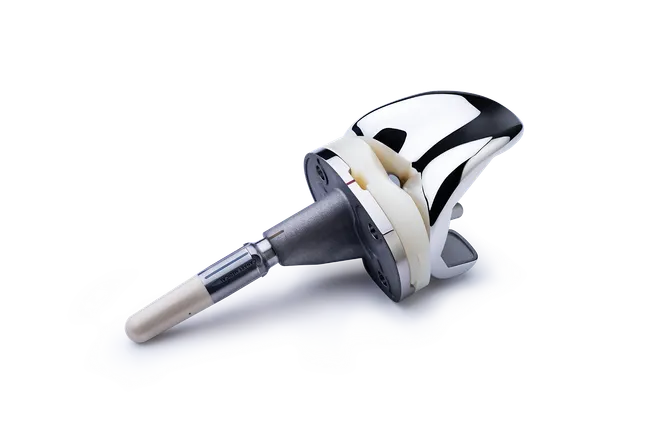
If a knee joint could "speak," who would be listening? That is the question facing orthopedic surgeons and rehabilitation physicians as they learn to use a new type of knee replacement implant—one with built-in sensors and processors that can transmit data about the joint's function from deep within the patient's body.
These devices are among a growing number of tools that transmit patient monitoring data to doctors, including continuous glucose monitors and wearable devices for detecting irregular heartbeats. Faced with this flood of information, medical technology companies are still figuring out how to make the data genuinely useful to physicians.
"This field is still in its very early stages," said Dr. Jay Pandit, a cardiologist and director of digital medicine at the Scripps Research Translational Institute in San Diego. He noted that doctors simply do not have time to review the raw data streaming in from wearable devices—and, soon, implantable ones.
Pandit said the data is far from user-friendly, often requiring doctors to arrange for dedicated analysts to review it on third-party websites. He added that most physicians have only 7 to 10 minutes to see a patient, review their chart, and develop a care plan, leaving no time to analyze large volumes of raw data.
Pandit noted that enthusiasm for remote patient monitoring devices has increased since the pandemic, but there are still no overarching guidelines for how to manage the data these devices generate.
That has not dampened the plans of the smart knee manufacturer, however.
"The talking knee is now a reality," Indiana-based Zimmer Biomet announced at the American Academy of Orthopaedic Surgeons meeting last year. Just days after receiving de novo clearance from the U.S. Food and Drug Administration (FDA), the company showcased its new knee implant extension with embedded sensors.
Now, the smart knee implant, Persona IQ, developed by Zimmer in collaboration with California-based Canary Medical, Inc., a company that makes sensors for medical devices, is on the market. It measures the patient's joint range of motion, step count, stride length, and walking distance from inside the body. However, doctors are not yet sure how to use this data to help patients.
"Moving from 'I have data on my patient' to 'I can make a diagnosis for my patient' or 'I can tell my patient what they need to do differently' takes time," said Dr. Matthew Hepinstall, associate professor of orthopedic surgery at NYU Grossman School of Medicine and co-director of its Center for Computer Navigation and Robotics.
Eventually, sensors could detect implant problems, help patients adjust their gait, or provide data to predict patient outcomes. In the meantime, competitors are creating systems that use wearable sensors to track patient recovery and hinting that they, too, have plans for implants with embedded sensors.
Bill Hunter, founder and CEO of Canary, said in an interview that medical technology companies have already launched a wave of sensor-equipped devices in other areas.
"The ability to have devices provide clinicians with actual feedback from inside the body has applications in nearly all major medical devices," he said. "So I do believe you will see it emerge in various different ways."

What can the data tell you?
Hepinstall said Zimmer's first challenge will be convincing doctors to use its Persona IQ device instead of traditional knee implants.
"I am waiting for wearable sensors to provide enough data and for us to gain enough experience to understand how to act on that data before I consider implanting them in my patients," he said, adding that the size of the sensor means surgeons must remove more bone when implanting a smart knee.
Still, Hepinstall said, "Someone has to put these devices in people so we can learn what they can do. Monitoring patients remotely in some way is an important priority."
Hepinstall added that when new forms of data emerge, learning how to interpret and apply that information takes time.
"Anytime you get new information, a type of information you haven't had before, it's not always easy at first to figure out how to use it effectively," he said.
The data collected by these smart implants is similar to what is tracked by wearable devices worn on the outside of the knee and connected to smartwatches. Doctors say the main differences are cost and compliance, since about 30% of people stop using wearable devices, according to a 2016 Gartner survey.
Dr. Fred Cushner, chief medical officer of Canary, said that obtaining data on a patient's stride, gait, and speed could help develop recovery curves to predict how well a patient will adapt to the implant.
It could also teach doctors how to reduce pain after replacement surgery and how to best position the replacement joint, he added. Cushner was involved in the development of the sensor.
"You have to do the studies, but once surgeons start implanting smart knees and the data starts flowing in, I think everyone is inclined to believe we will be able to answer some of these unknown questions," said Cushner, who is also an associate professor and orthopedic surgeon at the Hospital for Special Surgery in New York.
He noted that the smart knee is only FDA-cleared for tracking patient activity and is not indicated for supporting clinical decisions.
Data from inside the body could also help scientists design better knees, said Dr. Peter Sculco, another associate professor of orthopedic surgery at the Hospital for Special Surgery in New York.
"That's an incredible research repository," said Sculco, who consults for Zimmer but was not involved in the device's development.
What excites him most about the smart knee?
"Being able to compare and contrast the different ways we implant knee replacements, their alignment, their balance, the designs we use, the types of plastic we use, and then look at this gait-level data in some way and say, well, maybe this is a better way to do a knee replacement," he said.
Zimmer confirmed plans for additional studies of its Persona IQ device but did not provide specific details.
Starting with the knee
Joint replacement manufacturers are facing rising commercial pressure as surgeries shift to ambulatory surgery centers and implants are increasingly viewed as commodities.
"These areas face price pressure every year," said Ryan Zimmerman, an analyst at the institutional brokerage BTIG. "For companies looking to differentiate, adding a smart implant component makes a lot of sense."
The knee is Zimmer's largest revenue source; the company reported an 8% increase in knee sales in the first quarter of this year and an 11% year-over-year increase in 2021. On a May earnings call, the company declined to comment on whether Persona IQ would materially impact the growth of its knee business this year or next.
"I won't talk about the number of hospitals that have been onboarded, but it's a meaningful number," Zimmer Chief Operating Officer Ivan Tornos told investors. "The patient pipeline is also meaningful, and it's exceeding our expectations."
Canary Medical's Cushner added that the knee and its implants are also a good place to start using sensors.
As Canary develops smaller versions of the sensor, they provide scientists with more "space," he added. In Zimmer's knee, the sensor is attached to a stem that is drilled into the patient's tibia.
2021 Knee Revenue
- Zimmer Biomet: $2.65 billion
- Stryker: $1.85 billion
- Johnson & Johnson: $1.33 billion
- Smith & Nephew: $876 million
Source: Company annual earnings reports
Bionic revolution
The smart knee is part of Zimmer's broader strategy to enhance its products with its own robotics and technology, said Liane Teplitsky, president of Zimmer's global robotics, technology, and data solutions.
The sensors work much like a pacemaker, she said.
"The information automatically downloads to a base station in the patient's home and then uploads to the cloud," Teplitsky said.
During surgery to implant the knee, Zimmer's surgical robot collects data, and surgeons use HoloLens smart glasses (made by Microsoft) to guide themselves through the assembly of the device.
The smart knee connects to an iPhone app called Mymobility, which can pull kinematic data from the implant as well as data from the patient's Apple Watch to track post-operative exercises.
"Everything we are now thinking about bringing to market either generates data or collects data," Teplitsky said. Eventually, Zimmer will use sensors in more implants, including cementless knees and shoulders. Canary Medical has patented sensors for heart valves, spinal implants, and stent grafts.
Zimmer is also using data from the Mymobility app to power a feature called WalkAI, designed to predict which patients may have slower gait 90 days after hip or knee surgery. The company would need FDA clearance to use the data to make care recommendations.
"You can go from being able to predict to being able to recommend," Teplitsky said. "That's still in the future. We can't make any such claims today, but that's the end goal."

Other companies position for sensors
Zimmer's competitors have not yet launched their own smart knee implants, but they are betting on the need for data, primarily through wearable devices.
Stryker, the second-largest knee implant maker by revenue, acquired OrthoSensor last year; its technology is integrated into knee implants to help surgeons balance the knee during surgery. Both Zimmer and Smith & Nephew, the fourth-largest knee maker, have used OrthoSensor's technology in their knee replacement systems.
Stryker also uses OrthoSensor's wearable sensors, which attach above and below the patient's knee, to track range of motion, gait, and other information before and after surgery.
"It's all about information that the surgeon can use for each unique patient. Its application certainly includes both getting short-term baseline information pre-operatively and tracking up to 90 days post-operatively, so you can really see progress," said Don Payerle, president of Stryker's joint replacement division.
Richard Newitter, an analyst at the financial services firm Truist, said Stryker will likely also begin adding sensors to its implant products.
Johnson & Johnson is also working on smart implants, according to Shagun Singh, an analyst at RBC Capital Markets.
"They have said they have over 50% share in the trauma market. So they want to enter that market first," Singh said.
Looking ahead
The technology may still be in its early stages, but sensors that allow patients and doctors to monitor health and improve outcomes have become an "important area of focus and development" for the medical device industry, said Truist's Newitter.
"It's not just about the implant itself anymore—it's about building a complete digital ecosystem around the continuum of surgical care," Newitter said.
Of course, sensors come at a cost. RBC's Singh noted that Zimmer prices its sensor-equipped implant $1,000 higher than the version without sensors.
It may also take several more years to accumulate enough data to prove that sensors can improve health outcomes and lower costs for insurers, according to Newitter.
"We're interested to see if it takes off like robotics did," said BTIG's Zimmerman. If it does, "you should see a number of other companies follow," Zimmerman added.