
Expansion of Catholic Health Systems May Worsen Access to Reproductive Health Services
Catholic health care institutions are widely distributed across the United States, and their religious directives restrict abortion, sterilization, and contraceptive services. With the overturning of Roe, these restrictions may pose additional obstacles for individuals seeking reproductive health services. This article cites multiple studies and expert opinions to analyze the market share of the Catholic health system, service restrictions, lack of transparency, and potential consequences, and discusses policy recommendations.
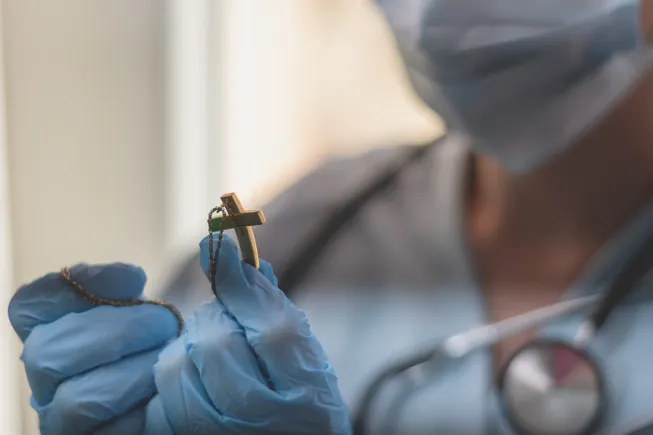
In the United States, Catholic healthcare institutions are widespread across the country. With the Supreme Court overturning Roe v. Wade, some advocates for abortion rights and women's health have expressed concerns about this.
Researchers, advocacy organizations, and associations representing obstetricians and gynecologists in the United States point out that people seeking comprehensive reproductive health services may face additional barriers due to religious restrictions at medical centers owned or operated by Catholic entities.
This issue is not new for Catholic institutions—they do not allow abortions unless it is to save the mother's life. Stakeholders say that with Roe overturned, women may need to travel across state lines for abortions or management of miscarriage complications, but they may not be fully aware of the restrictions on reproductive services at certain religious institutions under the jurisdiction of local dioceses.
Some doctors have raised concerns about this because these entities must adhere to the teachings of the Catholic Church.
"This is something that deeply concerns us and has been a major focus for a long time," said Jen Villavicencio, an obstetrician-gynecologist and leader at the American College of Obstetricians and Gynecologists in Washington, D.C., after the Supreme Court ruling.
According to a 2020 report by the national health advocacy organization Community Catalyst, Catholic healthcare institutions have a significant presence in some states where abortion remains legal, and they own not only hospitals.
In the United States, one out of every six hospital beds belongs to a Catholic institution. However, the Church's influence on healthcare extends beyond acute care hospitals.
Catholic hospitals hold a large share in certain states
The report shows that the 10 largest Catholic health systems operate about 860 urgent care centers, 385 outpatient surgery centers, and about 280 physician groups.
Meanwhile, a 2020 study published in JAMA Network Open found that nearly 40% of women of reproductive age live in areas where Catholic hospitals have a high or dominant market share. About 35% of counties nationwide have a high market share for Catholic hospitals.
Catholic institutions must follow Ethical and Religious Directives, which state that they cannot provide abortion or sterilization services and must not "promote or condone" contraception. These directives, approved by the U.S. Conference of Catholic Bishops, dictate how healthcare is provided in Catholic institutions, including clinics, urgent care centers, and care provided by employed physicians.
As Catholic hospitals acquire physician practices and outpatient facilities, religious restrictions are rapidly expanding beyond Catholic hospitals, said Lois Uttley, senior adviser at Community Catalyst, who co-authored the 2020 report on the growth of Catholic health systems.
The Catholic Health Association disputed Uttley's research and questioned its accuracy when it was released in 2020. At that time, CHA said that one in seven hospital beds was in a Catholic hospital, not one in six. The organization stated then that it did not agree with Community Catalyst's methodology.
Nevertheless, the two largest Catholic health systems alone control extensive healthcare services covering large areas of the United States.
As of March 31, Ascension said it had 40,000 "aligned" providers at 2,600 care sites across 19 states, while CommonSpirit had 25,000 physicians and advanced practice clinicians and 1,500 care sites across 21 states.
Neither Ascension nor CommonSpirit responded to requests for comment.
Abortion is expected to remain legal in half the country
For patients, how care is affected by religious institutions is not always clear. A 2019 JAMA report found that only 28% of Catholic hospitals disclosed how their religious affiliation might affect care.
This lack of transparency could lead pregnant women into serious health dilemmas when complications arise at Catholic hospitals. There have been reports of women seeking care for miscarriage complications but being turned away due to religious directives at Catholic hospitals. If not treated promptly, miscarriage complications can be life-threatening for pregnant women.
Although Catholic institutions cannot provide abortions, there are some exceptions. However, it is not always clear when a Catholic hospital can intervene to save the mother's life; in such cases, institutions typically convene hospital ethics committees to decide on a course of action.
The U.S. Conference of Catholic Bishops says there is a distinction between what it calls "direct" abortion and "legitimate" medical procedures.
In a 2010 guidance document, the conference explained that medical procedures that "indirectly" terminate a pregnancy are allowed, such as cases where a pregnant woman is diagnosed with uterine cancer. According to the U.S. Conference of Catholic Bishops, removing the cancerous uterus "directly" addresses the medical problem and "indirectly" ends the pregnancy.
However, if a pregnant woman develops organ complications due to the "additional burden of the pregnancy," abortion is not permitted because it is considered a "direct" abortion.
The bishops issued this guidance after a 2009 abortion at a Catholic hospital in Phoenix to save the life of a 27-year-old mother of four. Phoenix Bishop Thomas Olmsted condemned the procedure, although the mother reportedly survived.
According to a previous NPR report, a nun who was also a hospital administrator allowed the abortion and was subsequently excommunicated by the Church. The bishop also stripped the hospital of its Catholic affiliation, according to ABC News.
Marian Jarlenski, a professor at the University of Pittsburgh Graduate School of Public Health, said that in some states where abortion remains legal, Catholic healthcare institutions hold a large share, and legislators should prioritize pushing for transparency in these institutions. Jarlenski is a co-author of the study on Catholic hospital market share.
"I think a very clear policy response is: 'Okay, any healthcare institution that receives public funds—Medicare, Medicaid—should be required to clearly state which services are available and which are not,'" Jarlenski said.
In 10 states, more than 30% of acute care beds are in Catholic hospitals, including Colorado, Oregon, and Washington. These states have vowed to preserve access to abortion.
In Illinois, Catholic institutions account for about 28% of hospital beds.
"The proliferation of religiously affiliated healthcare institutions absolutely raises concerns about patient access to reproductive health services," said Ameri Klafeta, director of the Women's and Reproductive Rights Project at the American Civil Liberties Union of Illinois.
"We also know that certain areas of the state may have very limited healthcare options. So in some areas, the only healthcare actually available—whether due to geographic location or insurance restrictions—may be religiously affiliated institutions," Klafeta said.
The ACLU of Illinois filed a lawsuit in 2018 stemming from a woman being denied long-acting reversible contraception at a Catholic institution in Chicago.
According to an analysis of 2017 abortion incidence by the Guttmacher Institute, the vast majority of abortions in the United States occur in clinics, with only 5% of abortions performed in hospitals.
Catholic institutions operate more urgent care clinics, physician groups, and outpatient facilities, raising concerns about complicating access to contraceptives and Plan B (an emergency contraceptive pill, commonly known as the "morning-after pill," used to prevent pregnancy).
"In some areas of these states, this type of care may be greatly restricted," said Uttley of Community Catalyst, because hospitals often operate outpatient facilities, urgent care centers, and manage physician practices in areas where they have hospitals.