
How Nursing Home Capacity Constraints Become a Bottleneck for Hospital Operations
Insufficient nursing home capacity is hindering hospital discharge processes, leading to prolonged hospital stays and intensifying operational pressures on the healthcare system in the post-pandemic era.
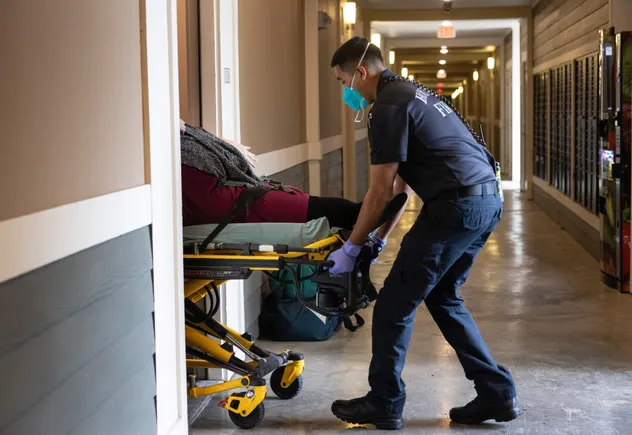
Insufficient nursing home capacity is hindering hospital patient discharge processes, causing lengths of stay to continue to climb and putting greater pressure on health systems trying to survive in a fragile operating environment after the COVID-19 pandemic.
A review of recent financial filings by Healthcare Dive found that even as overall hospital admissions declined, large hospital operators still reported longer lengths of stay and discharge difficulties compared with prior years. This trend is evident among both nonprofit and for-profit operators and has led to declining operating income for many health systems.
"What we're seeing is that more facilities are seeing lower inpatient discharges than pre-pandemic levels, but patient days are not declining accordingly," said Erik Swanson, senior vice president of data and analytics at Kaufman Hall. "Length of stay has continued to grow since the start of the pandemic."
Large nonprofit health systems—including Providence, Intermountain, Sutter, Mass General Brigham, and Advocate Aurora—all reported higher lengths of stay and lower discharges this summer compared with 2021. For-profit operators HCA Healthcare and UHS also reported year-over-year increases in length of stay in the second quarter: from 4.94 days to 4.99 days, and from 4.8 days to 4.9 days, respectively.
Longer lengths of stay are contributing to some of the worst hospital profit margins since the start of the pandemic and prompting rating agencies to downgrade the industry outlook. Part of the reason is that Medicare, which covers most hospitalized patients, typically pays for inpatient care based on diagnosis-related groups (DRGs), which pay a fixed amount based on diagnosis and severity, regardless of the length of stay. Other commercial insurers also often pay fixed rates for certain high-cost hospitalizations, such as bundled payment models for total joint replacements or heart attacks.
Therefore, the longer patients stay in the hospital, the higher the costs borne by the hospital, said Rick Gundling, senior vice president of healthcare financial practices at the Healthcare Financial Management Association (HFMA). "They're usually already losing money; it's just that the losses are widening," Gundling said.
Workforce demand 'enormous and urgent'
Several organizations said the increase in length of stay stems from difficulties in transferring patients to other care facilities. About 12% of hospitalized patients are transferred to long-term care facilities such as nursing homes, which were already under pressure before the pandemic. The operational strain of the pandemic hit cash-strapped nursing homes hard, leading to high resident deaths, staffing shortages, and facility closures.
Providence, one of the largest nonprofit health systems in the U.S., said discharges to skilled nursing facilities are the most difficult, especially in states where beds have been chronically scarce and the workforce continues to shrink. This is creating a backlog in acute care—Providence's average length of stay in the first six months of this year was 5.85 days, compared with 5.62 days in 2021.
"We believe this issue requires some level of state and federal intervention to provide necessary relief to communities. The demand is enormous and urgent," a spokesperson for the system said.
According to data from the U.S. Bureau of Labor Statistics, as of August, nursing home employment was down 10% from its peak in January 2020, before the pandemic hit the U.S. This decline is quite significant compared with workforce recovery in other industries. Hospital employment is only slightly below pre-pandemic levels, while employment in physician offices, outpatient care, and home health care has rebounded, even outperforming overall private sector employment, according to an analysis by the University of Washington's Center for Health Workforce Studies.
Nursing home workforce recovery lags peers
"There are no beds. Or there are no staff—even if there are beds, there may be no staff. So hospitals can't discharge patients," Gundling said.
Bianca Frogner, director of the University of Washington's Center for Health Workforce Studies, said there are multiple reasons for the employment decline in nursing homes, especially skilled nursing facilities. A larger shift toward home and community-based services is diverting business away from traditional post-acute care facilities; the spread of COVID-19 in nursing homes during the pandemic also raised concerns about facility safety. Additionally, nursing homes struggle to raise wages, especially those heavily reliant on fixed Medicaid reimbursements.
Many workers in their workforce, including nursing assistants, are low-paid and often lack health insurance or sick leave. These employees may have chosen to stay home during the pandemic out of fear of contracting COVID-19, or left entirely, attracted by higher-paying jobs in other industries such as retail or food service, Frogner said.
Experts point out that any factor exacerbating nursing home staff turnover is problematic. Even before the pandemic, turnover rates for registered nurses and certified nursing assistants were as high as 141% and 130%, respectively. Staffing shortages in post-acute care facilities ripple upstream, affecting hospital staffing as well.
"I hope people realize that what happens in one healthcare setting actually creates ripple effects across the entire healthcare system."
Bianca Frogner
Professor, University of Washington School of Public Health
Frogner said that the inability to accept patients transferred from hospitals means longer hospital stays, which adds to the burden on hospital staff, who must handle higher patient loads. Hospitals have also struggled to recruit and retain staff during the pandemic—many have been forced to turn to high-cost travel nurses to fill gaps.
"This could be quite significantly related to the staffing problems hospitals are facing"—and this issue may persist as workers have attractive job options outside of healthcare and nursing home pay structures lack major investment or change, Frogner said. "I hope people realize that what happens in one healthcare setting actually creates ripple effects across the entire healthcare system, and the interconnectedness between many places is far greater than people imagine."
Delayed care, approval delays, and other factors
Other factors are also lengthening patient stays. During the pandemic, a third of adults delayed non-urgent care, leading to worsening health conditions and increased complications. Experts say many patients now require higher-acuity care.
Mayo Clinic said in August that it was operating "near full capacity" due to increased patient days (up 7.6% in the first six months of this year compared with 2021). The academic medical center attributed this to capacity constraints and a "structural shift" in patients requiring longer hospital stays.
Sicker patients have longer stays and often require more expensive resources, such as specialty drugs. HFMA's Gundling noted that the costs of these resources have risen due to supply chain issues, drug price increases, and inflation. Hospitals are spending 6% more on supplies and 5% more on drugs than in 2020.
Additionally, many elderly patients have shifted to Medicare Advantage plans, which now cover nearly half of the Medicare population. Hospitals may need several days to receive responses from plan administrators about whether to authorize transfers to post-acute services. This extends lengths of stay, said Brian Pisarsky, a length-of-stay expert at Kaufman Hall.
About three-quarters of patients discharged home also face bottlenecks. Pisarsky said hospitals are facing shortages of durable medical equipment, such as oxygen tanks or walkers, needed for patients to manage follow-up care at home. As a result, facilities must wait to receive the necessary equipment before arranging discharge.
How hospitals are responding
Overall, experts expect that unless significant investments are made in the healthcare workforce, the larger headwinds will not ease—but that doesn't mean hospitals have no interventions at all to ensure they can staff crowded beds.
Frogner said that in addition to offering higher wages to attract workers to manage patients with longer stays, hospitals can also offer benefits such as tuition payment, paid sick leave, transportation subsidies, and more training opportunities. Frogner added that hospitals may be reluctant to spend extra on these benefits, but by retaining staff, they are likely to save money down the line.
"Turn on the TV, and you'll see Amazon ads promoting the various extra benefits they offer employees beyond wages. I don't know when I last saw—or if I've ever seen—hospitals or nursing homes advertising these things," Frogner said.
Additionally, Pisarsky said hospitals should start discharge planning earlier so that a plan is in place when patients are ready to leave. This means submitting post-acute care approval requests to insurers earlier; adopting measures such as multidisciplinary rounds or multiple daily huddles to ensure care teams are aligned on patient needs; strengthening partnerships with post-acute care providers; and being proactive in daily operations, Pisarsky said.
Hospitals can also adopt better team-based care models, optimize health IT use to reduce click fatigue, use artificial intelligence or robotics to automate routine tasks, and revisit CEO compensation to free up more funds. Experts say all options should be on the table to alleviate the growing patient backlog and free up manpower and money to provide better patient care.
Otherwise, "this ripple effect will quickly tear through hospitals and clog everything up," warned Swanson of Kaufman Hall.
