
Orthopedic surgeries accelerate migration to ambulatory surgery centers, medical device companies adjust strategies
The number of ambulatory surgery centers (ASCs) in the United States has grown from over 5,000 in 2010 to more than 6,000 today, with orthopedic surgeries accelerating their outflow. Medical device companies such as Stryker, Zimmer Biomet, and DePuy Synthes have introduced leasing, pay-per-use, and construction support services. Although ASC reimbursement from Medicare is lower than that of hospitals, equipment procurement costs are similar, prompting companies to explore new collaboration models. Analysts expect that the ASC channel may bring pricing pressure in the future.
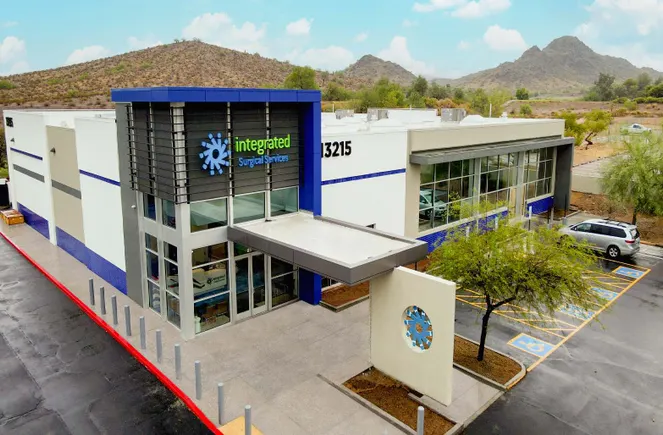
A year ago, Dr. Brian Gruber opened Integrated Surgical Services in Phoenix, converting a former grocery store into an ambulatory surgery center (ASC) for outpatient orthopedic procedures.
"It all started with the desire to control the patient experience," Gruber said. "Hospitals are our friends, but in some large institutions, you ultimately have limited say."
Physicians say ASCs allow them to better control costs and the patient experience while maintaining lower costs than hospitals. By purchasing their own equipment and focusing on a single specialty, surgical scheduling and operating room efficiency improve, and they add that it is also more professionally fulfilling.
"Having your own space, your own ASC, from a surgical standpoint, is fantastic. We really enjoy being able to do things directly," Gruber said. "You don't have to go through countless people and all the red tape. Just do it. If you need to offer a patient financial relief, you can. Having that capability and authority is truly liberating."
Gruber is one of hundreds of physicians who have opened ASCs over the past decade. According to the Ambulatory Surgery Center Association, an industry lobbying group, the number of ASCs nationwide has grown from over 5,000 in 2010 to more than 6,000 today. Orthopedic procedures in particular have accelerated their shift to outpatient centers, partly driven by the pandemic and also related to Medicare's increased willingness to pay for ASC procedures. Total knee replacements were added in 2020, and total hip replacements were added in 2021 (see related coverage).
Seeing the opportunity, medical device companies are increasingly catering to ASC needs, offering equipment financing programs and even forming teams to assist with the construction and design of surgical centers. For large, high-cost equipment such as surgical robots, more companies are beginning to offer pay-per-use, leasing, and installment payment options.
Ivan Tornos, Chief Operating Officer of Zimmer Biomet, wrote in an email that while many hospitals have established capital equipment procurement budgets, ASCs may seek more flexible financing options. "Many want to obtain capital equipment and services on a cashless basis, along with implants and disposable supply purchases, to offset the significant upfront costs of new construction, thereby improving operating cash flow/preserving credit lines while gradually increasing procedure volumes."
ASC numbers surge, orthopedic procedure share rises rapidly
Orthopedic device manufacturers expect ASC procedure volumes to continue rising, but this does not mean total procedure volumes are increasing—it is just a shift in location, said Shagun Singh, an analyst at RBC Capital Markets. "Whether more people can be brought into the funnel remains to be seen," Singh wrote in an email. "(Joint reconstruction) is a mature market growing 3-4% annually in a normal environment. Compared to other underpenetrated medical device segments, the potential for market expansion may be smaller."
Nevertheless, this shift has prompted medical device companies to form dedicated teams to engage with ASCs. Johnson & Johnson subsidiary DePuy Synthes estimates that 21% of orthopedic procedures are already performed in ASCs. The company has an ASC team that provides customized solutions for surgeon entrepreneurs and ASC administrators, including capital projects for equipment procurement, coding, and insurance reimbursement assistance, said Andrie Leday III, its U.S. ASC Commercial Vice President. "Although this trend was already advancing for clinical and economic reasons, the COVID-19 pandemic accelerated the shift," Leday wrote in an email.
Stryker, the world's largest orthopedic company by revenue, estimates that 10% of joint replacements are performed in ASCs and expects that proportion to double over the next five years. Chad Evans, General Manager of Stryker's ASC and Neurotechnology sales, said in an email that hundreds of ASCs are built each year. The company can assist with the initial planning, design, and construction of new ASCs—from waiting room furniture to implants, stretchers, and other equipment.
While competitors such as Johnson & Johnson and Smith & Nephew have dedicated teams engaging with ASCs, according to Singh, Stryker has higher penetration in this market than its peers. "They are actually years ahead of many others because they truly have architects," she said. "They can send an architect to build you an entire operating room, an entire ASC facility. Then they will sell you everything."
Cost and reimbursement differences: ASC Medicare payments are lower than hospitals
ASC advocates say that because they do not bear the indirect costs of hospital operations, they can perform procedures at lower cost with similar outcomes. According to ASC Association data, Medicare pays ASCs only 55% of what it pays hospitals for the same outpatient procedures. For total knee replacement, for example, Medicare pays ASCs $8,222, while it pays hospital outpatient departments $12,088 (according to Medicare's price lookup tool). Nevertheless, patients may face higher out-of-pocket costs for procedures at ASCs because, for high-cost procedures, Medicare caps the copayment for hospital outpatient departments but not for ASCs.
According to healthcare data company Definitive Healthcare, in 2021, ASCs performed 16.5% of knee replacements and 12.1% of hip replacements in the United States. Although Medicare now covers both ASC procedures, the association has been lobbying the Centers for Medicare & Medicaid Services (CMS) to also include shoulder, ankle reconstruction, and lumbar fusion procedures in the ASC covered list.
Despite reimbursement differences, ASCs often spend the same as hospitals on implants and equipment, the ASC Association wrote in a September 13 letter to CMS. In fact, hospitals are more likely to purchase in bulk through large purchasing agreements and obtain lower prices. To offset costs, physician owners seek funding or strike deals with device companies.
Collaborative models for equipment procurement: from joint ventures to leasing
Gruber partnered with Stryker when building his ASC. Through a joint venture with the company—Stryker provided funding in exchange for a five-year purchasing commitment—he was able to acquire some large equipment, such as the Mako surgical robot used in joint replacement procedures. Other large equipment such as ultrasound and C-arms are typically financed.
While some physicians may choose to mix and match equipment from different brands, Gruber chose to source everything from Stryker, he said. "For me, Stryker has the largest service lines. They have so much equipment," Gruber added. "Working with Stryker is like pressing the 'easy button.'"
In many cases, physicians join forces and seek financing from private equity firms to cover the startup costs of new facilities. They may also seek joint ventures with hospital groups, such as Tenet, which has spent billions of dollars building its outpatient surgery division.
New Mexico Surgery Center Orthopaedics in Albuquerque opened in 2000, founded by the physician group New Mexico Orthopaedics in partnership with Ortholink, which provided financing and holds the management contract. Today, a local hospital also holds a minority stake, but the physician group retains the largest share, said Dr. Bill Ritchie, an orthopedic surgeon with the group.
The ASC prefers Zimmer Biomet products because of its focus on total joints, Ritchie said. Other products are sourced from multiple vendors, seeking volume discounts on disposables such as lights, cameras, power systems, and drills. For surgical robots, they chose "the manufacturer with whom we have the highest volume," with the contract structured as a lease, reducing costs by increasing purchase volumes.

Integrated Surgical Services decided to partner with a single medical device manufacturer, Stryker, to equip most of its operating rooms. (Image courtesy of Stryker)
Scale for bargaining power: the purchasing advantages of large ASC groups
Bulk purchasing is key to the success of large groups operating hundreds of ASC facilities. At Surgical Care Affiliates (SCA Health), a 320-ambulatory surgery company owned by insurer Optum of Eden Prairie, Minnesota, the number of joint replacements performed annually nearly doubled from 2019 to 2022, said Amanda Conroy, who oversees the company's total joint and spine service lines.
This allows SCA to set the prices it pays device suppliers for total joint replacements. "For the first time in the company's history, we have been able to do this collectively. It has saved our patients millions of dollars," Conroy said. Lower costs also benefit the insurer that owns SCA.
Without the capital that hospitals can mobilize, SCA has adopted what Conroy calls "creative solutions" to acquire expensive equipment, including surgical robots, specialized operating tables, and imaging equipment. It decides on a case-by-case basis whether it is more cost-effective to purchase or lease equipment.
Working with equipment suppliers is crucial, said Brandon Hollis, Regional Vice President of Musculoskeletal Operations at Amsurg. Amsurg operates more than 250 ASCs in the United States. "Capital procurement is much simpler for hospital systems, whereas in the ASC industry, we see many large, expensive equipment items, including robots, X-ray machines, and microscopes... suppliers have done an excellent job offering different types of payment plans," he said.
Impact on device companies: shifting from one-time sales to recurring revenue
The shift from outright purchases of expensive equipment to leasing or financing is already reflected in device manufacturers' quarterly earnings.
Both Stryker and Zimmer Biomet (the third-largest company in orthopedics) have said this shift has reduced upfront revenue from their surgical robots, which assist surgeons in positioning knee and hip implants.
Stryker reported that sales of its Mako surgical robot grew 19% year-over-year in the second quarter of 2022, but the transaction structure reduced quarterly revenue. The company also said the proportion of its Mako robots sold to ASCs versus hospitals is gradually increasing.
"Over the past six months or so, we have seen more deals using financing rather than outright purchases, actually shifting more toward lease agreements," Chief Executive Officer Kevin Lobo said on an August 2 earnings call.
Zimmer Biomet, meanwhile, said approximately 30% of its ROSA robot installations are in ASCs.
Although medical device companies currently receive the same amount regardless of where procedures are performed, that could change in the future, said RBC Capital's Singh. "ASCs are lower-cost settings with lower reimbursement. Therefore, I would expect some pricing pressure in the ASC channel in the future, which could affect our medical device companies, but we have not seen it yet," Singh said.