
Steward Health Faces Bankruptcy Risk, Few Options Remain Under Massive Debt
Steward Health Care Group is facing a severe financial crisis and could become one of the largest hospital bankruptcies in decades. The company must prove to lenders by the end of the month that it can repay its debts, or it may enter bankruptcy proceedings. Analysts note that its debt burden is massive, and its self-rescue plan faces multiple challenges, including regulatory hurdles and a credit crunch.
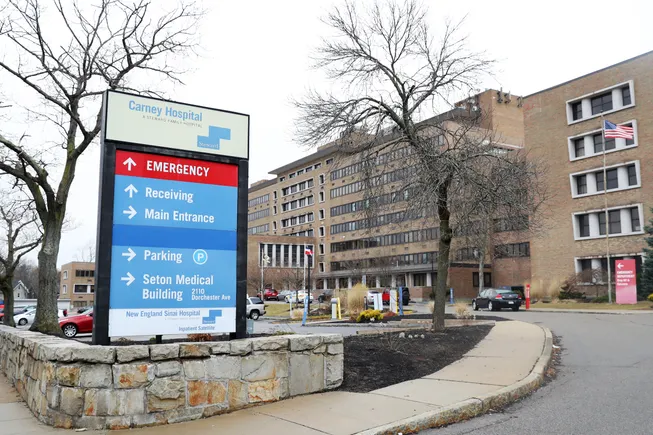
Steward Health Care is facing a deadline. The Dallas-based health network must prove to lenders by the end of the month that it has enough cash to begin repaying its massive debt, or it could face bankruptcy proceedings.
Proving solvency could be a difficult task given that the health system owes significant amounts to multiple parties, analysts familiar with the system said.
If Steward fails, it would become one of the largest health care bankruptcies in decades, said Laura Coordes, a law professor at Arizona State University's Sandra Day O'Connor College of Law.
Steward operates more than 30 hospitals across eight states, primarily serving publicly insured patients, according to a company spokesperson. Due to financial difficulties, the company has closed hospitals in Texas and Massachusetts.
In February, Steward said it had a plan to address its cash crisis and emerge from the grace period as a sustainable company, which included hiring restructuring advisors, securing another bridge loan, and selling its physician group and other assets.
Analysts question the viability of Steward's recovery plan, pointing to the scale of its financial problems, significant regulatory hurdles to selling assets, and multiple challenges to further extending the health network's credit line.
Some believe bankruptcy is a possible—even inevitable—outcome for Steward.
"There's a point where things completely fall apart," said Mary Bugbee, senior coordinator for the Private Equity Stakeholder Project. "I think that's happening now. I wouldn't be surprised to see bankruptcy."
The roots of Steward's financial troubles
Steward was founded in 2010 when private equity firm Cerberus Capital Management purchased six struggling Massachusetts hospitals, and it has been burdened with high debt ever since.
Just three years after its founding, the health system's debt was already several times its equity, according to a 2015 report from the Massachusetts Attorney General.
However, Steward's problems increased dramatically after partnering with hospital landlord Medical Properties Trust (MPT) in 2016, said Rosemary Batt, who studies health care financialization at Cornell University's ILR School.
Steward and MPT engaged in sale-leaseback transactions, a "classic" private equity financial strategy that typically leaves operating companies saddled with debt, according to research published by Batt. Sales can provide private equity-owned companies with quick access to capital to expand or pay down debt, while benefiting investors, she said. For example, Cerberus's funds profited $484 million from the first Steward sale-leaseback deal.
But profitable hospital chains typically don't lease back from real estate investment trusts like MPT because high rents can significantly cut into net income, Batt said.
REIT lease agreements are long-term and "triple-net," meaning the tenant is responsible for all expenses—including maintenance, repairs, utilities, taxes, and insurance—plus rent.
Worse, Steward's rents increased annually, with some hospital rents rising 5% each year.
Medicaid and Medicare payments—which Steward says account for most of its patient revenue—cannot keep up with such increases.
REITs have been linked to notable health care bankruptcies, including the 2018 collapse of HCR ManorCare, a nursing home chain backed by Carlyle Group, which owed $446 million in rent when it filed for bankruptcy.
"Cerberus must have known what it was doing," Batt said of saddling Steward with MPT leases, referring to the bankruptcy risk.
Over the past eight years, Steward has sold hospitals to MPT for at least $4.9 billion, then leased the properties back, according to a Healthcare Dive review of MPT's finances. At its closest point with MPT, Steward leased 41 properties from the landlord in 2022, according to regulatory filings.
According to Steward's last available audited financial report, the company owed MPT $385.2 million annually in rent for operations at 35 hospitals in 2020, and expected to owe $423 million by 2024. Steward has since shrunk somewhat, and analysts estimate it currently owes just under $400 million annually in rent.
Steward has failed to pay its rent on time. MPT claims Steward owes $50 million in unpaid rent—plus another $50 million in rent the landlord previously allowed the health system to defer. Steward's actual rent debt could be higher, considering funds MPT lent Steward for capital improvements, said Rob Simone, REIT sector head at research firm Hedgeye.
"No healthy hospital system can survive without its properties." — Rosemary Batt, professor at Cornell University's ILR School
"If I look at what Steward owed MPT in rent over the last two years, Steward paid about 50% of it," he said. "That means MPT gave them relief on every side, half of the rent we know was abated, and they still failed."
How has Steward lasted this long?
Analysts say Steward likely burned through more than $1 billion between 2017 and 2021 trying to keep up with MPT's rent.
Meanwhile, MPT acted as both Steward's landlord and its lifeline, providing the health network with regular cash infusions that don't fit the REIT model, such as a $50 million general capital loan for repairs after flooding at a Norwood, Massachusetts hospital.
In total, MPT has provided Steward with approximately $1.7 billion in non-real estate funding since 2018, according to Hedgeye's Simone.
That cash, along with $400 million in COVID-19 relief funds, likely prevented Steward from going bankrupt in 2020, Simone said.
Keeping Steward solvent was valuable to MPT because it allowed the real estate investment trust to collect rent from its largest asset, which in turn generated dividends for investors.
"MPT lent money to Steward, and never cut the rent... That allowed MPT to continue to show earnings to investors, [while] behind the scenes, providing loans to Steward to keep the whole thing afloat," Simone explained. "It's a Ponzi scheme. It's a completely circular reference."
However, MPT's ability to prop up Steward became strained when some of MPT's other assets, including Prospect Medical Holdings, began defaulting on rent.
By December 2023, Moody's Ratings reported that MPT faced significant risk due to tenant liquidity issues; MPT's stock price plummeted from $23.25 per share in January 2022 to $3.99 in mid-April.
In January, MPT sought to limit its exposure to Steward, citing concerns about its solvency. It publicly announced Steward was behind on rent and demanded repayment, even though the real estate trust had been financially supporting Steward since at least 2018, according to its financial statements.
Steward's financial situation is partly attributable to MPT, said Batt of the ILR School.
MPT claims to be the world's second-largest non-governmental hospital owner and boasts on its website about understanding health care and hospital needs. However, Batt said MPT's lease agreements lead to quality decline because tenants have little money left after paying rent to invest in advancements that could benefit patient care.
Health systems in MPT's portfolio often sacrifice technology investments, equipment upgrades, staff training, and pay raises to cover rent, she said.
"High debt, low profitability, lower or declining liquidity—all these factors are the result of financial strategies," Batt said. "All of this was created by selling off all the properties... No healthy hospital system can survive without its properties."
Can asset sales prevent a bankruptcy filing?
As Steward seeks to exit the grace period, the health system has considered selling assets to repay debt.
Last month, Steward said it would sell its physician group, Stewardship Health, to Optum Care, a subsidiary of UnitedHealth Group. But lawmakers have urged regulators to scrutinize the deal, and price details have not yet been disclosed.
Analysts are skeptical about whether the proposed deal can be completed. If it is, they doubt it can change Steward's current financial situation in time—especially since the Massachusetts regulatory board overseeing the deal had not begun its review as of mid-April.
The average time to complete health care deals is also lengthening, sometimes taking over a year due to increased regulatory scrutiny, said Nathan Ray, a partner at West Monroe.
"There seems to be a recklessness of short-term thinking." — Mary Bugbee, senior coordinator at the Private Equity Stakeholder Project
"Optum and UnitedHealth can't start due diligence until the FTC approves it," said Hedgeye's Simone. "There's no way any cash flows into this deal before the grace period ends."
If the Optum deal does eventually close, Bugbee of the Private Equity Stakeholder Project is not convinced it will help Steward's long-term financial health. While it would provide Steward with some immediate cash, she said divesting its physician group could weaken its ongoing profitability efforts.
"There seems to be a recklessness of short-term thinking," she said. "Even if the deal succeeds, they still have to make payments to Medical Properties Trust. And they won't have the physician group anymore to help drive revenue to make those payments."
MPT also raised the option in a recent earnings call of re-leasing or selling some of Steward's hospitals to repay Steward's debt—a move supported by Massachusetts regulators.
In a regulatory filing, Steward said it expects significant changes in the sale of some of its acute care hospitals within the next year, but did not specify whether it intends to close, sell, or purchase facilities.
However, finding other operators to take over Steward's hospital leases could be difficult, as the company has been accused of degrading facility quality over time.
Massachusetts Democratic Senator Elizabeth Warren has said Steward has left a trail of "zombie" hospitals in its wake—facilities that are open but barely functioning. Clinicians have similarly told Healthcare Dive that Steward's emergency departments can be dilapidated, under-equipped, and lacking basic supplies.
As Batt put it, "What [health care] operator would want to absorb a corpse?"
Bankruptcy could provide 'breathing room'
With Steward's credit line nearly exhausted, bankruptcy may be one of the better options for Steward, experts say.
Bankruptcy could give Steward some breathing room from lenders, said ASU law professor Coordes. Steward currently faces at least 35 lawsuits across multiple states, most of which are collection cases.
"The bankruptcy code stops all other litigation and claim collection," she said. "If a company is being chased by multiple creditors... bankruptcy can provide the opportunity to stop those, and then give the health care business space to say, 'Okay, where am I?'"
She clarified that Steward would not emerge from bankruptcy unscathed, but it could pay far less than it would to resolve debts outside the system.
Lenders could also breathe a sigh of relief if Steward files for bankruptcy, analysts say.
Although lenders provided long-term credit lines to indebted companies during the COVID-19 pandemic, that trend has since declined, Coordes said.
"I think lenders are starting to tighten the reins and may not be as lenient as they were two or three years ago," Coordes said.
The opacity of Steward's finances could increase the risk of further credit.
