
Antitrust agencies rely on consumer reports of anticompetitive behavior, experts question their reliability
U.S. antitrust agencies launched a new portal to encourage public reporting of anticompetitive practices in healthcare. Experts say this may generate investigative leads but worry that consumers may struggle to accurately identify anticompetitive behavior, and agencies could face a flood of complaints and resource constraints.
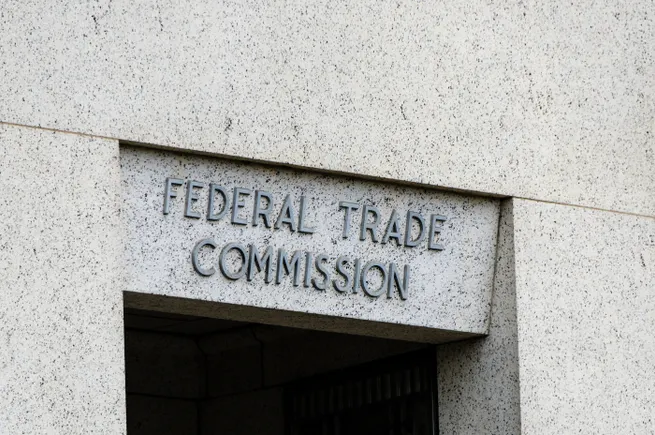
U.S. antitrust enforcers want everyday people to report suspected anticompetitive behavior in healthcare, but antitrust experts are divided on whether that is a wise move.
Last month, the Federal Trade Commission (FTC), the Department of Justice (DOJ), and the Department of Health and Human Services (HHS) jointly launched a portal called HealthyCompetition.gov, where anyone can submit complaints for antitrust agencies to review—and, if the complaints qualify, potentially trigger an investigation.
According to press releases from the agencies, the move aims to ensure healthcare companies provide quality care, pay workers fair wages, and generally do not suppress market competition.
Experts say the portal could become a source of investigative leads while informing the public—and the courts—about the types of anticompetitive behavior the Biden administration wants to pursue.
However, antitrust agencies could be flooded with useless complaints, overwhelming already resource-strapped staff.
Still, "it could be very important. Regulators often say that tips from the public have led to many of their most significant investigations," said Jim Burns, an antitrust lawyer at Williams Mullen. "I would never underestimate the potential value of this."
Relying on everyday people
With hospital merger waves, opaque contracting practices, and behind-the-scenes deals pushing up consumer healthcare costs, pressure is growing in Washington to crack down on anticompetitive conduct in the medical field.
To that end, President Joe Biden signed an executive order in 2021 directing regulators to step up enforcement in the sector.
Late last year, the president further pressed the FTC, DOJ, and HHS to work more closely together to address corporate greed in healthcare.
Under pressure from the White House, antitrust regulators are increasingly turning to a long-standing source of investigative leads: tips from the public, experts note.
For example, the FTC has long had a consumer complaint portal, receiving more than 74,000 healthcare fraud reports last year alone. Similarly, most Medicaid fraud cases pursued by an HHS task force, according to the department, begin with referrals from external sources, including the public.
However, setting up a portal for ordinary consumers to report anticompetitive behavior relies on ordinary consumers being able to recognize it. Experts say that assumption may not hold.
Most people will struggle to distinguish business practices that harm market health from the day-to-day operations of healthcare companies that may simply be frustrating.
The portal itself asks consumers to submit only complaints about competition, not "unpaid claims or uncovered medical services, individual insurance rate increases, billing disputes, or general dissatisfaction with the healthcare system."
"Consumers may not be able to identify anticompetitive behavior," said Gregory Rübb, an antitrust lawyer at Dechert. "They may be unhappy with the prices they pay, but they are far from having enough information to infer some anticompetitive practice that may be driving prices up."
Experts say the portal could give antitrust agencies a bird's-eye view, spotting overlaps in complaints to pinpoint new areas of concern or provide additional complaint support for existing investigations.
For instance, regulators could link complaints against the same company or similar issues in the same region to uncover anticompetitive behavior.
However, "often competitors and other market participants are better positioned to identify potential anticompetitive behavior, and agencies tend to have regular contact with them," Rübb said.
Educating consumers—and courts
The new portal aligns with several recent FTC, DOJ, and HHS efforts to seek public input on antitrust issues, such as issuing requests for information on drug shortages, healthcare consolidation, and pharmacy benefit manager practices.
Under Chair Lina Khan, confirmed in 2021, the FTC has made particular efforts to bring consumers into the conversation.
"This is consistent with this FTC's interest in hearing from ordinary consumers," Rübb said.
But consumers are not the only stakeholders the FTC hopes to educate through the new portal, experts note. The site includes examples of what the agency views as anticompetitive behavior, which could become a resource for courts reviewing transaction challenges.
Such guidance—like the stricter merger guidelines finalized late last year—carries no legal weight on its own, but courts often rely on it when deciding whether to allow deals to proceed, said Burns of Williams Mullen.
"Regulators have realized that the more we get our views on anticompetitive behavior out into the world, the more it helps us bring enforcement actions."
— Jim Burns, Chair of Williams Mullen's Antitrust and Trade Regulation Practice Group
For example, according to the portal, consolidation among healthcare providers, including vertical mergers and chain acquisitions, can be anticompetitive. Competitor collusion or price fixing can stifle competition, and wage fixing or no-poach agreements can make it harder for workers to switch jobs, according to the site's documents.
Burns said the portal is another forum for the FTC to publish documents supporting its antitrust arguments in areas with less case law.
"Regulators have realized that the more we get our views on anticompetitive behavior out into the world, the more it helps us bring enforcement actions," Burns said. "This is an attempt to provide guidance to the public and the courts about what they consider misconduct."
Resource constraints
Despite the potential benefits, some experts worry that creating another consumer portal could plunge FTC, DOJ, and HHS staff into a tsunami of complaints they may lack the resources to sift through, or that it could divert funds or personnel from other antitrust activities like merger review.
"Agencies could indeed be overwhelmed by thousands of consumer comments or complaints," Rübb said. But ultimately, the volume depends on how and where the FTC promotes the portal, and the resource drain largely depends on whether complaints become actual investigative targets, he said.
Still, public comments could pour in on hot-button issues. For example, the FTC and HHS issued a public comment request on drug shortages in February, and it has already received more than 5,800 submissions.
"They will get a large number of complaints about potential anticompetitive conduct," said David Balto, an antitrust lawyer and former policy director at the Federal Trade Commission.
Meanwhile, the FTC said in a 2022 CNBC interview that the agency is "severely" understaffed and under-resourced, Khan said in the interview.
In its 2025 budget request released earlier this year, the agency asked for an additional $105 million and 55 full-time employees. "The primary driver of the increase in the Commission's resource needs is the high level of market concentration in major sectors of the economy, including healthcare," the budget document said.
Research shows resource constraints have already prevented the FTC from keeping pace with the rapid pace of mergers in healthcare.
A study published this month found that out of more than 1,000 hospital mergers between 2002 and 2020, the FTC took enforcement action in only 13, a challenge rate of about 1%. Researchers found that despite about 20% of mergers occurring in overly concentrated markets, or highly likely to drive up prices.
However, experts say if resources were the main concern, the FTC might not have opened the portal. The FTC has already acted on several recent major deals, including suing to block Novant Health's acquisition of two hospitals in North Carolina.
Moreover, the FTC recently appointed two new administrative law judges—independent agency employees responsible for fact-finding in administrative proceedings and rulemaking—citing its increased workload. These appointments bring the FTC's total number of administrative law judges to three. Traditionally, the FTC had only one, according to Burns.
"When they need resources, they seem to find them," Burns said.
Still, whether the portal will become a useful resource for regulators, or whether the FTC, DOJ, and HHS asking consumers to report issues to address the wave of anticompetitive behavior in healthcare is akin to rearranging deck chairs on the Titanic, remains to be seen.
"This is a first step," Balto said. "But they could take more significant steps."
