
Federal Cuts Threaten Colorado Maternal Health Public Funding Program
HardBeauty, a Colorado nonprofit, provides peer support services to mothers in the Western Slope region through federal funding. In March 2025, the federal government prematurely terminated related grants, citing the end of the pandemic, prompting a lawsuit. Although a court ordered temporary restoration of funds, the program still faces uncertainty with weekly changes, impacting service delivery and staff livelihoods.
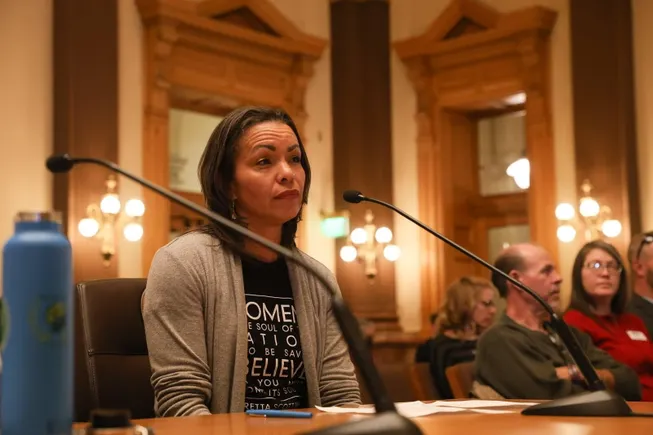
The founder of a Colorado nonprofit that provides peer support to people facing substance use and behavioral health challenges, Racquel Garcia, received an email in late March while traveling to a funeral. The email stated that, according to an assessment by the Department of Government Efficiency, the federal government would terminate early projects funded by COVID-19 grants, canceling more than $11 billion in public health funding nationwide.
The timing of the email was poignant: Garcia was heading to the funeral of a mother who had died of an overdose, a tragedy she is dedicated to preventing.
For Garcia, it seemed to mean the early end of a funded project for HardBeauty—a program providing behavioral health and substance use support to women during pregnancy, childbirth, and the postpartum period in Colorado's Western Slope region, which is primarily rural and frontier counties. However, what actually unfolded was weeks of funding uncertainty, involving a federal lawsuit filed by 23 states, including Colorado, and Washington, D.C., challenging the Department of Government Efficiency's cuts. As the lawsuit proceeds through the courts, providers regularly—sometimes weekly—receive updates on the status of the litigation, which will determine the fate of their funding for the remainder of the grant period.
There has been some relief so far. More than a week after the cuts were announced, a federal judge ordered the Trump administration to temporarily restore the grants.
But many providers are still dealing with major questions about their funding, which supports critical public health services such as vaccine clinics and substance use recovery programs.
"This is truly a difficult time for grantees," said Kylie Hibshman, director of integrated behavioral health and continuum of care at the Colorado Perinatal Care Quality Collaborative (CPCQC), which administers the grant to HardBeauty. "We hear every couple of weeks or so that the funding is still in litigation. It creates a lot of uncertainty for our organization and for grantees like HardBeauty who are working hard to support families on the Western Slope."
Providers face grant cuts
Garcia said HardBeauty is now the largest employer of people in recovery from substance use in Colorado, but the concept started small, with just two hands.
A few weeks into 2018, Garcia walked into a tattoo shop. Although she had been in long-term recovery for eight years, new challenges were mounting. Her beloved husband was still actively using substances, and Garcia worried it would erode the life they had built together.
Earlier that year, Garcia decided to set a motto. "Strong" didn't fit, nor did "faith" or "believe." Frustrated, she tried to fall asleep but tossed and turned. In a dream, she kept hearing two words.
"I couldn't sleep," Garcia said. "I kept hearing 'hard beauty,' 'hard beauty.'"
The dream became a catalyst for Garcia. The next morning, she resolved to do two things: divorce her husband (they later saved their marriage) and get a new tattoo. "Hard" tattooed across each knuckle of her right hand, and "Beauty" on her left.

"Hard beauty means doing what's best for yourself, above anything or anyone else," Garcia said.
In late 2019, Garcia's motto "hard beauty" became the name of her organization, which provides peer recovery and coaching to people in Colorado struggling with substance use.
Initially, Garcia led support meetings for young people in a church basement after two teen suicides in her town. Later, during the COVID-19 pandemic, Garcia and a co-founder began coaching and helping those facing substance use and behavioral health challenges. Social media fueled Garcia's organization, and it grew. HardBeauty now employs 34 peer coaches and two consultants statewide.
The backbone of the organization's programs relies on peer coaches: trained staff with personal experience of substance use who guide clients toward help and recovery. Over time, HardBeauty saw opportunities to expand its services into clinics, acute care hospitals, and birthing wards, including programs supporting pregnant women.
If a pregnant woman enters a hospital and is homeless, using substances, or her baby is exposed to substance use, HardBeauty staff can come to provide support. The organization's staff can communicate with child protective services and medical professionals, and many can also help with deliveries—nine of its employees are certified doulas. HardBeauty also partners with different hospitals across the state to provide peer support.
"Often in that space, all the focus is on the baby, and the mother is forgotten," Garcia said. "She doesn't get medication, and no one asks what she needs."
In 2024, HardBeauty received a one-year grant through CPCQC's Impact BH program to expand its community support services for pregnant and postpartum women. The grant supports HardBeauty and other organizations in the state, funded by the Colorado Behavioral Health Administration and federal funds.


For CPCQC, expanding services to the region was crucial. The grant enabled HardBeauty to expand services in Western Slope areas like Mesa and Eagle counties and allowed it to provide perinatal peer support services in the region, which is especially important in a state where suicide and accidental overdose are leading causes of maternal death, with 70% of deaths occurring between six weeks and one year postpartum.
"During pregnancy, you see your healthcare provider frequently, you're always there, then you give birth," Hibshman said. "Often, for most people, you go home, maybe go back for a postpartum check at six weeks, and then you're on your own."
"At some point, we return to the community, and ultimately it's the community that supports us or doesn't support us when we go home postpartum," Hibshman said.
However, in late March, the Trump administration abruptly canceled funds allocated through various federal funds and pandemic-related laws, seemingly jeopardizing this work. The email stated that the pandemic "is over" and the "limited purpose of the funds has been exhausted."
According to the lawsuit filed against the Department of Health and Human Services (HHS), the funding freeze threatens the dismantling of public health programs nationwide, including infectious disease tracking, substance use prevention, and childhood vaccinations. Meanwhile, HHS underwent a massive reorganization, with about 10,000 employees laid off and half of its regional offices closed.
In Colorado, state Attorney General Phil Weiser said in the lawsuit against the Trump administration that the cuts could jeopardize more than $229 million in funding over the remaining grant period.
"These cuts will also negatively impact Colorado's most vulnerable residents who seek behavioral health and substance use treatment, including high-risk children and those with severe mental illness," Weiser said in a press release.
For CPCQC and HardBeauty, about 25% of the original grant period's funding—HardBeauty was originally set to receive $75,000—was canceled months before its scheduled end on June 30.
On a broader scale, the federal cuts threaten the work of all organizations receiving community service grants through CPCQC on the Western Slope. According to a letter from CPCQC to the Colorado Attorney General's office, this could mean losing hundreds of opportunities to screen perinatal patients for depression and substance use, and also jeopardizes mental health and substance use workforce training for 30 enrolled participants, as well as seven community panel meetings discussing perinatal behavioral health gaps (note: an editor's note clarifies the number of meetings).
Although CPCQC has secured additional funding for the new grant period starting in July, organizations are still awaiting the ruling on the federal lawsuit to learn the fate of their original funding.
As of April 3, after a federal judge issued a temporary emergency order blocking the cuts, grantees could once again bill for services—at least for now.
Despite the relief, it feels like a rollercoaster for grantees.
"I haven't figured out how to tell my clients yet," said Susann Plenus, a recovery coach and doula at HardBeauty providing services through the Impact grant. "I don't know if I'll wake up the next morning and be told, 'Okay, now it's gone.'"
The grant provided Plenus with enough hours to work full-time, in addition to other services she provides for HardBeauty. The cuts meant she could immediately lose half her income.
However, there was still a 10-day period when billing was not possible. During the transition between the announcement of the cuts and the filing of the lawsuit, the grant was canceled. During that time, two women supported by HardBeauty gave birth—HardBeauty responded, and Garcia paid out of her own pocket.
For now, Garcia is trying to operate as usual amid high funding uncertainty, though she admits "it's almost day by day, depending on how the litigation goes."
"Every day I know I can keep going until I can't," Garcia said. "It's a terrible way to operate... but it is what it is."
Editor's note: This story has been updated to clarify the number of community panel meetings referenced.