
Federal Medicaid Cuts Could Deliver 'Devastating Blow' to Healthcare Providers
The U.S. Congress is advancing a budget resolution that may involve cuts to Medicaid, requiring the House Energy and Commerce Committee to save $880 billion. Experts note that cuts of this magnitude would almost inevitably involve Medicaid. For safety-net hospitals, rural hospitals, and long-term care facilities that depend on the program, the impact could be 'devastating,' potentially forcing them to reduce services, lay off staff, or even sell off assets. This article analyzes the potential pathways of the cuts and their cascading effects on healthcare providers.
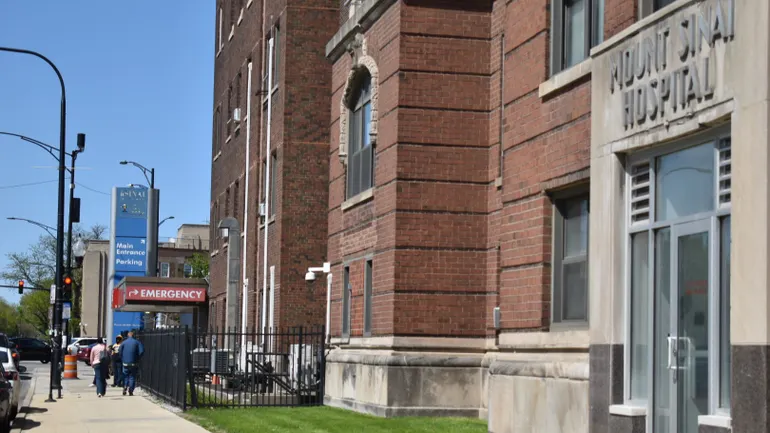
Sinai Chicago is a safety-net health system located in Chicago's South and West Sides, serving a patient population whose life expectancy may be years shorter than that of city residents just a few miles away.shorter by several years. The system's President and CEO, Ngozi Ezike, noted that the majority of its patients are African American and Latino, who face higher rates of chronic disease and worse health outcomes.
"This gives us a great opportunity to work on narrowing the health gap between our community and those just a few miles away who enjoy longer lives and a higher quality of life," Ezike said.
Therefore, in Ezike's view, Medicaid is a "critical" payer for the health system. About 70% of the institution's patients are enrolled in this public insurance program for low-income Americans—a rate far higher than the roughly 25% enrollment rate across Illinois.
Now, Sinai, like healthcare providers across the country, faces the potential consequences of cuts to the safety-net insurance program being considered by Congress.
Experts say that restricting the flow of Medicaid funds would have a significant impact on healthcare providers, especially those serving more low-income populations, hospitals in rural communities, and long-term care facilities that already rely heavily on the program.
According to KFF, a health policy research organization, Medicaid has broad coverage, accounting for about one-fifth of hospital care spending and covering more than 60% of long-term care service costs. Experts say some providers may need to reduce services, lay off staff, or consider selling to manage the impact.
At Sinai, for example, Ezike said the institution has developed contingency plans to ensure the health system can remain operational, which may include cutting services.
"We understand that we may have to provide fewer medical services—cut back and minimize losses—rather than continuing to try to do everything and ultimately not be able to provide any services in the long run," she said.
Shifting costs to states
Last month, Republican lawmakers passed a budget blueprint requiring the House Energy and Commerce Committee, which oversees Medicare and Medicaid, to save $880 billion.
The resolution did not specifically name Medicaid, but according to the Congressional Budget Office (CBO), it would be nearly impossible to achieve such a large savings target without cutting major health programs under the committee's jurisdiction.
The specific methods lawmakers will use to cut Medicaid spending are not yet clear, though the Energy and Commerce Committee is expected to meet next week to mark up and draft legislation for its part of the reconciliation package.
Edwin Park, a research professor at Georgetown University's McCourt School of Public Policy, said during a panel discussion hosted last month by the USC Annenberg Center for Health Journalism that most of the Medicaid cut plans currently under consideration involve shifting costs to states.
For example, Congress could set aper capita capon federal Medicaid spending growth. Alice Burns, deputy director of KFF's Medicaid and Uninsured Program, noted that over time, states would receive less federal funding per enrollee, increasing financial pressure to cut provider payment rates or reduce benefits.
Lawmakers could also set a federal spending cap only for enrollees covered through Medicaid expansion, as most states have expanded eligibility for the safety-net insurance program under the Affordable Care Act.
Other options include limiting provider taxes—where states tax providers and use the revenue to increase the state share of funding, which the federal government matches—as well as eligibility and renewal changes, such as work requirements.
Burns said that work requirements, which tie Medicaid eligibility to work, education, or volunteer hours, could cause beneficiaries to lose coverage, although some might eventually re-enroll. She added that many enrollees might not realize they have been removed from the program until they visit a doctor or try to fill a prescription, which could leave providers with uncompensated care costs.
Park said that, unlike the federal government, states must also balance their budgets, leaving them with options such as raising taxes, cutting other budget areas, or significantly reducing Medicaid. This could include lowering provider rates, restricting eligibility, or cutting benefits.
The cuts could lead to significant coverage losses. According to an analysis released this week by the CBO, if Congress implements per capita caps or limits provider taxes, millions of people could lose Medicaid or become uninsured.
"Every state will need to make difficult decisions to balance its budget," Park said.
A 'devastating blow' to providers
Burns said the potential scale of the cuts—possibly hundreds of billions of dollars—means there would be far-reaching effects on providers.
"No matter how you cut the program, cuts of this magnitude will have an impact," she said.
The cuts could come at a time when many providers are still recovering from the COVID-19 pandemic, when hospital profit margins narrowed as institutions faced pressure from rising labor and supply costs.
Although many hospitals' financial performance has improved since 2023, the recovery has been uneven—especially for hospitals that rely more heavily on Medicaid.
According to a KFF analysis, in 2023, rural and urban hospitals with high Medicaid patient shares had operating margins of 1.7% and 2.3%, respectively. In comparison, the overall operating margin for all hospitals was 5.2%.
Mary Haddad, President and CEO of the Catholic Health Association, which represents Catholic hospitals and other providers, said that after the pandemic, many hospitals were already seeking to improve efficiency and cut costs.
"We recognize that resources are limited and we must find ways to continue providing care to those who need it most," she said. "This would have a devastating impact."
John Fanburg, managing member and chair of the healthcare law practice at Brach Eichler, said hospitals will look to cut costs, possibly through layoffs or reducing services. Physician practices may close, or may try to sell themselves to larger health systems or private equity firms.
Fanburg said the impact would be more severe for providers serving more Medicaid patients. If Medicaid makes up a larger share of a system's budget, the greater the concern, "because if Medicaid pays $10 million a year, a 5% cut would have a significant impact," Fanburg said. "Where does that money come from?"
Zachary Levinson, director of KFF's Hospital Cost Project, said rural hospitals could also be hit hard by Medicaid cuts, as these institutions often have lower profit margins and are more likely to experience losses.
If patients lose insurance, the cost of their care could be shifted to providers. Many community health centers—which provide primary care to low-income populations, with half of their patients relying on Medicaid—already operate with negative profit margins and limited cash reserves, said Kyu Rhee, President and CEO of the National Association of Community Health Centers.
"Health centers have to absorb these costs. If you don't have the money to pay, what do you do? In that situation of negative margins and insufficient cash reserves, you are essentially forced to either lay off staff or close sites," he said.
Meanwhile, if beneficiaries lose coverage, they may avoid seeking medical care due to potential costs—putting additional strain on other parts of the healthcare system.
Haddad said that before the ACA was passed, many patients used emergency departments for primary care. She said this sometimes led to overcrowded emergency rooms or delayed treatment for sicker patients—a situation that could return if Medicaid is cut.

Ezike of Sinai worries that cutting Medicaid, beyond impacting the health system itself, could have ripple effects across the entire safety-net ecosystem. Other providers refer patients to Sinai because the health system offers a range of specialty services that other institutions may not provide, such as a high-level neonatal intensive care unit.
She said that if cuts occur, some smaller safety-net institutions could close.
"This would lead to people not being able to access care, then presenting at later stages of disease with worse outcomes, perpetuating this vicious cycle," Ezike said. "The life expectancy gap we are actively working to narrow could actually worsen."