
CVS net profit triples, health plan business performs strongly
CVS Health's second-quarter net profit approached $3 billion, roughly three times that of the same period last year, mainly driven by the strong earnings performance of its insurance unit Aetna. Despite a decline of about 600,000 total members, Aetna improved its profit margin by cutting benefits and exiting unprofitable markets. The company raised its 2026 guidance for the second time and announced a collaboration with Eli Lilly to offer more GLP-1 weight-loss drugs through CVS channels.
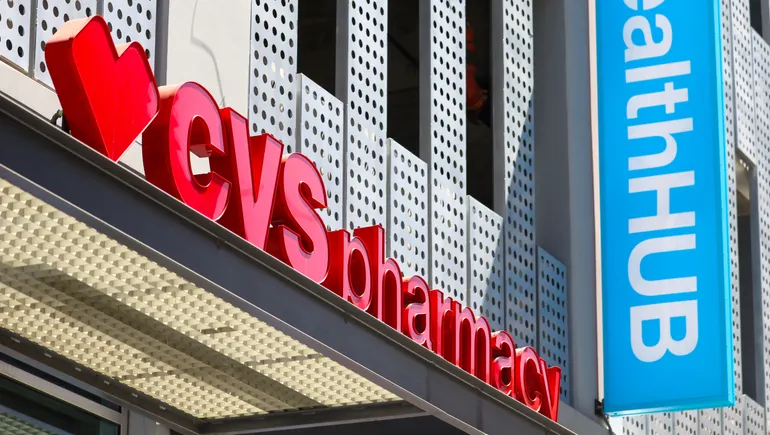
Aetna, the insurance division of CVS Health, saw its second-quarter profit soar, pushing the Rhode Island-based healthcare giant's net income to nearly $3 billion — about three times the $1 billion from the same period last year.
Profit growth far outpaced revenue growth. The company's revenue rose 7% year-over-year to $106.1 billion.The results showthat insurers are generating higher profits with fewer members. The Medicare Advantage business, which had previously been a drag on Aetna, became a performance driver this quarter. Executives said this was due to the company cutting benefits and exiting unprofitable markets.
CVS's results significantly exceeded Wall Street expectations. Although Aetna contributed most of the outperformance, CVS's health services segment and its pharmacy and retail store operations also beat expectations.
"For CVS's second quarter, there's not much to say beyond 'wow,'" Leerink analyst Michael Cherny wrote in a research note on Wednesday.
Based on these results, CVSraised its 2026 earnings outlook for the second time this year. The company now expects adjusted earnings per share of $7.90 to $8.10, up from its previous guidance range of $7.30 to $7.50.
CVS is the latest insurer to beat expectations and raise guidance in the second quarter, as the industry makes progress in margin recovery. Previously,UnitedHealth、Elevance、Centene、MolinaandCignahave all reported similar results.Humana is the only company that has not raised its guidance, with its 2026 outlook remaining unchanged.
Aetna, the third-largest health insurer in the U.S., had 26 million members at the end of the second quarter, down about 600,000 from the end of 2025, as the companyexited the Affordable Care Act (ACA) insurance exchanges。
But CVS's operating profit for that segment doubled year-over-year, and its medical loss ratio (a measure of the proportion of member medical spending) fell to 87.4%. Insurers typically prefer to keep the medical loss ratio below 90% while staying above regulatory minimums. In comparison, inthe third quarter of 2024, before current CEO David Joyner took office, Aetna's medical loss ratio had exceeded 95%, mainly due to higher medical costs for its Medicare Advantage elderly members. That was the company's highest medical loss ratio in recent years.
However, according to Aetna President Steve Nelson, CVS's Medicare privatization business is experiencing a turnaround.
"We've made tremendous progress in geographic coverage, product portfolio, and open enrollment execution, and we've taken a lot of disciplined measures over the past two bidding cycles, and these are showing up in 2026," Nelson said on a conference call with investors on Wednesday morning. "Our membership decline was less than expected, and the member mix is more favorable."
"Everything is really coming together," he added.
Aetna plans to continue this momentum into next year. The company has submitted its bid for the 2027 plans and believes this will help return to target profit margins during periods of high medical utilization.
"We are seeing significant momentum in Aetna's margin recovery," Chief Financial Officer Brian Newman told investors. "We expect this momentum to continue over the next few years, driving us back to our target profit margins."
CVS's other two reporting segments — the health services segment, which includes the large pharmacy benefit manager Caremark, and the pharmacy and consumer health segment, which includes retail stores — also performed well in the second quarter.
The health services segment posted operating profit of $1.6 billion, up 45% year-over-year, on revenue of $51.8 billion, up 11%.
However, Newman said challenges from a major federal drug discount program are putting pressure on the segment's profitability.
CVS profits by operating as a contract pharmacy for participating healthcare providers in this program, known as 340B, and charging various dispensing and administrative fees. The program has historically been a stable source of revenue.
But drugmakers are restricting the 340B contract pharmacies that healthcare providers can use, and more specialty drugs are converting to lower-cost generics — two trends that are compressing CVS's 340B profitability, according to Prem Shah, CVS's executive vice president and group president.
The company's pharmacy and consumer health segment posted operating profit of $1.4 billion in the quarter, nearly double the $736 million from the same period last year, with revenue roughly flat at $33.8 billion. The segment benefited fromCVS's acquisition of Rite Aid stores and prescription files, which was completed at the end of last year.
CVS also announced a new partnership with Eli Lilly on Wednesday to expand Americans' access to the drugmaker's GLP-1 weight-loss drugs Zepbound and Foundayo through the CVS app.
CVS had previously offered Novo Nordisk's blockbuster weight-loss therapy Wegovy, but Joyner said the partnership with Lilly will make more GLP-1 drugs available directly to consumers.
With this move, CVS is betting that Americans will continue to embrace GLP-1 drugs, even as they become harder to obtain through insurance. Employers and health plans have been limiting coverage of GLP-1 drugs for weight loss,unable to absorb the high costs of these drugs。
However, GLP-1 drugs have brought significant revenue growth to pharmacy benefit managers like Caremark and have become a financial boon for CVS pharmacies.
"What we're thinking about is where we believe the obesity treatment category is headed," Joyner said. "We're seeing a lot of demand flowing back to the cash-pay or uninsured market, which is why we're emphasizing our ability to support that on direct-to-consumer platforms — serving both Lilly and Novo Nordisk products in that market."
The company said that by the end of this year, patients eligible for Zepbound and Foundayo will be able to pick up these injectable GLP-1 drugs at more than 9,000 CVS stores on the same day their prescription is written.
CVS has also launched a new model that connects self-pay patients with GLP-1 virtual visits at MinuteClinics.