
ONC Chief Micky Tripathi on Information Blocking Complaints, Vendor Penalties, and the Future of TEFCA
At the HIMSS Annual Conference in Orlando, interoperability took center stage. ONC Chief Micky Tripathi was interviewed, discussing the volume and composition of information blocking complaints, progress on vendor penalties, and the release and implementation plans for the TEFCA framework.
At the annual HIMSS conference in Orlando, interoperability took center stage. Last week, from large EHR vendors like Cerner to interoperability startups like Health Gorilla, numerous companies showcased their data-sharing solutions, aiming to coordinate care across thousands of miles among different healthcare organizations and health IT systems.
The federal government has also been particularly active in this area, even before the pandemic highlighted the nation's lack of accessible health data sharing.
The Biden administration recently released the national data exchange framework TEFCA and began receiving information blocking complaints, measures stemming from the 21st Century Cures Act passed in 2016.
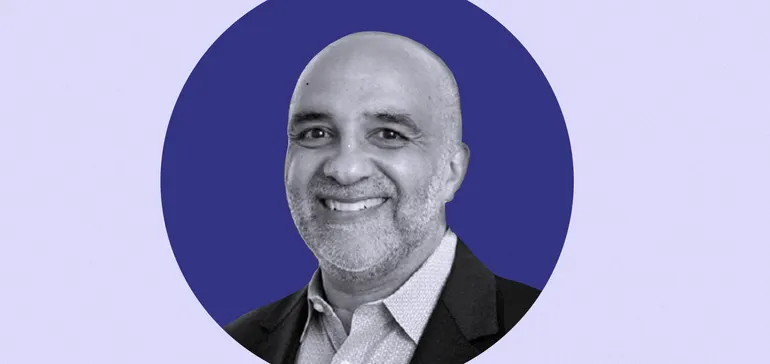
National Health IT Coordinator Micky Tripathi, in an interview on the sidelines of the HIMSS conference, shared his views on the scope and content of interoperability complaints, when the industry can expect penalties for information blockers, and how the government plans to advance TEFCA.
Here are five takeaways from the interview.
-
Information blocking complaints
In early 2020, HHS finalized interoperability rules requiring providers, health information exchanges, and ONC-certified health IT developers to share data with patients and each other.
Since the information blocking rule took effect last April, HHS has received 299 information blocking complaints.
"I actually didn't know what to expect, whether in terms of volume or composition. Interestingly, I've certainly heard from both sides," said Tripathi, a longtime health IT figure. "I did hear some people say, 'Wow, this is much more than what's being reported in complaints.' But on the other hand, I also did hear people say, 'Wow, that's a lot. That's significant.'"
Tripathi said the number of complaints underscores the importance of advancing further education and enforcement, so that aggrieved parties know there are systems in place to flag issues.
"There's always a balance—how many complaints do you want to see? I would actually like to see zero real complaints, because that would mean this isn't happening. But on the other hand, knowing that problems exist, I want everyone who believes they're under the influence of interference to feel they can file a complaint," he said.
The majority of complaints—211—were against healthcare providers. Forty-six alleged information blocking by specific health IT developers, while only two targeted health information networks or exchanges.
Meanwhile, patients filed the majority of complaints.
"I didn't know what the composition would look like," Tripathi said. "I think it's really interesting. Especially because individuals, in some ways, might be the hardest to reach."
The ONC chief noted that individuals have a harder time learning about the reporting process, while vendors are paying close attention because they face "real, serious" civil penalties of $1 million per incident if found in violation.
"So in that sense, having that many individuals come forward is a bit surprising. I think it's a good thing," he added.
Despite calls from some patient advocates, the government has not considered publishing a list of participants accused of information blocking.
It remains unclear how many complaints have been substantiated, although regulators have referred all credible complaints to the HHS Office of Inspector General for investigation. Tripathi emphasized that ONC merely receives complaints and has not yet found any violations.
"We absolutely will not release the names of any party. For something that is merely a complaint, not yet investigated," Tripathi said, adding that when enforcement agencies begin investigating complaints, he "can't even talk about what the OIG will do."
-
Appropriate deterrent measures
An OIG rule outlining financial penalties for information blocking by health information exchanges and health IT developers is expected to be finalized in March. HHS has not yet proposed appropriate deterrents for providers, although the 21st Century Cures Act allows regulators to impose fines of up to $1 million per information blocking incident.
There are concerns that without penalties for providers found to be impeding the free flow of electronic information, the information blocking rule will be toothless—especially since most complaints currently target providers.
HHS Secretary Xavier Becerra, in a virtual address at HIMSS, highlighted this major enforcement gap.
Tripathi said criticism of the delay is justified.
"We are working very hard, but it's complex," Tripathi noted. "I can assure you, we are spending a lot of time thinking about how to roll out that policy. We need to resolve it as soon as possible."
-
TEFCA release 'amazing'
In January, the Biden administration released the governance framework for health information exchange, called the Trusted Exchange Framework and Common Agreement (TEFCA). TEFCA aims to create legal and technical requirements to enable secure information sharing among different entities.
Soon, health information networks, exchanges, and other companies will open applications to become Qualified Health Information Networks (QHINs), which are collections of organizations where participants can exchange health information across the United States.
Tripathi said the release of TEFCA felt 'amazing,' partly because of how long it took to come out.
"It had gone quiet. Until 14 months ago, I was still in the industry, and I really thought it was dead. So being able to come in, assess the current state, make some adjustments, and confirm it would be valuable—that's very exciting," he said.
Tripathi said ONC and its private partners, including the Sequoia Project, have begun working with stakeholders to address issues in the framework. Community reaction has been largely positive, with many organizations appearing interested in joining.
To become a QHIN, entities must sign the Common Agreement, which establishes the infrastructure model and governance approach to help users in different networks share information with each other. The government expects the first QHINs to join the network this year.
"There are certainly some potential QHINs starting to look into the matter, and hopefully stepping forward to go through the process," Tripathi said.
That said, it doesn't mean concerns haven't been raised, including clarifying how individual access works, identity verification and patient matching, sharing minimum necessary data with public health, and reconciling different laws and jurisdictions, he added.
"It's not that we waved a magic wand and these issues disappeared. But now we have a forum to start raising these questions," Tripathi said.
Tripathi noted it's too early to speculate how many entities will apply, and it's important for ONC not to be overly prescriptive about what constitutes a viable QHIN. But it may only take a few networks joining to achieve broad interoperability.
For example, if interoperability frameworks Carequality and CommonWell Health Alliance join TEFCA, that would cover nearly the hospital acute care market and ambulatory providers, since vendors participating in those networks represent "about 80% to 90% of providers nationwide," Tripathi said.
Additionally, other organizations have different ways to participate, he added. For instance, health insurers could have QHINs form and join different networks, or band together to form their own payer-specific health insurance QHIN.
"From ONC's perspective, from TEFCA's perspective, we are agnostic about this. This is what I call market formation," Tripathi said.
-
Federal agency participation
ONC is working with multiple federal agency partners to explore the use cases they want to achieve through TEFCA, including CMS, the Centers for Disease Control and Prevention, the Social Security Administration, and the Departments of Defense and Veterans Affairs, which provide healthcare to service members and veterans.
Initially, QHINs participating in TEFCA must respond to data requests for treatment and individual access purposes. Then, over time, ONC and the Sequoia Project plan to gradually introduce other exchange purposes such as payment, healthcare operations, public health, and government benefits determination.
Tripathi said CMS is particularly focused on TEFCA use cases.
"We're discussing whether there are possibilities—within the scope of CMS's participation in networks (such as through Medicare, Medicaid, or CMMI)—whether there are other opportunities for them to engage with TEFCA in a more efficient way to accomplish what they're already doing today? That would be a huge benefit to the broader taxpayer, because it would lower their operational costs," he added.
Other use cases CMS might be interested in include quality measurement pathways, as well as situations requiring claims attachment information. Tripathi said CMS is already obtaining data, but TEFCA could be a more efficient way.
Similarly, SSA is already involved in some networks for government benefits determination purposes, and TEFCA offers opportunities for scalability.
-
Carrot and stick?
Some in the industry worry that TEFCA's voluntary nature could threaten future adoption, despite the competitive advantage of joining. Tripathi said that given there are no direct incentives or penalties, ONC plans to continuously monitor this.
Tripathi noted that because the government supports TEFCA, it provides a degree of stability and trust to the framework, which hopefully is a benefit that private companies will be able to leverage, since the commercial market struggles to achieve these use cases on its own.
"Hopefully the TEFCA model can help achieve these," Tripathi said.
ONC is watching adoption before considering any additional measures to incentivize participation, such as requiring entities to participate in TEFCA if they also want to participate in other federal programs like Medicare or Medicaid.
"I don't know if there's a 'let's start talking about federal incentives now' kind of thing, but rather as things develop and grow, you start to see more opportunities to show that this has real value for taxpayers," Tripathi said.