
New Antitrust Merger Rules May Significantly Suppress Healthcare Industry Deal Activity
The Federal Trade Commission and the Department of Justice jointly released proposed revisions to merger guidelines, aiming to strengthen scrutiny of vertical integration, cross-market transactions, and serial private equity acquisitions in the healthcare industry. If the new rules are approved, they could have a significant cooling effect on overall merger and acquisition activity.
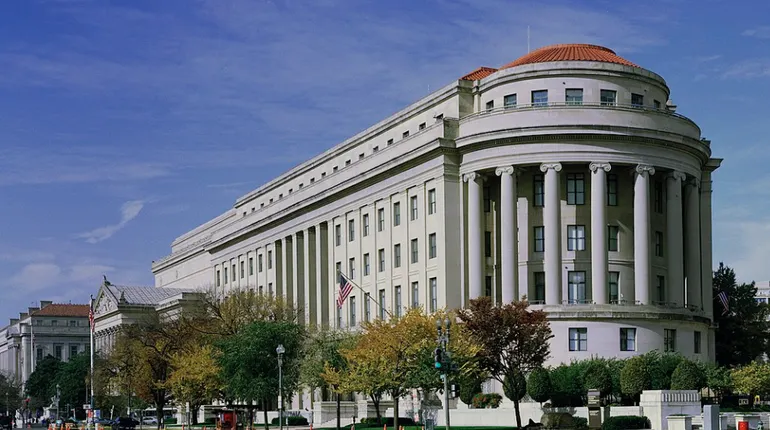
U.S. federal antitrust agencies have opened a public comment period on draft merger guidelines revisions. Antitrust experts point out that if the draft is finalized, regulators will gain stronger tools to more effectively curb consolidation trends in the healthcare industry.
The new guidelines, jointly issued bythe Federal Trade Commission (FTC) and the Department of Justice (DOJ)include several provisions that regulators can use to target vertical mergers and cross-market transactions. Lawyers say the new guidelines are likely to have a cooling effect on overall merger activity—at least temporarily, until the business community sees how merger challenges play out in court.
"If adopted, these guidelines will bring stricter scrutiny and increase the overall likelihood of challenges," said Jim Burns, antitrust attorney at Williams Mullen.
Although the guidelines are not binding, they serve as an authoritative roadmap for regulators in deciding which mergers to challenge. Courts also rely on the guidelines to determine the legality of proposed transactions.
The guidelines had not been revised for more than a decade, drawing criticism that regulators have fallen behind current market realities—including in the healthcare industry,where there is evidence that consolidation has driven up already high healthcare prices.。
Regulators have historically struggled to bring strong cases against complex and non-traditional merger combinations, as many hospitals and health insurers seek deals to diversify revenue streams and retain more of patients' healthcare spending.
Experts say the new guidelines could change that.
"I think the guidelines target the types of mergers the FTC has previously failed to successfully challenge—they are providing more guidance to apply in similar situations," said Pahl Zinn, attorney at Dickinson Wright.
Vertical and cross-market deals
Experts note that if the guidelines are finalized, antitrust regulators will be more likely to challenge types of mergers where they previously had weaker legal authority, including vertical mergers and cross-market transactions.
Under the new guidelines, vertical mergers must not create anticompetitive market structures; even if the combined market share is below 50%, regulators will review vertical deals.
Zinn said the vertical merger guidance is "particularly relevant to the healthcare industry." "The day-to-day reality in healthcare is that this will allow regulators to examine situations where large hospital systems attempt vertical integration."
Vertical integration is a common strategy among large insurers and hospitals. By acquiring physician practices, they retain a larger share of revenue within the system and push toward value-based payment models.
The industry has recently seen several large vertical deals, includingCVS's $10.6 billion acquisition of Oak Street Health, a primary care chain focused on elderly patients, andUnitedHealth's $3.3 billion acquisition of Amedisys, a home health and hospice provider。
Hospitals and other corporate entities are also heavily acquiring physician groups—currently, aboutthree-quarters of U.S. physiciansare employed by hospitals, health insurers, or private equity firms.
Experts say that under the new guidelines, regulators may also gain greater discretion to challenge deals that span multiple states or markets. Current regulations provide limited leverage for regulators when analyzing cross-market transactions, which has allowedhealth systems to grow into multi-regional playerswhile largely avoiding antitrust enforcement.
Burns noted that the guidelines suggest that if a proposed deal puts an emerging party on a path to becoming a monopolist—even if it has not yet reached monopoly status—the deal could attract more antitrust scrutiny.
"Under traditional antitrust analysis, when two entities are not competitors at all, it is often difficult to make a compelling argument to a court about how this could substantially lessen competition," Burns said. "This is the beginning of laying some groundwork for arguments in non-traditional deals."
Serial acquisitions and data integration
The FTC and DOJ are also targeting private equity serial acquisitions—where firms acquire and combine multiple small businesses into a larger company.
Private equity serial acquisitions areincreasingly commonin the healthcare industry, although their profit-driven impact on healthcare quality and costs is highly debated, including innursing homesandrural hospitals.
Antitrust experts say the new guidelines give regulators a handle to challenge potentially anticompetitive serial acquisitions by analyzing past deals and the likelihood of future deals, rather than viewing each transaction in isolation.
By reviewing the entire sequence of deals, regulators may also intensify scrutiny of hospital or retail healthcare acquisitions involving multiple physician practices.
For example, Walgreens entered the healthcare delivery business in 2021 by acquiringa majority stake in VillageMD, then acquiredSummit Health, a New York-based healthcare chainin late 2022. Four months later, it acquired aConnecticut physician group。
Experts say heightened scrutiny of multiple acquisitions could become a particular obstacle for companies seeking deals.
"It will be interesting to see these giants—their growth and strategy, all the shareholders of Optum and UnitedHealth. I don't think they hold these assets expecting them to grow organically," said Nathan Ray, healthcare M&A lead at consulting firm West Monroe.
Other deals that may face more scrutiny involve healthcare technology and competitive data. Regulators recently failed to blockUnitedHealth's $13 billion acquisition of Change Healthcare—a deal completed in late 2022 after the two companies defeated a DOJ challenge in federal court.
Regulators had sued to block the deal over concerns that UnitedHealth could mine data from Change's billions of healthcare claims, including data from its health insurance competitors.
"In (the regulators') view, they should not have lost any of those challenges," Burns said. Presumably, "they think they will be better positioned going forward to convince courts to side with them in merger challenges and not lose cases like UnitedHealth-Change again."
Under the proposed guidelines, regulators will review deals that give the combined company control over products or services that competitors might use to compete, as well as deals involving access to competitors' sensitive competitive information. The guidelines cite existing case law.
Ray noted that these restrictions could also apply to cross-market mergers. For example,the merger of Michigan systems Spectrum and Beaumontwas not challenged by regulators because the two operators did not compete in the same geographic area, but the deal led to data integration, Ray said.
"This is the beginning of laying some groundwork for arguments in non-traditional deals."
—Jim Burns, antitrust attorney at Williams Mullen
Focus on labor and presumptive harm
Under the guidelines, regulators also plan to place greater emphasis on potential harm to workers from mergers.
In healthcare, for example, regulators could consider the impact of hospital mergers on doctors and nurses, including whether market concentration could suppress wages or give employers excessive power.
Research shows that after hospital mergers,wage growth slowsdue to shifts in labor market power; when physician practices are acquired by hospitals,physician income also declines。
"I think this is an important factor, especially in areas of healthcare with shortages of qualified labor, such as nursing," Zinn said.
The guidelines also lower the market share threshold for presumptive harm from mergers.
Carrie Amezcua and Abigail Cessna, attorneys at Buchanan Ingersoll & Rooney, said that horizontal mergers could be deemed illegal if the combined company's market share exceeds 30%—a threshold lower than the high market share standard courts currently recognize.
The public comment period for the guidelines is open until September. The changes have already faced opposition from the American Hospital Association (AHA), which said it plans to review the proposal and submit formal comments, butreiterated its previous positionthat the guidelines do not need major revisions.
"Hospital mergers benefit patients and their communities in many ways, and the guidelines do not need major revisions," AHA General Counsel Melinda Hatton told Healthcare Dive.
The Biden administration has beenincreasing pressure on healthcare industry M&A. Earlier this month, the FTC withdrew antitrust policy statements, including a hospital merger safety zone. The agency alsoproposed changes to pre-merger notification requirementsto give regulators more time to review deals.
Antitrust experts say these proposals show regulators' willingness to modernize antitrust enforcement, but whether courts will agree with regulators' more aggressive stance—and whether these measures can curb the rise in M&A activity as companies seek deals amid a turbulent economic and regulatory environment—remains to be seen.
"Regulators are clarifying that the positions they have expressed to courts over the past few years were appropriate under prior precedent," Burns said. "The business community may disagree."
