
Cigna and Humana Merger: Long Review May Be Settled, Experts Say Approval Still Possible
According to the Wall Street Journal, health insurance giants Cigna and Humana are in talks to merge, potentially announcing a deal before the end of the year. Experts point out that the transaction will undergo a lengthy antitrust review, but given the limited business overlap, the possibility of final approval should not be overlooked.
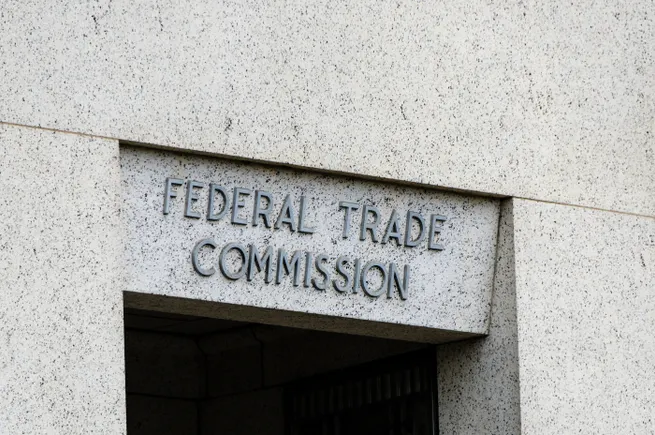
Industry experts say that the merger between health insurance giants Cigna and Humana will undergo strict antitrust review, but it may still ultimately be approved. However, to gain regulatory clearance, the combined company may look very different from today's Cigna and Humana.
According to a Wall Street Journal report on Wednesday, the two insurers are in talks to merge and could announce a deal by the end of the year. Following the news, shares of both companies fell, with investors expressing concerns over the uncertainty of increasingly tough antitrust scrutiny from the Federal Trade Commission (FTC) and the Department of Justice (DOJ).
Analysts and industry experts agree that the union of these two major health insurers will face strict antitrust review. Massachusetts Democratic Senator Elizabeth Warren has already called on regulators to conduct a "careful review" of the potential merger.
Obtaining regulatory approval—especially if the review process is further delayed by litigation challenges—could push the final completion of the deal back by a year or more. However, because there is little direct competition between the two companies, the Cigna-Humana merger could still be approved, creating a healthcare giant with annual revenue of approximately $300 billion.
"If I had to bet, I think the deal is likely to be approved," said Samantha Prokop, head of healthcare transactions at Florida law firm Gunster. "Cigna and Humana know what the regulatory framework is, they know what they are facing, and they expect to do this."
Experts say the merger is a smart strategic move. It combines two companies that are currently more focused—Humana on Medicare Advantage plans and Cigna on employer-sponsored plans—into a diversified large managed care organization. In addition to gaining significant scale in the MA space, Cigna's pharmacy benefit management (PBM) business could absorb Humana's insured population, thereby strengthening its drug purchasing bargaining power.
Experts point out that other major U.S. insurers such as UnitedHealth, CVS, and Elevance all have highly diversified businesses—most built through acquisitions—so there is ample regulatory precedent to allow Cigna and Humana to merge.
"The FTC has been quite inconsistent over its lifetime. It allowed UnitedHealth to grow to where it is today," said Nathan Ray, healthcare M&A lead at consulting firm West Monroe. "It created a whole new scale tier of payers, and one could argue that mergers like this are necessary to compete with that."
"A very difficult deal to get approved"
Historically, regulators have had the highest success rate when challenging deals with significant horizontal overlap—mergers that increase a company's market share in an existing industry.
Concerns that health insurer consolidation could reduce consumer plan choices in specific markets helped block several proposed major mergers in the mid-2010s, including Aetna's acquisition of Humana and Anthem's acquisition of Cigna.
Both deals were blocked by the DOJ in 2017, setting a precedent that will make regulators extremely suspicious of the Cigna-Humana deal, said David Balto, a former FTC policy director and antitrust attorney.
"This will be a very difficult deal to get approved. Nothing strengthens an enforcement agency's resolve more than winning in court," Balto said.
Given this history, analysts say investors were cautious when the Wall Street Journal reported on Cigna-Humana talks. On November 29, the day merger speculation surfaced, Humana shares fell nearly 6% and Cigna shares fell more than 8%.
However, for this proposed deal, horizontal overlap issues are minimal—especially if Cigna and Humana divest overlapping assets as planned.
According to Reuters, Cigna is currently seeking to sell its MA business. Meanwhile, Humana announced in February that it would exit its commercial group business over the next 18 to 24 months.
JPMorgan analyst Lisa Gill wrote in a research note on the deal speculation that these divestitures would largely eliminate the competitive overlap between Cigna's and Humana's managed care businesses.
However, Balto said regulators are currently less open to divestitures as a solution to antitrust concerns than in the past. "They don't believe these remedies work," Balto said.
Even if divestitures are approved and eliminate most horizontal concerns, Gunster's Prokop noted that the FTC could still analyze how the Cigna-Humana merger affects plan choices in specific markets.
"I don't know how much more consolidation we can take and still see a fair market."
— Samantha Prokop, head of healthcare transactions at Gunster
Additionally, regulators may examine the vertical effects of the deal, such as whether the combined insurer would gain greater leverage in price negotiations, causing downstream harm to healthcare providers. They may also consider how the merger affects providers in markets where Cigna and Humana operate their own physician networks, and whether it could lead to more patients being steered away from independent providers.
Prokop said that given Humana's large primary care network focused on seniors, spanning 12 states with hundreds of centers, regulators may scrutinize the senior care sector more closely.
"Doctors have one less contract," Prokop said. "The concern is you have four major payers, and now it's going to be three. I don't know how much more consolidation we can take and still see a fair market."
Updates to merger guidelines proposed by federal antitrust agencies earlier this year could make it easier for them to successfully argue more abstract theories of harm in court, such as negative vertical effects of a deal. If finalized, the guidelines are expected to give regulators more leverage to block mergers.
A new PBM giant
Experts say that if regulators do decide to challenge the Cigna-Humana deal, the most effective strategy might be to focus on the overlap of the two companies' pharmacy benefit management businesses. That's because combining them would create a PBM giant in an already highly consolidated market.
PBMs are the much-maligned intermediaries in the drug supply chain between health insurers and drug manufacturers. According to data from pharmaceutical industry research firm Drug Channels Institute, Cigna has the second-largest PBM in the U.S., and Humana has the fourth-largest.
"The PBM overlap could be more problematic, depending on how the DOJ defines the competition," Bank of America analyst Kevin Fischbeck wrote in a research note on the deal.
Combining Cigna's and Humana's PBMs would create a company capable of competing with market leader CVS Caremark, which could cause vertical harm to pharmaceutical companies or distributors, analysts said.
"Given the unusually strict regulatory scrutiny of PBMs... this aspect of the deal seems certain to be challenged," TD Cowen analyst Gary Taylor wrote in a research note on the merger speculation. PBMs already face considerable anticompetitive scrutiny, including an FTC investigation.
JPMorgan analyst Lisa Gill noted that Humana's PBM is relatively small and primarily serves its own managed care members. However, "we believe the likelihood of regulators challenging the deal remains high," Gill wrote in the note.
FTC's 'deaf ears'
Experts estimate that the Cigna-Humana merger could take one to two years from announcement to completion, depending on how antitrust agencies approach their review of the deal.
Prokop said that if regulators are only concerned about horizontal consolidation in managed care, and Cigna sells its MA business, the deal could close within months.
However, "I think it's highly likely the FTC will investigate or challenge aspects of the merger. FTC Chair Lina Khan has shown a more hawkish stance toward corporate consolidation, especially in healthcare," said George Condon, senior analyst at research firm Third Bridge.
As medical prices continue to rise for Americans, President Joe Biden has called on antitrust regulators to vigorously enforce antitrust laws in healthcare. However, regulators' recent track record of challenging deals is not strong.
Despite significant regulatory scrutiny, insurers have been allowed to balloon into some of the largest companies in the U.S., experts say. In 2018, CVS acquired health insurer Aetna for $78 billion, and Cigna acquired its PBM Express Scripts for $67 billion. In 2020, health insurer Centene acquired WellCare for $17 billion. All three major mergers were completed unchallenged, although Centene was required to divest some businesses.
Payers have also continued to acquire physician practices, including CVS's acquisition of Oak Street Health this year for nearly $11 billion, and UnitedHealth's expansion of its physician network to 90,000 owned or affiliated doctors—one-tenth of all doctors in the country—through a series of deals. UnitedHealth also completed its $13 billion acquisition of data analytics company Change Healthcare last year, despite a DOJ lawsuit to block it.
Regulators have had less success challenging deals without direct competitive overlap, experts say. The Cigna-Humana merger could follow a similar script: strict antitrust review, perhaps a direct challenge, but ultimately the payers will still merge.
But "regulators have indeed changed—they take a broader view," Balto said. "The typical health insurer argument that 'we need to merge to enhance our ability to lower provider costs' will fall on deaf ears."
