
FDA Laboratory-Developed Test Rule May Become First Test of Agency Power After Chevron Doctrine Overturned
The U.S. Supreme Court voted 6-3 in late June to overturn the Chevron doctrine, meaning courts are no longer required to defer to federal agencies' interpretations of ambiguous congressional statutes. This ruling could affect the FDA's regulatory rule for laboratory-developed tests (LDTs), which has already sparked industry litigation. Lawyers note that the LDT lawsuit will serve as a 'barometer' for observing changes in FDA power after the Chevron doctrine was overturned.
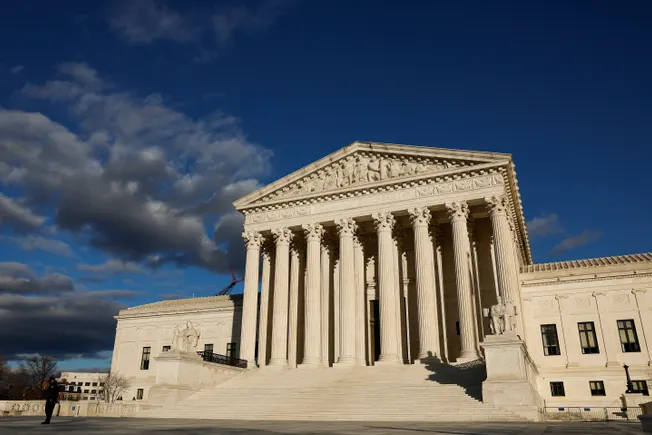
The U.S. Supreme Court's landmark ruling overturning the Chevron doctrine could open the door to more challenges to Food and Drug Administration (FDA) regulations, including the agency's controversial rule on laboratory-developed tests (LDTs).
In late June, the Supreme Court voted 6-3 to overturn the decades-old Chevron deference doctrine, meaning courts no longer must defer to federal agencies' interpretations of ambiguous statutes passed by Congress. The cases—Loper Bright Enterprises v. Raimondo and Relentless Inc. v. Department of Commerce—involved fishery monitoring requirements but could have broad implications for all federal agencies.
"This is a broad ruling that will manifest itself in various ways, many of which are difficult to foresee," Jeff Gibbs, director at the Washington, D.C. law firm Hyman, Phelps & McNamara, told MedTech Dive.
Gibbs added that the ruling will affect the medical device industry, and ongoing litigation over the FDA's final rule on LDTs could serve as "a kind of bellwether" for how the Chevron upheaval impacts the agency.
"This is a broad ruling that will manifest itself in various ways, many of which are difficult to foresee."
— Jeff Gibbs, Director at Hyman, Phelps & McNamara
An FDA spokesperson said the agency remains confident in the legal basis of its regulations, guidance, and decisions.
"We will continue to take actions guided by science and consistent with federal law and regulatory authority," the spokesperson wrote in an email.
Former FDA Commissioner Scott Gottlieb wrote on X (formerly Twitter) that the court's ruling is "significant" for the FDA. Gottlieb noted that courts will still defer to the FDA on product review decisions, but certain areas could be immediately affected, including the agency's final rule on LDTs.
LDTs become an 'early indicator' of Chevron's impact
How the Supreme Court's Chevron ruling will apply is expected to first become apparent in LDT regulation.
For decades, the FDA exercised enforcement discretion over LDTs, meaning it did not require most tests developed by laboratories to comply with medical device regulations, such as premarket review, device registration, labeling standards, and adverse event reporting.
That changed on May 6, when the agency issued a final rule significantly expanding its oversight of LDTs, bringing these tests under the same framework as other in vitro diagnostics. Despite strong opposition from the laboratory industry, the FDA moved forward with the plan because officials believed that the risks associated with these increasingly complex and widely used tests had grown since the agency initially adopted its more permissive approach.
Critics of the new rule accuse the agency of exceeding its statutory authority in defining LDTs as medical devices. Less than a month after the final rule was issued, the American Clinical Laboratory Association (ACLA) sued the FDA in the U.S. District Court for the Eastern District of Texas, seeking to overturn the rule. ACLA, whose members include test developers such as Labcorp and Quest Diagnostics, argues that Congress never granted the FDA authority to regulate clinical laboratories' provision of testing services.
Legal experts say the Supreme Court's ruling overturning Chevron deference in the Loper and Relentless cases will affect how courts review ACLA's challenge.
"I do expect Loper and Relentless to be a significant part of the current litigation," said Rebecca Wood, a partner at the Chicago law firm Sidley and former FDA chief counsel. "That doesn't mean the agency will necessarily lose, but it will certainly receive less deference than it would have before these rulings."
Wood said that even with the Chevron precedent overturned, the FDA's positions on scientific, technical, and regulatory policy issues will continue to receive respect. However, the ruling could make it harder for the agency to prevail in such court cases.
Whether testing companies and organizations will file further legal challenges to the LDT rule following the Supreme Court's action remains to be seen. "They may prefer to let that specific case play out naturally," Wood said.
"That doesn't mean the agency will necessarily lose, but it will certainly receive less deference than it would have before these rulings."
— Rebecca Wood, Partner at Sidley
Some believe the FDA will face more resistance in its overall decision-making, especially those involving interpretations of its authority under the Federal Food, Drug, and Cosmetic Act.
"Courts have made clear that agencies do not get deference on questions of statutory interpretation," said Greg Levine, a partner at the Boston law firm Ropes & Gray. Levine added that "industry participants, manufacturers, and other stakeholders will be less hesitant to challenge the FDA."
The FDA, for its part, will need to spend more time thinking about the basis for its decisions and articulating justifications that can withstand court challenges.
"This will inevitably slow down some of the FDA's policy-making or rule issuance," Levine said.
Another recent Supreme Court ruling could expose the FDA to more challenges, allowing plaintiffs to sue within six years of an agency action causing harm, regardless of when that action occurred.
"In terms of the FDA's vulnerability to legal challenges, that's a pretty powerful combination," Levine said.
 On July 12, 2022, in Seattle, Washington, an automated system extracts DNA for Mpox virus testing at the UW Medicine Virology Laboratory. This lab is one of the few clinical reference laboratories in the U.S. offering laboratory-developed PCR tests to detect the virus.
Image credit: Karen Ducey via Getty Images
Implementation of the LDT rule
Meanwhile, test developers are transitioning to the new standards, especially those that have not previously manufactured medical devices and are therefore unaccustomed to complying with FDA's current good manufacturing practice regulations and other requirements.
"We are indeed seeing clients who believe the rule applies to them preparing and initiating work," said Sidley's Wood.
Sugganth Pillei, global medical director of oncology at San Diego-based gene sequencing company Illumina, said he sees laboratories doing their best to prepare for compliance.
"The general sentiment is to comply because it's a government requirement," Pillei said.
As a manufacturer that has long produced laboratory instruments, Illumina already meets quality management system requirements and is familiar with the relevant processes, he said. Pillei added that the company is preparing to leverage its own experience as a resource for its laboratory customers to help them navigate the changes under the FDA's new rule.
A return of the VALID Act?
For years, Congress has failed to pass legislation called the Verifying Accurate, Leading-edge IVCT Development Act (VALID Act), which aimed to clarify the regulatory framework for laboratory-developed tests by amending the Federal Food, Drug, and Cosmetic Act.
In the absence of legislation addressing the FDA's role in regulating LDTs, the agency moved forward with the rulemaking process, citing the need to ensure the safety and effectiveness of tests ranging from newborn screening to cancer risk prediction. Mahnu Davar, a partner at the Washington, D.C. law firm Arnold & Porter specializing in life sciences, said that despite Congress's lack of willingness to expand the agency's authority, after the overturning of Chevron, parties might agree that a legislative solution would provide a clearer path for LDTs.
"This kind of thing hopefully gives parties the momentum to come together again and push Congress to act in this area," Davar said.
FDA may face more lawsuits after Chevron
Although lawyers expect the FDA to face more challenges due to the Supreme Court's recent rulings, the agency's authority over product approvals, clearances, and recalls is likely to remain unchanged.
Former U.S. Acting Attorney General Stuart Gerson expects "more cases" to arise between the two rulings. Gerson also anticipates more "forum shopping" among courts, where parties target specific jurisdictions to obtain favorable rulings.
"We are entering a period of uncertainty," he said. "There will be more disputes because... the avenues for bringing lawsuits have been strengthened."
However, not all challenges to FDA policies may succeed. Gerson said courts will rely on agency and private sector experts on technical issues, and agencies are more likely to receive deference when they have maintained a consistent position over time.
Ropes & Gray's Levine said decisions that apply the FDA's scientific expertise, such as device approvals or clearances, will remain difficult to challenge in court. For similar reasons, he does not expect the FDA's oversight of recalls to be affected.
The FDA may face more resistance in regulating artificial intelligence and software as a medical device, given the ambiguity in how software fits into existing regulations.
Although the 21st Century Cures Act clearly states that software functions can be medical devices, Levine said, "there are challenging questions at the margins about which software is a regulated device and which is not."
In 2022, the FDA issued final guidance on clinical decision support software, clarifying when certain software functions should be regulated as medical devices. The guidance drew opposition from industry groups because it expanded the types of software regulated as medical devices, including tools that analyze patient information to detect potential strokes or sepsis, which were previously not subject to FDA regulation.
"It's so gray," said James Ravitz, a partner at the Chicago law firm McDermott Will & Emery. "It's an area where someone can say, 'I'm not a medical device.'"
However, he added that the issue has not drawn the same level of industry attention as LDTs currently.
For medical device companies, lawyers expect the Supreme Court rulings to have minimal impact on day-to-day operations. Hyman Phelps' Gibbs said he expects legal challenges to arise in a "very small percentage" of high-risk issues, such as LDTs.
"Suing the U.S. government is not cheap," Ravitz said. "It has to be done by coalitions coming together."