
Legal Experts Question: HHS Mass Layoffs May Violate the Law
The mass layoffs at the U.S. Department of Health and Human Services (HHS) may violate federal law. Legal experts point out issues such as the closure of statutory offices, improper definition of competitive areas, and erroneous notification information during the layoff process. Unions and law firms have begun preparing legal challenges.
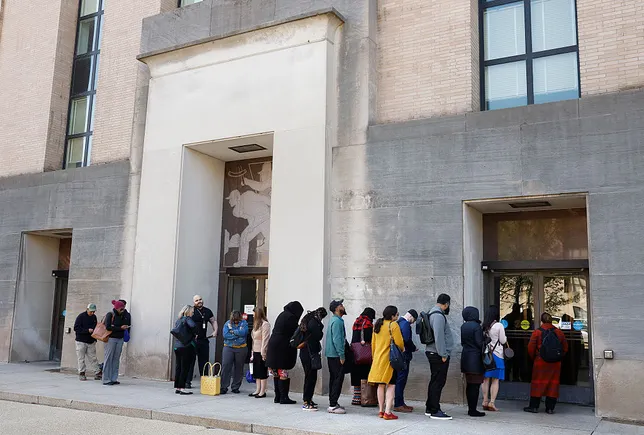
The U.S. Department of Health and Human Services (HHS) mass layoffs have not only brought chaos and stress to employees of this vast health department, but may also be illegal—according to several lawyers and federal employment experts.
Healthcare Dive interviewed more than a dozen current and former HHS employees, who all said that many aspects of this reduction in force (RIF) deviate from the usual practices of a process that is typically extremely complex, burdensome, and rare (a former government official once compared it to a "lost art"). Interviewees requested anonymity to avoid retaliation.
Potential issues include: closing entire offices (some of which are legally required); inconsistencies in how HHS determined who would be laid off; inaccurate information in termination notices; and a lack of transparency with department heads and unions.
Several legal experts believe some of these issues could constitute grounds for lawsuits. Unions and employment law firms have begun to take notice and are engaging with affected employees to gather information.
Last Tuesday, an online town hall meeting held for HHS employees by the law firm Gilbert Employment Law was so overcrowded that Zoom began turning attendees away due to capacity limits. Another firm, Federal Practice Group, told Healthcare Dive it plans to file appeals with the board that protects government employees from unlawful termination.
Meanwhile, the National Treasury Employees Union (NTEU), which represents employees at several HHS agencies, has filed an agency grievance—a move that, according to an email to members shared with Healthcare Dive, initiates an internal complaint process that could ultimately lead to arbitration.
Two weeks have passed since HHS began sending RIF notices to employees on April 1, but it remains unclear exactly how the HHS RIF is being implemented, who has full authority over it, and how layoff targets are being determined among more than 80,000 employees.
The layoffs will cut about 10,000 HHS employees, and the process has been marked by confusion from the highest leadership levels down to rank-and-file staff. Even HHS Secretary Robert F. Kennedy Jr. has admitted he does not know the full scope of the cuts, and said in a recent interview with CBS News that up to 20% of affected employees could be reinstated—a plan denied by other HHS officials.
"This operation is so sloppy, so careless," said one senior National Institutes of Health (NIH) employee not affected by the RIF. "This incompetence shocks me."
Layoffs face legal scrutiny
Typically in a government RIF, agency officials first determine which areas to streamline, whether specific geographic regions or offices; these defining parameters are called "competitive areas." Agencies may also designate the types of positions affected by the RIF before deciding the number or percentage of employees to be laid off.
Agencies then score all employees within the competitive area based on hire date, veteran status, performance ratings, and whether they are permanent or probationary employees. Employees are terminated or retained based on their ranking on this "retention register." Agencies may also use a process called "bumping" to retain talent by moving higher-performing employees into lower positions.
Government layoffs are essentially a "game of musical chairs," and "the RIF determines who gets a chair," said Ron Sanders, a senior government official who oversaw Department of Defense RIFs in the 1990s.
The entire process, if strictly followed, can take months and is highly labor-intensive. But that is not what HHS did—officials chose to close entire offices outright rather than carefully reducing staff. Experts note this strategy can speed things up and bypass ranking requirements.
This approach is highly unusual, but not necessarily illegal, depending on how HHS defines its competitive areas, Sanders said. If HHS defines a competitive area as a single office and closes it entirely, no ranking is required.
However, Healthcare Dive has confirmed that employees in at least four offices received RIF notices designating their entire office as the competitive area and stating the entire area would be abolished—but not everyone in the office was laid off.
Specific office names are not being disclosed to protect the identity of sources. But these offices span multiple HHS sub-departments, including NIH, the Centers for Medicare & Medicaid Services (CMS), and the Administration for Children and Families (ACF).
"I guess they just haven't gotten to us yet," said one NIH employee in one of those offices. "If they abolish the whole office, they can take the fast track and clear everyone out. But they can't keep some people and cut others."
Tamara Slater, a shareholder at the employment law firm Alan Lescht and Associates, also believes this appears to violate the law. "I do think that when looking at the RIF notices, there are quite a few aspects that don't seem to have been properly executed," Slater said. She noted that HHS appears to be trying to circumvent RIF regulations by abolishing entire competitive areas—but without actually laying off everyone in that area. "I think that's what they're trying to do, and I think there will be legal challenges," Slater said.
RIF notices sent to affected employees by HHS Chief Human Resources Officer Tom Nagy stated that a retention register had been prepared to execute the RIF. However, a former ACF employee said that based on who in their office was laid off and who was not, it seems unlikely the department actually carried out a ranking process. "I had more seniority than one of my direct reports who was not laid off; if the process had been done properly, he should have been the one cut," the former employee said.
An HHS spokesperson did not respond to multiple requests for comment and did not explain how the RIF was executed.
Lawyers note that the government does have some discretion in executing a RIF, which creates uncertainty about whether a court would find HHS's actions unlawful. The competitive area may be mislabeled on the RIF notice but correctly stated in the HHS internal system overseeing the RIF, meaning the RIF was executed correctly—even if employees were not informed. For example, if the competitive area targeted specific regions or job types in addition to the office, the department could cut those specific employees without ranking them against colleagues.
"All else being equal, an agency can define its RIF competitive area very narrowly," Sanders said. "Colleagues may sit at adjacent desks but be in different categories—one gets a RIF notice, the other doesn't."
But as things stand, "I think there's a decent chance of litigation," said Tom Spiggle, founder of Spiggle Law Firm, which handles wrongful termination cases including those of government employees. "It sounds like this wasn't done according to the law."
Unions and law firms step in
Other aspects of the RIF also have problems, including inaccurate information in termination notices, according to sources and experts. In some cases, employees received RIF notices with the wrong office name or incorrect performance ratings. Employment lawyers say such errors may not be illegal in themselves, but they can have negative downstream effects on specific employees, such as affecting their ranking on the retention register or their entitled severance pay.
Robert Hinckley Jr., managing shareholder at the law firm Buchalter, advised employees with problematic paperwork to notify human resources and plan to appeal to the Merit Systems Protection Board (MSPB), the quasi-judicial body within the executive branch responsible for federal employment issues.
However, there are problems with this. According to sources, many HHS human resources employees were also laid off in the cuts, as were employees in the Equal Employment Opportunity Commission offices, which will lead to a backlog of correction requests and hinder employees from filing discrimination complaints. The MSPB faces similar issues—earlier this year, after one member's term expired and President Donald Trump removed a Democratic-appointed member, the board, which typically has three members, was left with only one. The removed member, Cathy Harris, was first reinstated by a district court, but the Supreme Court later temporarily upheld her removal. This leadership turmoil, combined with a surge of appeals from other federal employees challenging mass government firings, could lead to a case backlog, employment lawyers say.
In the short term, employees have very limited channels to complain about how the RIF was carried out. Lawsuits could fill that gap. At least two law firms in the Washington, D.C. area are communicating with affected HHS employees and exploring the possibility of filing class-action lawsuits, including Gilbert Employment Law and Federal Practice Group, which held the town hall meeting last Tuesday.
"We have heard from hundreds of employees across multiple HHS sub-agencies who received RIF notices with various errors, ranging from bizarre competitive area definitions to incorrect dates for performance ratings, veteran status, and length of service calculations," FPG founding partner Debra D'Agostino told Healthcare Dive in an email. "We plan to file class MSPB appeals on their behalf."
FPG expects to prevail because nearly all RIF notices contain errors, and it appears no HHS human resources office lawfully created a retention register, D'Agostino said. "Instead, it looks like (likely led by DOGE) someone took an org chart and started crossing out certain offices, divisions, branches, etc., then generated RIF notices for employees in those offices from an old database—which is why the notices are riddled with errors."
HHS unions also allege the department violated collective bargaining agreement provisions regarding RIF handling. NTEU told its members Wednesday that it has filed an agency grievance against HHS, alleging violations of RIF procedures and failure to give the union proper notice, in breach of the contract. NTEU covers employees at the Food and Drug Administration (FDA), the Substance Abuse and Mental Health Services Administration, ACF, and other agencies. The grievance could ultimately lead to independent arbitration requiring HHS to reinstate affected employees.
However, Trump issued an executive order in March stripping collective bargaining rights from hundreds of thousands of federal employees, including those at HHS. The order, issued before the layoffs, is already being challenged in court by unions and could provide legal cover for the government's breach of its union contracts at HHS. "Failure to notify the union is a big issue. I suspect that's one of the reasons the March 27 executive order was issued, which said collective bargaining agreements don't apply to certain agencies, including HHS," Slater said.
Although several lawyers believe legal challenges to the HHS RIF have a strong chance of success, one FDA employee not affected by the layoffs said they expect the outcome to be similar to how the Trump administration has pushed aggressive interpretations of executive power elsewhere. "Nobody's listening to the courts anyway," the employee said. "These are tough times."

