
Deep Dive
来自我们记者的行业洞察

Balancing AI innovation and risk: 5 takeaways from HIMSS26
Last week's HIMSS conference in Las Vegas continued the trend of AI dominating healthcare technology discussions. The industry holds high hopes for AI to alleviate workforce shortages, burnout, and the pressures of aging care. As technology rapidly evolves, the healthcare industry is accelerating the adoption of more autonomous AI agents while simultaneously updating governance strategies to keep pace with innovation. Experts noted that these agents may introduce cybersecurity risks, requiring healthcare systems to rigorously verify non-human users. Meanwhile, EHR vendors are ramping up their own AI products but have committed to retaining third-party integration capabilities. This article distills the five key takeaways from the conference.

Health insurers brace for impact in 2026
After several years of difficulties, the health insurance industry may enter an adjustment period in 2026. Experts expect profit margins to recover, but the ACA market faces risks of subsidy expiration and a death spiral, Medicare Advantage plans may become a highlight, M&A activity accelerates, and AI adoption speeds up.

Top healthcare AI trends in 2026
In 2026, healthcare systems will continue to expand AI applications to address financial pressures, but the absence of federal regulation and fragmented state-level legislation create a complex environment. AI companies' share of funding is expected to reach new highs, with accelerated M&A integration, while facing competition from EHR giants.

Top healthcare provider trends in 2026
In 2026, medical institutions are experiencing a relatively stable start against the backdrop of an improved labor market, rebounding patient volumes, and stabilizing profit margins, but experts point out that the real challenge lies in execution—how to complete cost control, workforce planning, and investment positioning before reimbursement pressures intensify.


What medtech firms can learn from Whoop’s warning letter
Whoop received a warning letter this summer for adding a blood pressure feature to its health band without FDA authorization. The company argued that the feature falls within the health category, but the FDA considers blood pressure related to medical diagnosis. Experts predict the FDA will not back down and note that other companies such as Aktiia and Apple have obtained authorization, which may make Whoop's position more difficult. The article also explores the FDA's regulatory framework for health features, industry impact, and how companies should mitigate risks.

Health systems are racing to adopt AI. But can they prove its value?
At the HLTH 2025 conference, experts noted that healthcare organizations are accelerating the adoption of artificial intelligence, but the methods for measuring the return on investment (ROI) of AI remain unclear. Facing financial pressures and coverage reductions, hospitals need to explore multi-dimensional evaluation approaches.

AI could transform healthcare. Can safety-net providers keep up?
Artificial intelligence has the potential to ease the burden on clinicians, but resource-poor safety-net healthcare institutions face multiple challenges in implementing AI, including technology, funding, and talent, which may widen healthcare disparities.

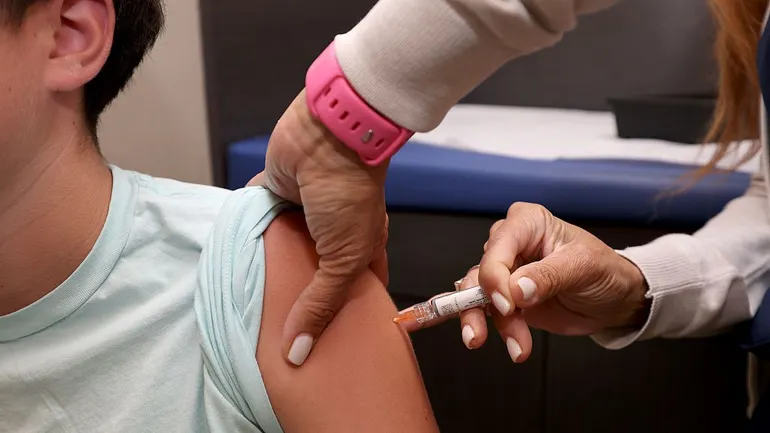
Interstate disparities in vaccine access cause distress for patients and healthcare providers
States across the U.S. are sharply divided in access to COVID-19 vaccines, with some restricting vaccinations while others strive to secure supply, leaving patients and doctors facing confusion and uncertainty.