
Interstate disparities in vaccine access cause distress for patients and healthcare providers
States across the U.S. are sharply divided in access to COVID-19 vaccines, with some restricting vaccinations while others strive to secure supply, leaving patients and doctors facing confusion and uncertainty.
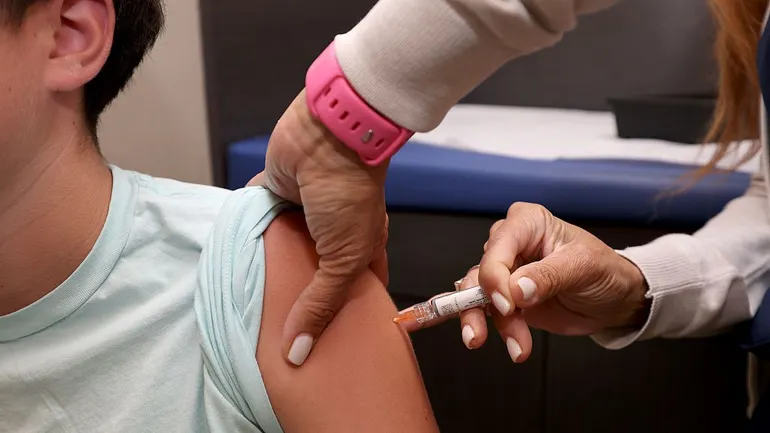
This weekend, Jennifer O. will pack up from Baton Rouge, Louisiana, and drive more than two hours to take her daughter to a CVS clinic in Ocean Springs, Mississippi, where she heard they might be able to get the children's COVID-19 vaccine.
Jennifer would have preferred to spend her time on other things, like taking her daughter to a birthday party, but she felt she had no choice. Despite the rising number of COVID cases in Louisianarising, Jennifer has been unable to find a vaccine for her daughter in Baton Rouge. This is the first time she hasn't been able to get vaccinated locally, even after scouring pharmacy websites and contacting pediatricians.
After Health and Human Services Secretary Robert F. Kennedy Jr. removed the COVID-19 vaccine from the Centers for Disease Control and Prevention's childhood vaccination schedule in May, and the Food and Drug Administration furtherrestricted boostersmonths later, vaccine access in some states has dried up.
These changes have been opposed by multiple medical groups, including theAmerican Academy of Family Physiciansand theAmerican Academy of Pediatrics, which say the new policies contradict existing evidence.
"This year, I called the pediatrician's office asking about the COVID vaccine, and the response was 'We didn't order the COVID vaccine, it's not recommended for healthy children,'" said Jennifer O., who only gave her first name out of fear of retaliation from anti-vaccine colleagues. "My concern is that most parents won't go through this hassle, or don't have the resources to do so."
Experts told Healthcare Dive that vaccine access is increasingly divided along state lines. As a result, two nearly identical patients may have vastly different experiences accessing COVID vaccines depending on which state they live in.
In the most conservative states, lawmakers havealigned with federal agency recommendationsto restrict vaccine access, according to a tracker maintained by the Common Health Coalition. However, other Democratic-led states have issued executive orders to protect vaccine access.
Experts worry this issue foreshadows the future of U.S. healthcare policy: medicine will be divided along partisan lines, with access increasingly dependent on where patients live.
"This is a huge problem. Viruses don't have borders; they don't care which state you live in," said Deborah Fuller, a microbiologist and vaccinologist at the University of Washington School of Medicine. "If there's an outbreak somewhere, it's a problem for everyone everywhere."
Providers face confusion and patchwork solutions
Since the FDA updated its COVID booster recommendations, Kennedy has wavered back and forth on whether vaccines areavailable to those who need them. This confusion has alarmed some providers, who say it's still unclear how to obtain vaccines for their patients.
Many Democratic-led states moved quickly to address access issues, with somejointly developing policiesto protect vaccine access. Still, doctors across the country say that when it comes to getting accurate, up-to-date prescribing guidance, it remains largely chaotic.
Dr. Sarah Nosal, president-elect of the American Academy of Family Physicians, said her phone has been ringing off the hook, with patients and colleagues asking about vaccine availability.
Nosal, who practices family medicine in the Bronx, said this is the first time in her career she hasn't been able to easily answer these questions, though things have started to improve after New York Governor Kathy Hochul took steps last week toensure residents' vaccine access.
"Before that, no one was vaccinating anyone because there was no clear guidance," Nosal said. "It felt like a lot of the intent was to make this very difficult and confusing."
For other providers, the situation is even harder. Dr. Rana Alissa, a pediatrician in Florida, said the state's stance on vaccines has created danger and confusion for her patients. Earlier this month, state Surgeon General Dr. Joseph Ladapo said Florida would endvaccine mandates for school-age childrenand hinted he wants toban COVID mRNA vaccines entirely。
. "Our state is in another level of chaos, skepticism, and inappropriateness," said Alissa, who also chairs the Florida chapter of the American Academy of Pediatrics. "There will be consequences, and they won't be 'Oh, I have a cold.' No, there will be deaths."
Providers say anti-vaccine rhetoric from HHS and some state lawmakers is sowing seeds of distrust among parents, leaving them unsure what information to believe—whether those who have already vaccinated their children or those considering future vaccination plans. In the past, doctors might have directed worried parents to CDC information, but now they worry the site is based more on politics than science.
"I think we're at a turning point where we have to figure out: where can people go? That's why we're all confused, because in the past it was the CDC, that was our 'bible,'" Fuller said.
In the absence of such guidance, doctors say they are spending their already limited time answering vaccine-related questions.
"We don't have time to educate," Alissa said, noting the average visit is about 20 minutes. "Yet we have an obligation to make time. But this time it will come at the expense of our personal health."
A harbinger of future trends
Providers and public health experts warn that as the nation's ideological divide deepens, differences in healthcare access between states will widen over time.
"We joke with colleagues from other states at conferences, saying, 'Well, I'm glad I'm not in Florida' or 'I wish I could move to your state,' because our work in Florida is much harder," Alissa said, noting that anti-science sentiment among patients and local lawmakers has noticeably risen since the start of Trump's second term.
Since taking office, the Trump administration has restricted minors' access togender-affirming care, contrary to the guidance of most of the medical community. It has also limited abortion access by rescinding Biden-era guidance protectingemergency abortion servicesand significantlycutting funding to Planned Parenthood, the nation's largest abortion provider.
Many red states areimplementing their own restrictions on gender-affirming careor imposingharsh sanctionson providers who violate abortion bans. Meanwhile, some blue states are trying to preserve access to abortion and gender-affirming care, filing lawsuits to block what they call "unconstitutional pressure," and taking legal action to protect some doctors from out-of-state abortion bans.
Experts worry that national healthcare disparities could become more pronounced over time. The administration has cut research funding that could help providers better treat diseases in underserved communities and hasdismantledwhat was once considered a cornerstone—thechildhood vaccine program。
. "I think we've opened a door to not using science to guide medicine, and I don't think it will stop at major issues," Nosal said. "If we allow this to develop, our overall health will be at risk, and it will vary by state... We can't fragment healthcare like this and keep the nation healthy."